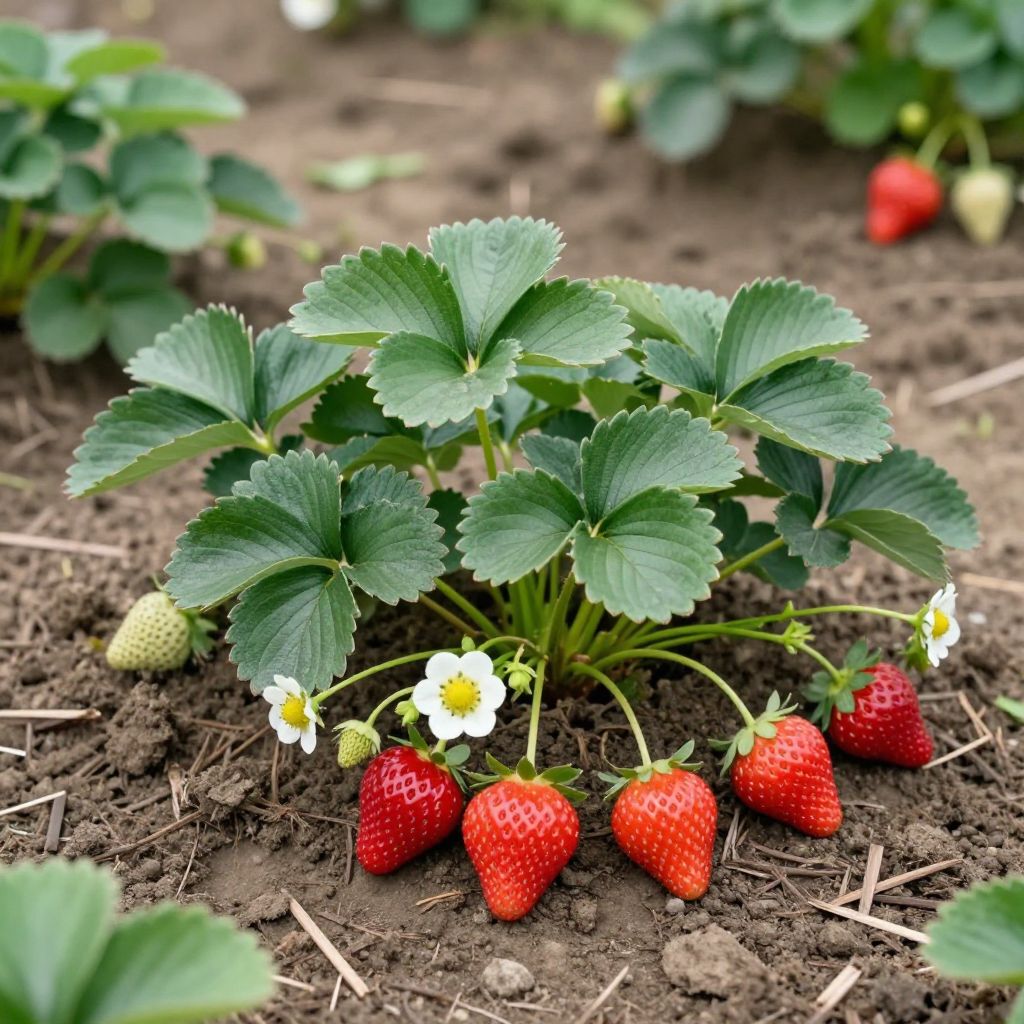
Do strawberries grow on vines? Not exactly. Strawberries are low-growing perennial plants that spread by runners, not true vines, so they don’t climb or twine the way beans or grapes do.
That confusion is common because strawberry stems can trail over the edge of containers and hanging baskets. If you want healthy fruit, it helps to understand how strawberries actually grow and what they need to produce well.
Do strawberries grow on vines?
No—strawberries do not grow on vines. They grow on compact crown-forming plants that send out runners, which are long stems that root and form new plants. The fruit develops on flower stalks above the foliage, so strawberries are best treated as ground-hugging perennials rather than climbing plants.
How strawberries actually grow
Strawberry plants have a central crown, fibrous roots, leaves, flowers, and runners. The crown is the growing point; if it is buried too deeply, the plant can rot, and if it is too high, roots may dry out.
Key growth parts to know
- Crown: The short, thick base where leaves and flower stalks emerge.
- Runners: Long stems that make baby plants at the ends.
- Flowers: White blossoms that become fruit after pollination.
- Leaves: Help fuel growth and protect developing fruit.
Because strawberries spread horizontally, they work well in raised beds, borders, containers, and hanging baskets. They are not suited to trellising like a vine crop.
What strawberries need to grow well
Strawberries perform best in full sun, loose fertile soil, and steady moisture with excellent drainage. If your soil stays wet for long periods, the plants are more likely to suffer from root problems and poor fruit quality.
Growing conditions that matter most
- Sunlight: Aim for at least 6 to 8 hours of direct sun daily.
- Soil: Rich, well-drained soil with plenty of organic matter.
- Drainage: Avoid soggy beds and standing water.
- Airflow: Good spacing helps reduce fungal disease.
- Moisture: Keep soil evenly moist, especially during flowering and fruiting.
If you garden in a hot climate, strawberries may benefit from light afternoon shade. In cooler regions, full sun usually gives the best fruit production.
How to plant strawberries for strong growth
Whether you plant bare-root strawberries or nursery starts, the crown placement is critical. Set the plant so the crown sits right at soil level, with roots spread out and covered, but the growing point left exposed.
- Choose a sunny location with well-drained soil or a container with drainage holes.
- Work in compost to improve soil structure and fertility.
- Dig a hole wide enough to spread the roots naturally.
- Place the plant so the crown is level with the soil surface.
- Firm the soil gently and water thoroughly.
- Mulch lightly to help conserve moisture and keep fruit clean.
Common planting mistake: burying the crown too deep. This can cause rot and slow growth. Another mistake is planting too shallow, which leaves roots exposed and dry.
Container growing: a good option for small spaces
Strawberries do very well in pots, window boxes, and hanging baskets if the container drains well and is large enough. Trailing stems can make them look a bit vine-like, but the plant itself still grows from a crown.
Container tips
- Use a pot that is at least 8 to 12 inches deep.
- Choose a quality potting mix, not heavy garden soil.
- Water more often than in-ground plants, since containers dry out faster.
- Rotate baskets or pots if one side gets more sun than the other.
Containers are especially useful if your yard has poor drainage, compacted soil, or you want to keep fruit close to the kitchen or patio.
Watering and mulching strawberries
Strawberries need consistent moisture to form plump fruit, but they dislike waterlogged soil. The goal is even moisture, not constant saturation.
Practical watering advice
- Water deeply when the top inch of soil feels dry.
- Water at the base of the plant when possible to keep leaves drier.
- Increase attention during flowering, fruit set, and hot weather.
- Reduce watering if the soil stays wet after rain.
Mulch with straw, shredded leaves, or pine needles to help keep berries clean, suppress weeds, and stabilize moisture. Keep mulch away from the crown so the plant can breathe.
Do strawberries need pruning or training?
Strawberries do not need training like vines, but they do benefit from light maintenance. Removing dead leaves, old fruit stalks, and excess runners can help the plant focus energy on healthy growth and fruiting.
What to remove and when
- Snip off dead, damaged, or diseased leaves.
- Remove spent flower stalks after fruiting.
- Cut back excessive runners if you want bigger fruit on the parent plant.
- Leave a few runners only if you want to propagate new plants.
If your goal is fruit production, too many runners can drain energy from the mother plant. If your goal is to expand your patch, let a few runners root in place or pot them up.
How to propagate strawberries from runners
Runners are the easiest way to make new strawberry plants. Each runner can form a new plantlet where it touches soil, making propagation simple for home gardeners.
- Choose a healthy runner from a vigorous plant.
- Pin the plantlet into moist soil or a small pot while it is still attached.
- Keep the soil lightly moist until roots form.
- Once the new plant is established, cut the runner from the mother plant.
This is one reason strawberries are often mistaken for vine plants: the runners trail outward and can spill over bed edges. But they are still ground-level spreaders, not climbers.
Common pests and diseases to watch for
Strawberries can be affected by pests and fungal diseases, especially in crowded, damp, or poorly ventilated plantings. Early detection makes a big difference.
Common problems
- Slugs and snails: Chew holes in fruit and leaves, especially in damp conditions.
- Birds: Peck ripening berries.
- Powdery mildew: A white coating on leaves in humid or crowded plantings.
- Gray mold: Fruit rots in wet weather or where berries touch damp soil.
- Leaf spots: Small discolored spots that can weaken plants over time.
Simple prevention steps
- Space plants well for airflow.
- Keep fruit off wet soil with mulch.
- Water early in the day so foliage dries faster.
- Remove rotten fruit promptly.
- Use netting if birds are a problem.
Important: If a plant shows repeated disease problems, remove badly affected leaves and consider replacing older, declining plants with healthy new ones.
Harvesting strawberries at the right time
Harvest strawberries when they are fully colored and fragrant. They do not continue to ripen much after picking, so it is best to wait until they are ready on the plant.
Harvesting tips
- Pick in the cool part of the day if possible.
- Use clean scissors or pinch the stem above the berry.
- Handle fruit gently to avoid bruising.
- Check plants every day or two during peak ripening.
If berries are small, pale, or misshapen, the cause is often poor pollination, inconsistent watering, overcrowding, or too little sun. Improving growing conditions usually helps more than any quick fix.
Best care habits for a productive strawberry patch
Healthy strawberries are easier to maintain when you keep the bed renewed and uncluttered. Older plants can become less productive over time, especially if runners are allowed to crowd the area.
Ongoing maintenance checklist
- Keep the bed weed-free.
- Refresh mulch as needed.
- Remove weak or diseased foliage.
- Thin overcrowded plants if airflow drops.
- Replace old plants when fruiting declines.
If you grow strawberries in a bed year after year, rotating them to a new spot can help reduce disease buildup and improve vigor.
Conclusion: strawberries are not vines, but they are easy to grow
So, do strawberries grow on vines? No—they grow on compact plants with runners, and understanding that difference helps you care for them properly. Give them sun, drainage, moisture, and room to spread, and you’ll have a much better chance of getting healthy plants and good fruit.
If you want to keep learning, you may also find it helpful to read about growing strawberries indoors for small spaces and year-round care.