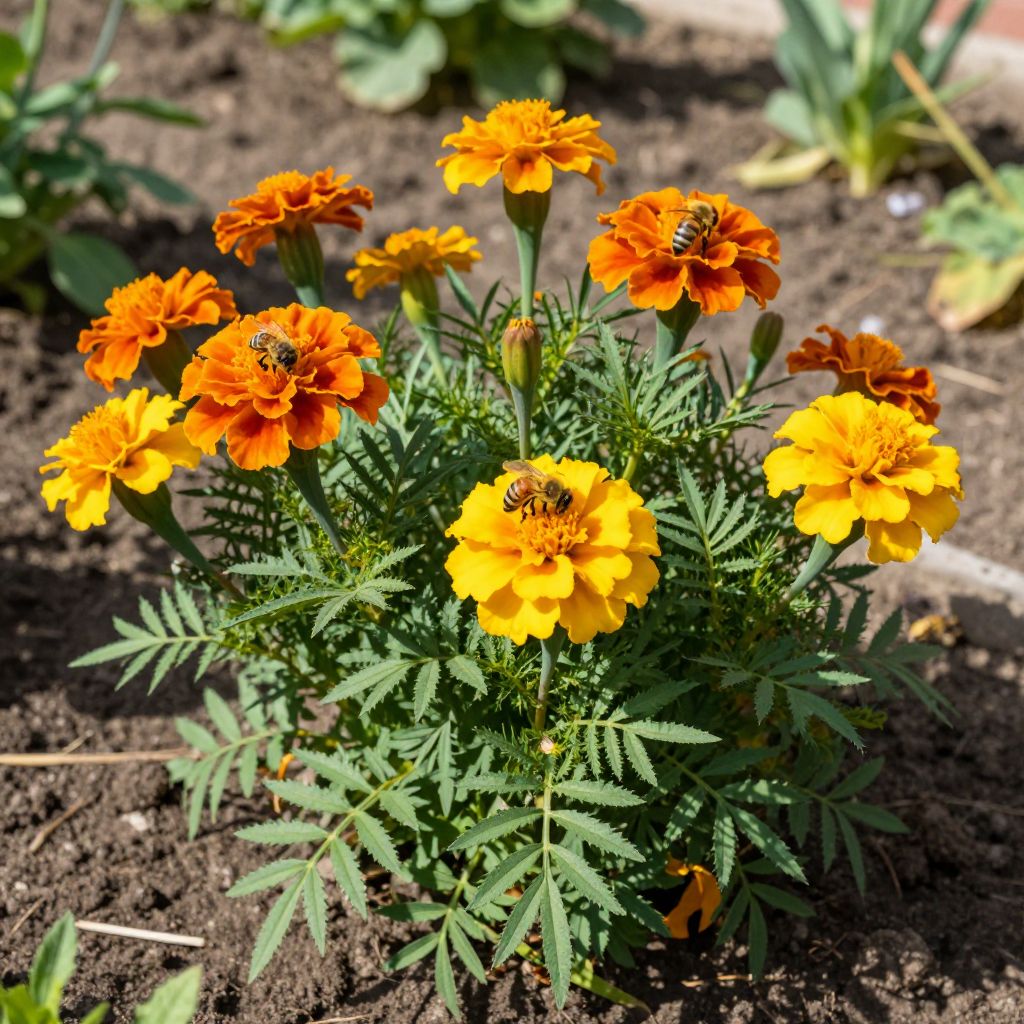
Do bees like marigolds? Yes—bees will visit marigolds, especially when the flowers are open, sunny, and producing accessible pollen. They are not usually the single best bee plant in the garden, but they can still support pollinators, especially when planted in generous drifts alongside other nectar-rich flowers.
If you want your marigolds to help bees, focus on growing healthy, open, single-flowered plants in full sun. The right planting, watering, and deadheading habits can make a noticeable difference in how attractive they are to pollinators.
Do bees like marigolds?
Bees do visit marigolds, but their appeal depends on the flower type and growing conditions. Single-flowered marigolds with open centers are easier for bees to use than dense, double blooms. In a mixed pollinator garden, marigolds can be a useful nectar and pollen source, especially during warm, sunny weather.
Why bees visit some marigolds more than others
Not all marigolds are equally attractive to bees. Flower structure matters more than flower color alone, because bees need easy access to pollen and nectar.
Best marigold types for bees
- Single-flowered marigolds with visible centers
- Open, daisy-like blooms that expose pollen
- Healthy plants with plenty of fresh flowers
Less attractive types
- Very double or ruffled blooms that hide the center
- Stressed plants with few flowers
- Flowers grown in deep shade or poor soil
In general, bees prefer flowers they can land on easily and forage from quickly. Marigolds can fit that need, but they are usually best used as part of a broader pollinator planting rather than as the only bee plant.
How to grow marigolds that bees actually use
Healthy marigolds bloom longer and produce more useful flowers for bees. Give them the basic conditions they need, and they will reward you with a steady display through the season.
Sunlight
Marigolds bloom best in full sun, which usually means at least 6 hours of direct light a day. More sun generally means more flowers, and more flowers mean more opportunities for bees.
Soil and drainage
Marigolds prefer soil that drains well. They can tolerate average garden soil, but soggy roots reduce vigor and flowering.
- Work in compost if your soil is thin or compacted.
- Avoid heavy, waterlogged beds unless you improve drainage first.
- In containers, use a quality potting mix rather than garden soil.
Watering
Water marigolds deeply when the top layer of soil begins to dry, especially while young plants are establishing. Mature plants handle short dry spells better than overly wet conditions.
- Water at the base, not over the blooms, when possible.
- Let the soil dry slightly between waterings.
- Container marigolds may need more frequent watering in hot weather.
Spacing
Give plants enough room for air movement and branching. Crowded marigolds are more prone to mildew and weaker flowering, which reduces their value to bees.
How to plant marigolds for pollinators
Whether you sow seeds or transplant seedlings, the goal is the same: strong plants that flower continuously. You do not need special techniques, but a few simple steps help a lot.
- Choose a sunny site with well-drained soil.
- Loosen the soil and mix in a modest amount of compost if needed.
- Plant seeds or transplants according to the spacing on the packet or plant label.
- Water gently after planting to settle the soil.
- Mulch lightly to help conserve moisture, keeping mulch away from stems.
If you are planting in containers, choose a pot with drainage holes. A container that is too small dries out quickly and can reduce bloom production during hot spells.
Best care tips to keep bees coming back
Bees are more likely to visit marigolds that keep producing fresh blooms. Good maintenance encourages repeat flowering and keeps the plant tidy without removing too many blossoms.
Deadheading
Remove spent flowers regularly to encourage new buds. This is one of the simplest ways to extend bloom time.
- Snip faded blooms just above the next set of leaves or buds.
- Do not remove every flower at once if bees are actively foraging on the plant.
- Leave some flowers in place during peak bee activity when practical.
Feeding
Marigolds usually do not need heavy fertilizing. Too much nitrogen can produce leafy growth with fewer flowers, which is not ideal for pollinators.
- Use compost at planting time if your soil is poor.
- Avoid overfeeding with high-nitrogen fertilizers.
- If plants look weak in containers, use a light, balanced feeding only if needed.
Pruning and pinching
Young marigolds can be pinched back lightly to encourage branching. More branches often mean more flowers, which can increase bee visits.
Common problems that reduce bee visits
When marigolds are not attracting bees, the issue is often the plant’s condition or flower form rather than the bees themselves. Check these common causes first.
Too much shade
Marigolds grown in shade may stretch, bloom poorly, and produce fewer open flowers. Move them to a sunnier spot if possible.
Overwatering
Constantly wet soil can weaken roots and reduce flowering. Let the soil dry slightly between waterings and improve drainage if needed.
Pests
Aphids, spider mites, and thrips can stress marigolds and distort blooms. Inspect the undersides of leaves and new growth regularly.
- Rinse small infestations off with a strong spray of water.
- Remove badly damaged growth if needed.
- Encourage beneficial insects by avoiding unnecessary broad-spectrum sprays.
Disease
Powdery mildew and root rot are more likely in crowded, damp conditions. Space plants well, water at the base, and remove diseased debris promptly.
How to make marigolds more pollinator-friendly
If your goal is to support bees, marigolds work best when paired with other flowering plants. A diverse garden gives bees more consistent forage across the season.
- Plant marigolds in groups rather than as single scattered plants.
- Mix them with herbs and flowers that bloom at different times.
- Choose open, single blooms when available.
- Avoid spraying insecticides on flowers in bloom.
One of the biggest mistakes is assuming all colorful flowers are equally useful to bees. A dense double bloom may look dramatic to people, but an open flower with accessible pollen is often far better for pollinators.
Growing marigolds in beds versus containers
Marigolds can perform well in both settings, but container plants need closer attention because they dry out faster and may bloom less if stressed.
In garden beds
Bed-grown marigolds usually need less frequent watering once established. They also tend to develop larger root systems and more flowers if the soil is healthy and well drained.
In containers
Use a roomy pot, a free-draining mix, and regular monitoring. Container marigolds may need more frequent deadheading and watering, especially in hot weather or windy locations.
When bees are most likely to visit marigolds
Bees are typically most active on warm, bright days when flowers are fully open. They are less active in cool, windy, or rainy weather, even if the marigolds are blooming well.
- Expect more bee activity in mid-morning through afternoon on sunny days.
- Freshly opened flowers are often more attractive than aging blooms.
- Pollinator visits may be lighter if other richer nectar sources are blooming nearby.
Quick troubleshooting guide
- No bees visiting? Check for shade, poor bloom production, or double-flowered varieties.
- Plants look leafy but not flowery? Reduce nitrogen and increase sun exposure if possible.
- Blooms fade quickly? Water consistently and deadhead regularly.
- Leaves are spotted or dusty? Improve airflow and remove affected foliage.
Conclusion
So, do bees like marigolds? Yes, especially open, single-flowered marigolds grown in full sun with good drainage and steady care. If you want more pollinator activity, plant them in groups, keep them blooming, and avoid practices that reduce flower quality. Start by checking your marigolds for sunlight, spacing, and flower form, then make one improvement this week.
If you want to build a stronger pollinator bed, you may also enjoy reading about how to choose flowers that attract bees and simple container gardening tips for sunny spaces.