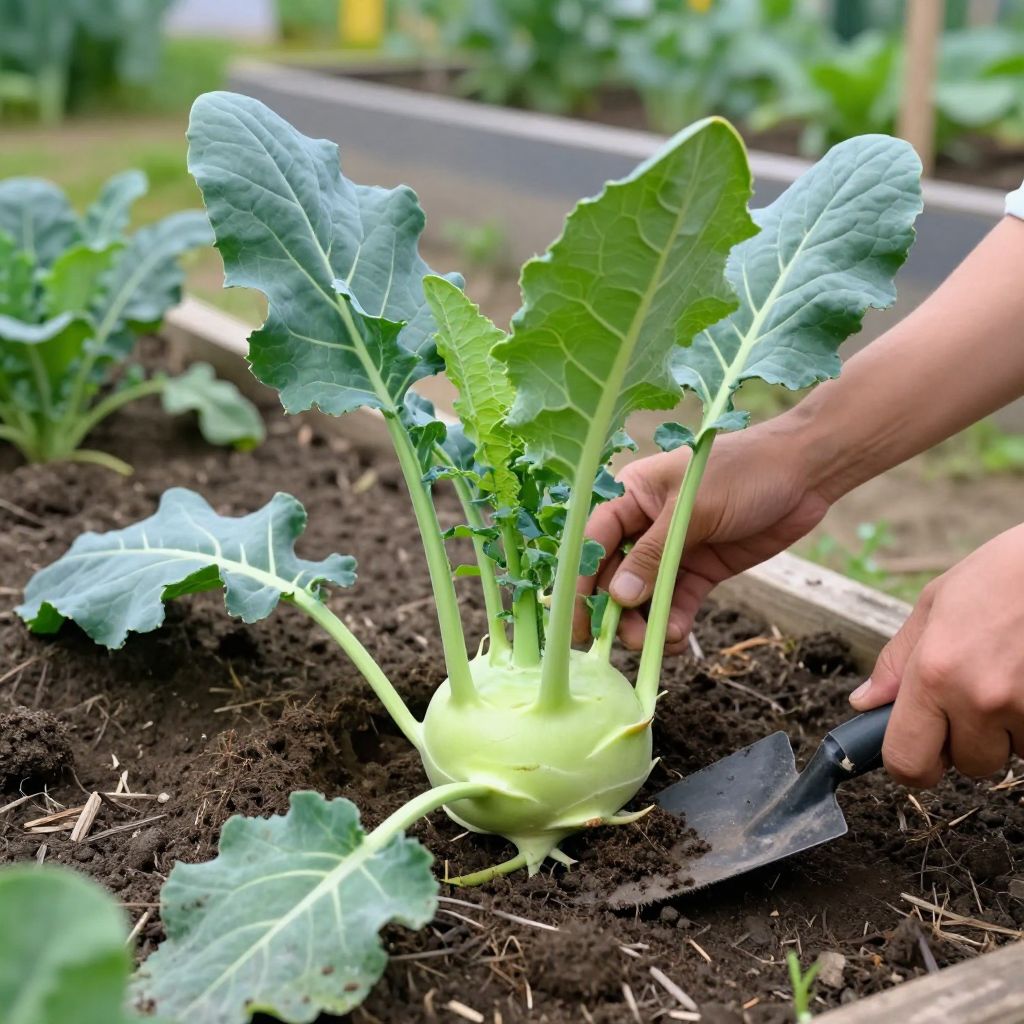
Wondering when to harvest kohlrabi so it’s crisp, tender, and not woody? The timing matters a lot with this unusual brassica, because it can go from sweet and juicy to tough quickly if you leave it too long.
The good news is that kohlrabi is easy to judge once you know what to look for. With a few simple checks for size, firmness, and texture, you can pick it at the right stage and enjoy the best flavor.
When to harvest kohlrabi?
Harvest kohlrabi when the swollen stem is usually about 2 to 4 inches across, depending on the variety, and still feels firm and tender. Most plants are best picked young, before the bulb becomes fibrous or pithy. Check size, texture, and days to maturity together rather than relying on calendar dates alone.
How to tell kohlrabi is ready
Look at the bulb size
Kohlrabi is harvested for its enlarged stem, often called the bulb, though it is not a true root. Many varieties taste best when they are smaller and younger, commonly around the size of a golf ball to a tennis ball.
If you wait until the bulb is much larger, the outer layer may thicken and the flesh can become woody. Some varieties stay tender a bit longer than others, so seed packet guidance is helpful, but your own inspection matters most.
Check the texture with your fingers
Gently press the bulb. A ready kohlrabi feels firm, but not rock-hard or spongy. If it still has a smooth, crisp feel and the skin is easy to peel, it is usually in good eating condition.
If the bulb seems dense and heavily fibrous, or if the surface starts to crack, it has likely been left too long. Smaller bulbs are usually sweeter and more tender than oversized ones.
Use the leaves as a clue
Healthy leaves often mean the plant is still actively growing, but the bulb can still be ready even when the foliage looks vigorous. Don’t wait for the plant to look tired before harvesting.
As a general rule, harvest based on bulb size and tenderness, not leaf age alone. The leaves themselves are edible too, if they are fresh and undamaged.
What size is best for harvesting?
For most home gardens, kohlrabi is at its best when the swollen stem is about 2 to 3 inches wide for very tender eating, and up to about 4 inches wide for a slightly larger harvest. Beyond that, quality often declines, especially in warm weather.
Some larger varieties can remain usable at bigger sizes, but if you are unsure, harvest one plant and test it. It is better to pick a little early than to lose tenderness.
How long does kohlrabi take to mature?
Most kohlrabi varieties mature in roughly 45 to 60 days, though some early types are quicker and some larger varieties take longer. Weather, soil fertility, and watering all affect how fast the bulbs swell.
Cool conditions usually produce the best flavor. In hot weather, kohlrabi can become tough faster, so check plants more often as they approach maturity.
Best harvesting technique
Use a clean, sharp tool
Cut kohlrabi from the base with a sharp knife, garden scissors, or pruning snips. Avoid twisting the plant out of the soil, because that can damage neighboring plants or tear the stem.
Leave a small stub of stem attached to the bulb if needed, and trim off the leaves after harvest. Handle the bulb gently to avoid bruising.
Harvest in the cool part of the day
Picking in the morning or evening helps keep the bulbs crisp. If the weather is hot, move harvested kohlrabi into shade quickly so it stays fresh.
For the best storage life, harvest only what you need and keep the rest growing until you are ready for them.
Can you harvest kohlrabi early?
Yes. If you need a small, tender bulb for the kitchen, you can harvest kohlrabi early. Young bulbs are often very mild and crisp, and many gardeners prefer them at a smaller size rather than waiting for maximum bulk.
Early harvest is especially useful if warm weather is approaching, because heat can speed up toughening. If you are unsure, pull one plant and compare it with the rest.
What happens if you harvest too late?
Woody flesh
The most common problem with late-harvested kohlrabi is a woody, fibrous interior. The outer layer thickens, and the center may lose its sweet, crisp texture.
Split or cracked bulbs
Irregular watering can cause bulbs to split, especially if dry soil is followed by heavy rain or a deep soak. Splitting does not always make the bulb unusable, but it shortens storage life and can affect quality.
Bitter or strong flavor
Very mature kohlrabi may taste sharper or more pungent. Cool growing conditions usually help keep the flavor mild, while heat and stress can intensify it.
How to keep kohlrabi tender before harvest
Keep moisture even
Consistent watering helps bulbs stay smooth and tender. Uneven moisture can slow growth, encourage cracking, and make texture less pleasant.
Water deeply when the soil begins to dry, especially during bulb formation. Aim for evenly moist soil rather than repeated soaking and drying cycles.
Grow in full sun with cool conditions
Kohlrabi grows best in full sun, but it appreciates cooler temperatures. In warmer regions or later in the season, partial shade during the hottest part of the day can help reduce stress.
Rich, well-drained soil also supports steady growth. If the soil is compacted or poor, bulbs may develop slowly and become tougher.
Feed lightly if needed
Ahead of planting, compost helps build fertile soil without pushing overly soft growth. Too much nitrogen can encourage leafy tops at the expense of bulb development, so keep feeding balanced and moderate.
If your soil is already rich, extra fertilizer may not be necessary. Focus on even moisture and timely harvesting instead.
How to harvest the leaves too
Kohlrabi leaves are edible when young and tender. You can snip a few outer leaves while the plant is still growing, but avoid removing so many that you slow bulb development too much.
If you plan to harvest the leaves, take only a small amount at a time from healthy plants. Older leaves can become tougher, so use the most tender ones first.
Storing harvested kohlrabi
After harvesting, trim the leaves from the bulb to reduce moisture loss. The bulbs store best when kept cool and humid, such as in the refrigerator crisper drawer.
For short-term storage, place unwashed bulbs in a perforated bag or loosely wrapped container. If the leaves are still attached, remove them first and store them separately if they are fresh.
Use harvested kohlrabi as soon as possible for the best texture. The longer it sits, the more likely it is to lose crispness.
Common mistakes to avoid
- Waiting too long and letting bulbs become woody.
- Judging readiness by calendar days only instead of checking size and firmness.
- Letting soil dry out and then overwatering, which can cause splitting.
- Ignoring heat stress, especially in late spring or summer plantings.
- Pulling the plant roughly instead of cutting it cleanly.
Troubleshooting poor harvest quality
Bulbs are small
If your kohlrabi stays small, it may be due to cool weather, crowded spacing, poor soil, or insufficient moisture. Some varieties simply mature faster than others, so check the seed packet for expected size and days to maturity.
Bulbs are tough
Tough bulbs usually mean the plant stayed in the ground too long or grew under heat stress. Harvest earlier next time, and consider sowing in a cooler part of the season.
Plants bolt before swelling
Bolting, or sending up a flower stalk, can happen when plants are exposed to stress or sudden temperature swings. Once bolting starts, bulb quality declines quickly, so harvest promptly if you notice flower stalk formation.
Quick harvest checklist
- Check the bulb size against the variety’s expected maturity.
- Feel for firmness and tenderness.
- Look for smooth skin without cracking or heavy woodiness.
- Harvest in cool weather if possible.
- Cut the stem cleanly and remove the leaves.
- Store promptly or use soon after picking.
Conclusion
The simplest answer to when to harvest kohlrabi is: pick it young, usually when the bulb is about 2 to 4 inches across and still crisp. If you are unsure, harvest one plant and taste it now rather than waiting for it to become tough.
For more practical vegetable-growing guidance, you may also want to read about how to grow kohlrabi and other cool-season crops that do best when harvested at just the right stage.