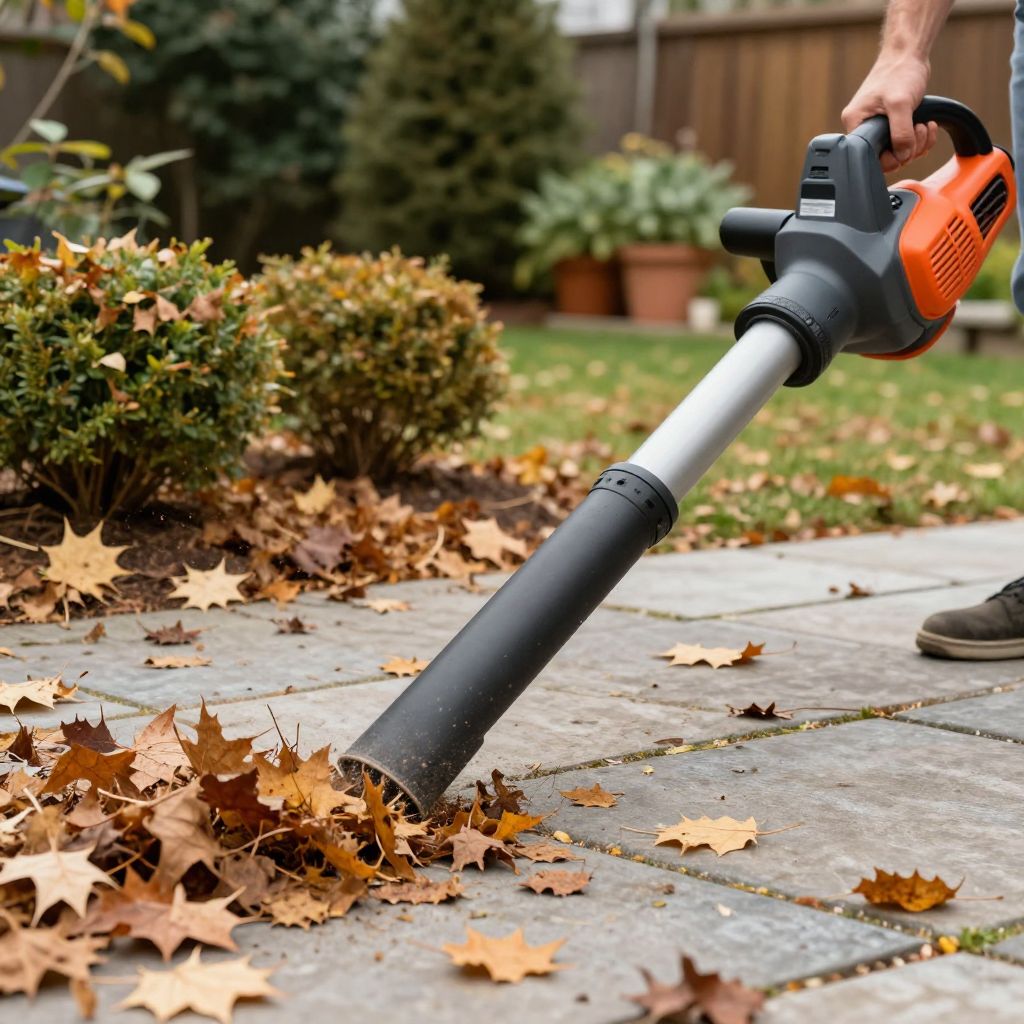
If you’re wondering what is cfm on a leaf blower, you’re really asking how much air the machine moves. CFM stands for cubic feet per minute, and it tells you the volume of air the blower pushes out. For leaf cleanup, that number helps you judge whether the tool can move dry leaves, wet debris, or heavier garden litter.
CFM matters because it affects how quickly you can clear paths, beds, patios, and lawn edges. It works alongside air speed, measured in miles per hour, so the best blower for your yard depends on the kind of debris you’re moving and the surface you’re cleaning.
What is CFM on a leaf blower?
CFM on a leaf blower means cubic feet of air moved per minute. A higher CFM usually means the blower can move a larger volume of debris, which is especially useful for wet leaves, pine needles, and broad garden cleanup. It does not measure force by itself, so it should be considered with air speed and nozzle design.
Why CFM matters in garden cleanup
When you’re maintaining a garden, you’re not just moving leaves. You may also be clearing flower beds, gravel paths, mulch edges, deck corners, and patio joints. CFM helps you estimate how much material the blower can shift in one pass.
For light jobs, such as dry leaves on a driveway, a modest CFM may be enough. For heavier jobs, such as damp maple leaves stuck in shrubs or debris caught in groundcover, you’ll usually want higher CFM so the air stream can move more material at once.
CFM vs. air speed
- CFM = how much air volume the blower moves.
- Air speed = how fast the air exits the nozzle.
- Both matter because volume helps gather debris, while speed helps dislodge it.
A blower with high air speed but low CFM may scatter a few leaves without moving a pile very far. A blower with stronger CFM can create a broader stream that is often more useful for general yard work.
How to read leaf blower specs without getting confused
Product labels often list CFM, MPH, and sometimes “air volume” or “airflow.” These numbers are helpful, but they do not tell the whole story. Nozzle shape, battery power, engine type, and whether the blower is handheld or backpack-style all affect real-world performance.
- Check the CFM number first to understand airflow volume.
- Look at MPH to see how forcefully the air exits.
- Consider the type of debris in your yard.
- Match the tool to the size of the area you clean most often.
If you have a small courtyard or raised-bed area, you may not need a very high CFM rating. If you maintain a large lawn with mature trees, a higher CFM model can reduce the time and effort needed for seasonal leaf cleanup.
What CFM range do gardeners actually need?
The right CFM depends on the job, not just the number. For light garden maintenance, lower airflow may be adequate. For larger properties or heavier debris, more airflow is usually more efficient. The goal is to choose a blower that clears debris without damaging plants or blasting away mulch.
Typical use cases
- Low to moderate CFM: patios, small beds, dry leaves, light grass clippings.
- Moderate CFM: average suburban yards, mixed dry debris, driveway cleanup.
- Higher CFM: wet leaves, larger lawns, long fence lines, heavier seasonal cleanup.
For delicate garden areas, more power is not always better. Too much airflow can strip mulch, expose roots, or knock flowers and seedlings flat. In planting beds, use the lowest effective setting and keep the nozzle moving.
How to use a leaf blower safely around plants
A leaf blower is useful in the garden, but it can also disturb soil, seedlings, and beneficial mulch if used carelessly. The best technique is controlled, short bursts of air rather than long blasts aimed directly at plants.
Best practices for beds, borders, and containers
- Hold the nozzle at a low angle so air skims the surface rather than digging into soil.
- Use short bursts instead of continuous blowing near tender plants.
- Keep the blower farther away from seedlings, annuals, and shallow-rooted plants.
- Work from the outside of beds inward so you don’t push debris deeper into the planting area.
- Avoid blowing directly at bark chips or fine mulch if you want to keep the layer intact.
If you garden in a windy area, try cleaning in calmer weather. Natural wind can make a blower less precise and can send debris back into the bed you just cleared.
Common problems when choosing by CFM alone
One of the most common mistakes is assuming that a higher CFM rating automatically means a better blower. In practice, the best tool depends on balance, comfort, and how you use it in the garden.
Mistakes to avoid
- Choosing only by the biggest number instead of comparing CFM and MPH together.
- Using too much power in mulched beds and around young plants.
- Ignoring weight and ergonomics, especially for longer cleanup sessions.
- Forgetting that wet leaves are much harder to move than dry ones.
- Using a blower where a rake or broom would be gentler and faster.
If your yard has gravel, loose bark, or decorative stone, test the blower in a small area first. A strong airflow can scatter material and create more work than it saves.
Choosing the right blower for your garden tasks
Think about your most common cleanup job. A small front garden with paved paths has different needs from a large property with mature trees, wide lawns, and deep leaf fall. The best leaf blower is the one that handles your regular work efficiently without causing avoidable damage.
Questions to ask before buying
- Do you mostly clear dry leaves or heavy, damp debris?
- Are you cleaning open lawn areas or tight planting beds?
- Do you need a lightweight tool for quick jobs or a stronger one for seasonal cleanup?
- Will you use it often enough that battery life, fuel, or cord length matters?
For many home gardeners, a mid-range blower is the most practical choice. It offers enough airflow for routine maintenance while staying easier to control around shrubs, borders, and hardscape features.
Seasonal considerations for leaf blower use
In autumn, CFM becomes more important because leaves accumulate quickly and often become damp after rain or morning dew. In spring, you may use a blower for pollen, seed pods, and light debris, which usually requires less airflow.
After storms, debris can be mixed with twigs, small branches, and wet leaves. In those conditions, higher CFM helps, but you may still need to rake out heavier material first. A blower is a cleanup tool, not a replacement for all garden maintenance.
When a blower is not the best tool
- For compacted wet leaves stuck in lawn turf, a rake may be more effective.
- For debris inside dense groundcover, hand-picking may protect plants better.
- For tiny patios or steps, a broom may be faster and quieter.
Practical tips for better results
Good technique often matters as much as the CFM rating. If you use the blower correctly, a moderate machine can outperform a more powerful one used poorly.
- Start at the farthest point and blow debris toward one collection area.
- Use the edge of the air stream to guide material instead of blasting straight on.
- Work in small sections so debris doesn’t scatter back into cleaned areas.
- Pause often to check mulch, soil, and plant stems for disturbance.
- Finish with a rake or hand tool where precision matters most.
For garden beds, the goal is to tidy the surface, not strip it bare. Leave mulch in place, preserve soil structure, and avoid exposing roots unless you are intentionally refreshing the bed.
Bottom line: how to use CFM to make a smarter choice
What is CFM on a leaf blower? It is the airflow volume that helps you understand how much debris the tool can move. Use it with air speed, weight, and nozzle design to choose a blower that fits your garden, not just the biggest spec on the box.
If you’re comparing models, make a quick list of your most common cleanup jobs and match the blower to those tasks. For more help choosing the right yard tools, you may also want to read about how to choose a leaf blower for your garden and safe ways to clean up autumn leaves without damaging plants.