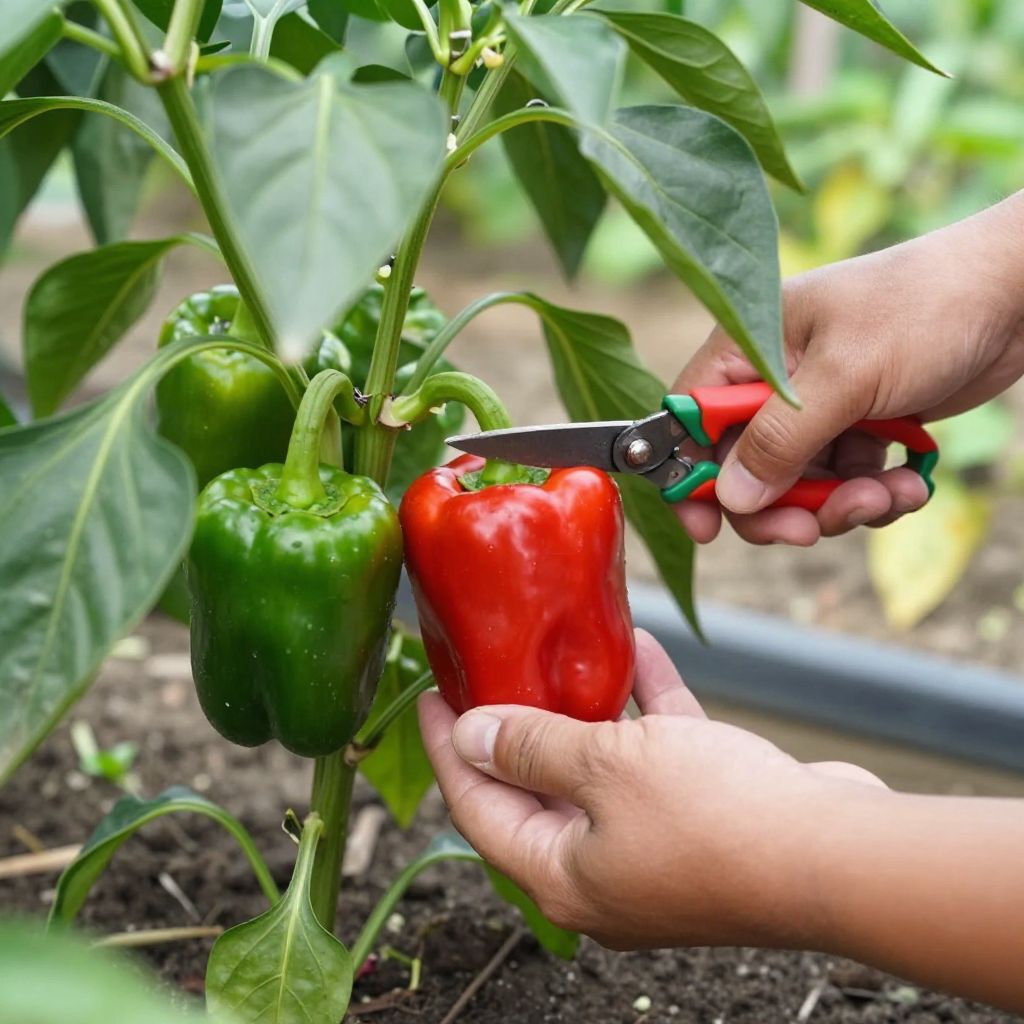
Wondering when to harvest bell peppers so they’re sweet, crisp, and full-sized? The right picking time depends on the pepper’s color, size, firmness, and the weather in your garden. You can harvest bell peppers while they’re green or let them ripen longer for sweeter flavor and richer color.
Knowing the difference helps you avoid underripe, bitter fruit or overripe peppers that soften on the plant. With a few simple checks, you can pick at the best stage for your taste and keep the plant producing longer.
When to harvest bell peppers?
Harvest bell peppers when the fruit is firm, glossy, and has reached a usable size for the variety, usually while still green or after it has fully changed color. Pick them with scissors or pruners once they feel solid and the skin looks smooth; waiting longer often improves sweetness and color.
How to tell bell peppers are ready to pick
Bell peppers do not all ripen the same way, so maturity is best judged by a mix of size, color, and texture rather than by days alone. A pepper can be harvestable before it changes from green to red, yellow, orange, or purple.
Signs your peppers are ready
- Size: The pepper has reached the size typical for its variety.
- Firmness: The fruit feels solid, not soft or wrinkled.
- Glossy skin: Mature peppers usually have a smooth, shiny surface.
- Color change: Green peppers may stay green, or they may begin ripening to another color.
- Easy separation: The stem may give slightly when cut, but do not twist hard and damage the plant.
If you are growing standard green bell peppers, you can harvest once they are full-sized and firm. If you want sweeter peppers, leave them on the plant until they fully ripen to their final color.
Green versus fully ripe bell peppers
Green bell peppers are simply harvested earlier. They are usually less sweet and more grassy in flavor, but they are perfectly usable and often picked sooner to encourage more fruiting.
Fully ripe bell peppers take longer, but they are usually sweeter and may have better flavor and higher color intensity. The tradeoff is that leaving fruit on the plant longer can slow the production of new peppers.
How long do bell peppers take to mature?
Most bell peppers need a long warm season, often around 60 to 90 days from transplanting to first harvest, depending on variety and growing conditions. Cooler weather, low light, or stress from water problems can slow ripening noticeably.
Seed packets and plant labels often give a “days to maturity” estimate. Use that as a guide, but rely on the plant itself, because local weather and soil conditions can shift harvest timing by several weeks.
What affects harvest time
- Temperature: Bell peppers ripen best in warm weather.
- Sunlight: More direct sun usually means better growth and faster ripening.
- Plant stress: Drought, nutrient imbalance, or root problems can delay fruiting.
- Variety: Some cultivars mature earlier than others.
- Season length: Short summers may not allow full color development outdoors.
How to harvest bell peppers the right way
Use clean scissors, garden snips, or a sharp knife to cut the stem above the fruit. This is safer for the plant than pulling, since twisting can break branches or tear the stem.
- Check that the pepper is firm and at the stage you want.
- Hold the fruit gently with one hand.
- Cut the stem about 1/2 inch above the pepper.
- Place harvested peppers in a basket or shallow container to avoid bruising.
Harvest in the cool part of the day if possible, especially during hot weather. Peppers stay crisper when they are not picked from overheated plants in full afternoon sun.
Can you twist peppers off by hand?
It is better not to. Bell peppers often hang from sturdy stems, and twisting can damage the plant or break nearby fruiting branches. A clean cut is faster, neater, and easier on the plant.
Should you pick bell peppers green or wait for color?
This depends on your goal. If you want more fruit sooner, harvest green peppers once they are full-sized. If you want sweeter flavor and deeper color, leave them on the plant until they finish ripening.
Many gardeners do both. Picking some peppers green can stimulate the plant to keep flowering, while leaving a few on the plant gives you ripe fruit later in the season.
Choosing the best stage for your kitchen
- Green stage: Crisp, less sweet, earlier harvest.
- Turning stage: Fruit has begun changing color but is not fully ripe yet.
- Fully ripe stage: Sweeter, softer in flavor, and often more colorful.
What if peppers stay green for a long time?
If your peppers are full-sized but not coloring up, the plant may need more warmth, more light, or simply more time. This is common late in the season, especially in cooler climates or during cloudy weather.
Ways to encourage ripening
- Keep the plant in full sun if possible.
- Avoid overwatering, which can slow growth and reduce vigor.
- Remove heavily shaded leaves only if they are blocking airflow or fruit access.
- Pick mature green peppers to help the plant redirect energy to new fruit.
- At season’s end, protect plants from cold nights if you want a final ripening window.
Once temperatures drop, ripening slows sharply. If frost is approaching, it is better to harvest usable green peppers than to leave them on the plant hoping for color that may never come.
Common mistakes to avoid when harvesting bell peppers
A few simple errors can reduce quality or slow the plant down. Most are easy to fix once you know what to look for.
- Picking too early: Small, pale peppers may not have finished developing flavor or size.
- Waiting too long: Overripe peppers can soften, wrinkle, or attract pests.
- Pulling fruit off: This can damage stems and reduce future harvests.
- Ignoring weather: Cold nights and frost can ruin late fruit quickly.
- Confusing size with ripeness: A big pepper is not always ready if it is still thin-walled or dull-looking.
How harvesting affects future pepper production
Regular picking often encourages bell pepper plants to keep producing. When mature fruit stays on the plant too long, the plant may slow down flowering and set fewer new peppers.
For the best long-term harvest, check plants every few days once fruit starts sizing up. Frequent picking is especially helpful in warm, productive weather when the plant can still make more flowers and fruit.
What to do with peppers after harvest
Handle peppers gently to avoid bruising. Store them unwashed in the refrigerator crisper drawer if you are not using them right away, and wash them just before use.
If a pepper has minor surface blemishes but is still firm, it is usually fine to harvest and use. Discard fruit that is soft, moldy, or badly damaged by pests or disease.
Problems that can affect harvest timing
Sometimes peppers look ready but do not mature well because the plant is under stress. Checking the plant’s overall condition can help you decide whether to wait or harvest now.
Watch for these issues
- Blossom-end rot: Dark, sunken spots at the blossom end, often linked to inconsistent watering.
- Aphids or mites: These pests can weaken the plant and reduce fruit quality.
- Sunscald: Pale, damaged patches on fruit exposed to intense sun.
- Fungal leaf diseases: Heavy leaf loss can slow ripening by reducing plant energy.
Healthy plants with steady moisture, good drainage, and plenty of light usually give the most reliable harvest. If your peppers are struggling, fix the growing conditions as soon as possible so the remaining fruit can finish well.
Quick harvest checklist
Before you pick, run through this simple check:
- Is the pepper full-sized for its variety?
- Does it feel firm and heavy for its size?
- Is the skin smooth and glossy?
- Do you want it green now or fully colored later?
- Can you cut it cleanly without damaging the plant?
If you can answer yes to the first three questions, the pepper is usually ready to harvest. The last two help you decide the best timing for your flavor preference and your plant’s productivity.
Final tip for better bell pepper harvests
Check your plants every few days once fruit starts forming, and harvest with clean snips as soon as each pepper reaches the stage you want. If you want more growing advice, look next at how to support pepper plants through the season and keep fruiting strong.