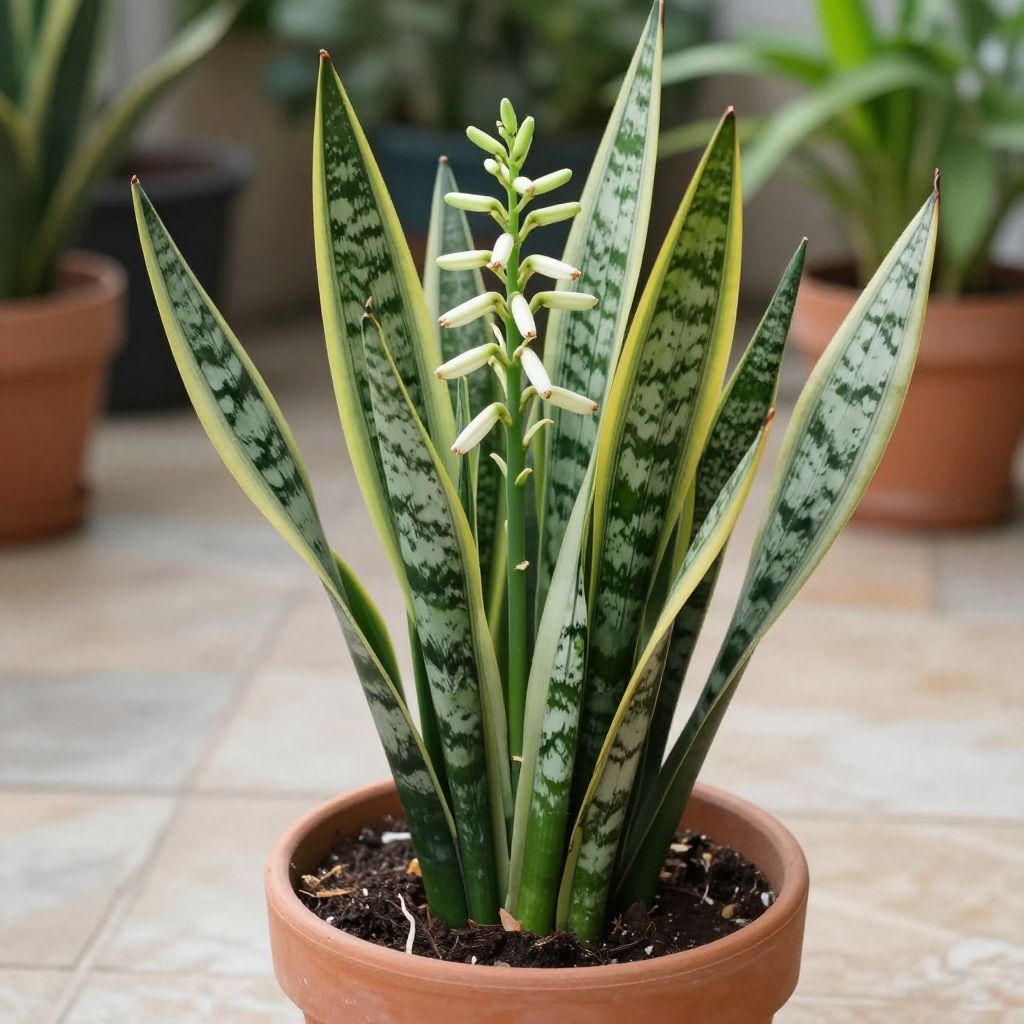
Do snake plants bloom? Yes, they can—but it’s not something most indoor gardeners see often. Snake plants, now commonly placed in the genus Dracaena, usually bloom only when they’re mature and growing under the right conditions.
When they do flower, the blooms are a bonus, not a sign you’ve done something wrong. In fact, a healthy snake plant may flower after a period of steady growth, good light, and a little root crowding.
Do snake plants bloom?
Snake plants can bloom, but flowering is uncommon indoors. Mature plants may send up a tall stalk with small, pale, fragrant flowers when they receive bright light, are slightly rootbound, and grow steadily. Blooming is more likely on established plants than on young ones, and it does not happen on a fixed schedule.
What snake plant flowers look and smell like
Snake plant blooms appear on a long, slender flower stalk that rises from the center or side of the plant. The flowers are usually small, tubular, greenish-white, cream, or pale yellow.
Many gardeners are surprised by the scent. The flowers can be lightly sweet and noticeable, especially in the evening or at night. Some people enjoy the fragrance, while others find it strong in a small room.
What to expect if your plant blooms
- A tall stalk may emerge quickly, sometimes reaching well above the leaves.
- Flowers usually open in clusters along the stalk.
- Blooming may last for days or several weeks.
- The flowers may produce sticky nectar, so place the plant where that won’t be a problem.
Why snake plants bloom in the first place
Flowering is a maturity and stress-response event, not a routine part of care. A snake plant often blooms when it feels established and stable, especially if it has bright light, warm temperatures, and a somewhat snug pot.
That does not mean the plant must be neglected to bloom. It simply means snake plants often flower when conditions are close to their preferred growing range and the plant has enough energy stored to reproduce.
Common bloom triggers
- Maturity: older, larger plants are more likely to flower.
- Bright light: especially bright indirect light or some gentle direct sun.
- Root crowding: a slightly tight pot can encourage blooming.
- Consistent care: steady watering and healthy growth matter more than frequent feeding.
- Seasonal change: blooms are more likely during active growth periods in warm months.
How to encourage a snake plant to bloom
You can’t force a snake plant to flower on command, but you can create conditions that make blooming more likely. Focus on light, drainage, and overall plant health rather than trying to “stress” the plant.
1. Give it brighter light
Snake plants tolerate low light, but low light rarely supports flowering. Place the plant in bright, indirect light near a window, or give it a few hours of gentle morning sun if your climate and window exposure allow it.
If the leaves are stretching, leaning, or losing color, the plant probably needs more light. Rotate the pot every couple of weeks so growth stays even.
2. Keep the pot slightly snug
Snake plants often bloom when they are a bit rootbound. If the roots are packed tightly and the plant is otherwise healthy, it may be better to leave it alone for a while rather than repotting immediately.
That said, if the pot is cracked, the roots are circling heavily, or water runs straight through without being absorbed, it may be time for a larger container.
3. Use fast-draining soil
Good drainage is essential. Snake plants do best in a gritty, well-aerated mix that dries between waterings. A cactus or succulent mix is usually a good starting point, and you can improve it with extra perlite, pumice, or coarse sand if needed.
A heavy, moisture-holding potting mix can keep roots too wet and reduce the plant’s vigor. Healthy roots are more important than frequent watering.
4. Water only when the soil dries
Overwatering is one of the biggest reasons snake plants struggle. Let the potting mix dry out before watering again, and check the soil with your finger or a moisture meter rather than following a calendar.
In brighter, warmer conditions, plants may dry faster. In winter or low light, they usually need less water. Always adjust to your home’s temperature, humidity, and light levels.
5. Avoid overfertilizing
Snake plants do not need heavy feeding. Too much fertilizer can create weak, soft growth and may do more harm than good. A light feeding during active growth is usually enough if the plant is in a healthy potting mix.
If your plant is already thriving, focus first on light and drainage. Those factors matter more for flowering than pushing fertilizer.
Indoor vs. outdoor snake plants
Snake plants grown outdoors in warm climates may bloom more readily than indoor plants because they often receive stronger light and more natural seasonal cues. Indoors, flowering is still possible, but it usually takes patience and the right placement.
Indoor growing tips
- Place the plant near the brightest suitable window.
- Keep it away from cold drafts and heating vents.
- Use a pot with drainage holes.
- Wipe dust from the leaves so they can capture more light.
Outdoor growing tips
- Protect the plant from heavy rain and waterlogged soil.
- Give it bright shade or filtered sun in hot climates.
- Bring it indoors if temperatures drop below what your plant can tolerate.
- Watch for sun scorch if moving it suddenly into stronger light.
Should you cut off the flower stalk?
You can leave the flower stalk in place if you enjoy the blooms and fragrance. The plant will usually continue growing normally while flowering, though it may slow down a little during the bloom period.
If the stalk starts to dry out after flowering, you can cut it back at the base with clean pruners or scissors. Remove only the spent stalk, not healthy leaves.
When to remove the stalk
- After the flowers fade and the stalk turns brown or dry.
- If the scent is too strong for the room.
- If the stalk becomes floppy or unattractive.
Common reasons snake plants do not bloom
Many healthy snake plants never flower indoors, and that is normal. Lack of blooms does not mean the plant is failing. It usually means the plant is still too young, not getting enough light, or growing in conditions that favor survival over flowering.
Typical bloom blockers
- Insufficient light: the most common reason.
- Young plant: immature plants usually do not flower.
- Overpotting: too much soil can hold excess moisture.
- Frequent repotting: the plant may stay in growth mode instead of settling in.
- Overwatering: weak roots cannot support flowering well.
If your snake plant looks healthy but never blooms, it may simply be doing exactly what many snake plants do: growing leaves instead of flowers.
Care tips that support healthy growth and future blooms
Blooming starts with a strong plant. If you want the best chance of flowers, keep the plant vigorous without babying it too much.
Basic care checklist
- Use a pot with drainage holes.
- Plant in a fast-draining succulent mix.
- Place it in bright light, not deep shade.
- Water only after the soil dries out.
- Repot only when needed, not on a fixed schedule.
- Inspect leaves and soil regularly for pests or rot.
Pruning and cleanup
Snake plants need very little pruning. Remove damaged leaves at the base with a clean blade if they are yellowing, mushy, or badly bent. Do not trim healthy leaf tips just to shape the plant; that won’t encourage blooming.
Pests and diseases to watch for
- Mealybugs: white cottony insects in leaf joints.
- Spider mites: fine webbing and speckled leaves in dry indoor air.
- Root rot: soft, smelly roots from too much moisture.
If you see pests, isolate the plant and treat early. If you suspect root rot, remove the plant from the pot, trim damaged roots, and repot in fresh, dry, well-draining mix.
Propagation and blooming: what to know
Snake plants can be propagated from leaf cuttings, division, or offsets, but newly propagated plants usually need time before they are mature enough to bloom. Division is often the best method if you want to keep a strong parent plant and maintain its growth momentum.
Leaf-cutting propagation is useful for making new plants, but keep in mind that variegated types may not always produce identical offspring from leaf cuttings. If flowering is your goal, focus on growing a mature, established plant rather than starting over repeatedly.
Frequently asked questions about snake plant flowers
Are snake plant flowers rare?
They are uncommon indoors, but not rare in the sense of being impossible. Many gardeners simply never see them because the plant needs maturity and good light.
Do snake plants die after blooming?
No. Snake plants do not die after flowering. They usually keep growing, though the bloom can take a little energy from the plant.
Should I repot a snake plant to make it bloom?
Usually no. A slightly rootbound plant is often more likely to flower than one that has just been moved into a much larger pot.
Can low-light snake plants bloom?
It is much less likely. Low light may keep the plant alive, but brighter light is usually needed for flowering.
Conclusion: what to do if you want your snake plant to bloom
If you’ve been wondering, “Do snake plants bloom?” the answer is yes—but only when the plant is mature and growing in the right conditions. Give yours bright light, excellent drainage, and careful watering, then be patient.
If you want to keep learning about easy houseplant care, look for more guidance on snake plant care basics and choosing the right succulent soil mix.