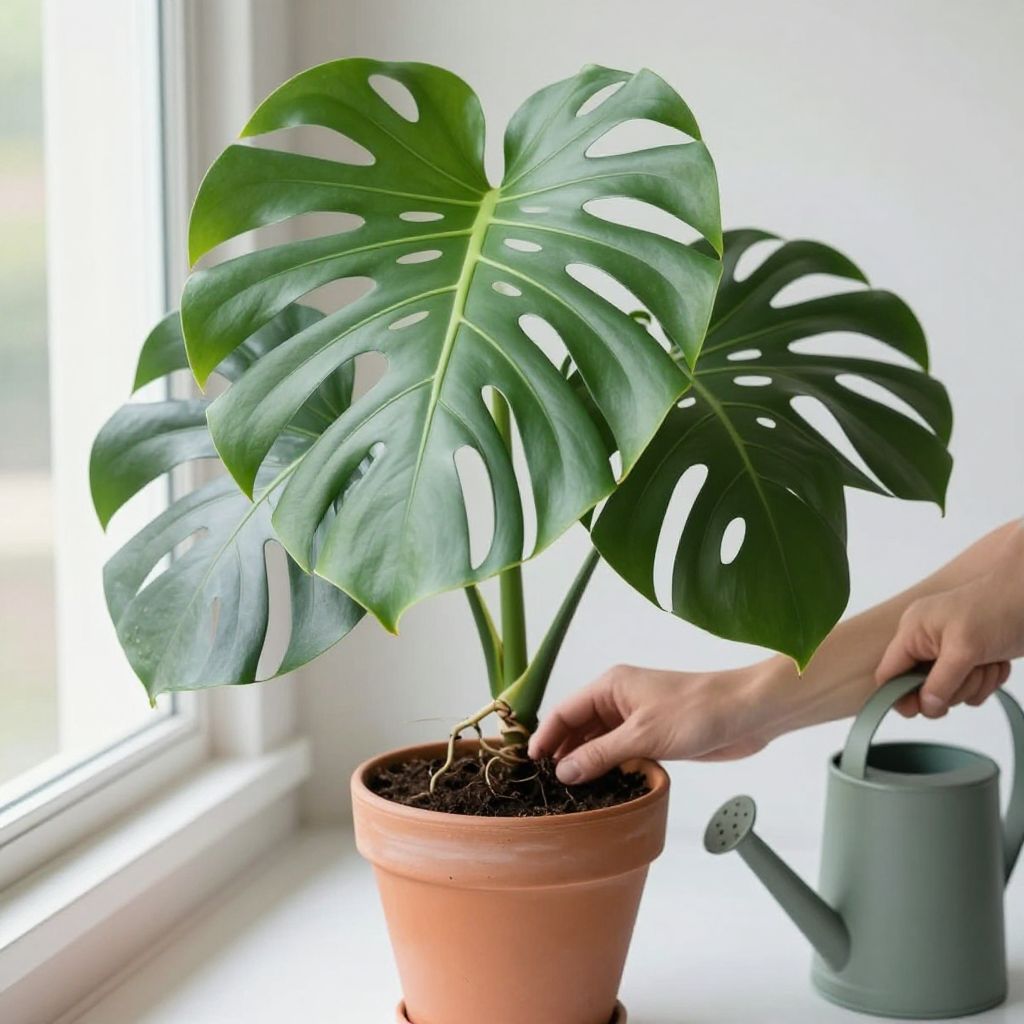
When should you water a monstera? The short answer is: water when the top layer of soil has dried, not on a fixed calendar. Monsteras grow best with evenly moist, well-drained soil, but they dislike staying wet for long, especially in cooler months or low light.
The right timing changes with season, pot size, light levels, temperature, and whether your plant is indoors or outdoors. If you learn how to read the soil and the plant itself, you can avoid the two biggest problems: underwatering and root rot.
When To Water Monstera?
Water a monstera when the top 1 to 2 inches of potting mix feel dry, or when the pot feels noticeably lighter than it did after watering. In bright, warm conditions this may be weekly; in winter or low light it may be every 2 to 4 weeks. Always adjust to the plant, not the calendar.
How to tell if your monstera needs water
Soil feel is the most reliable guide. Insert a finger into the potting mix near the edge of the pot; if the top layer is dry but the soil below is still slightly moist, you can usually wait a little longer. If the potting mix is dry deeper down, it is time to water.
Useful signs your monstera is thirsty
- The top 1 to 2 inches of soil are dry.
- The pot feels lighter than usual when lifted.
- Leaves look a little less firm or start to droop slightly.
- New growth slows during warm, bright weather because the plant is drying faster.
Signs you may be watering too often
- Soil stays wet for many days after watering.
- Lower leaves yellow and feel soft.
- The plant looks droopy even though the soil is damp.
- You notice a sour smell from the potting mix.
Important: drooping can mean either too little water or too much. Check the soil before you water again.
Seasonal watering guide for monstera
Monsteras do not follow a strict schedule through the year. Their water use changes with light, temperature, humidity, and growth rate, so seasonal adjustment matters more than a set weekly routine.
Spring and summer
During active growth, monsteras usually drink more. Warm temperatures, longer days, and stronger light dry the potting mix faster, especially in a porous pot or a smaller container.
- Check the soil more often, sometimes every 3 to 5 days for smaller pots.
- Water thoroughly when the top layer dries.
- Make sure excess water drains away completely.
Fall and winter
Growth usually slows in cooler, darker months, so the plant uses less water. Overwatering is more common at this time because the soil dries slowly and roots stay wet longer.
- Check before watering; do not assume the plant needs water on the same schedule as summer.
- Let the top layer dry a bit more between waterings.
- Reduce watering if the room is cool or the plant is near a window with less light.
Indoor vs. outdoor monstera
Indoor monsteras are usually grown as houseplants, and their watering needs depend on room conditions. Outdoor monsteras, where climate allows, dry faster in wind, heat, and direct sun, but they can also be exposed to heavy rain that keeps the soil too wet.
- Indoors: expect slower drying in winter and faster drying near bright windows or vents.
- Outdoors: check after rain and during hot spells, and make sure the root zone drains freely.
The best soil and pot setup for watering success
Watering is much easier when the potting mix and container support healthy drainage. Monsteras prefer an airy, chunky mix that holds some moisture but never becomes soggy for long.
What kind of potting mix works best?
A good monstera mix should drain quickly while still retaining enough moisture for roots to absorb. Many gardeners use a houseplant mix amended with bark, perlite, or similar materials to improve airflow.
- Use a potting mix that drains well, not heavy garden soil.
- Choose a container with drainage holes.
- Empty saucers after watering so roots do not sit in runoff.
Why pot size matters
Large pots hold more moisture for longer, which can be helpful for established plants but risky for small root systems. A pot that is too large can keep the center of the mix wet for days, increasing the chance of root rot.
- Repot only when roots are filling the container or the mix breaks down.
- Use a pot only slightly larger than the root ball when repotting.
How to water a monstera correctly
When it is time to water, do it deeply so the entire root zone gets moisture. Shallow watering encourages roots near the surface and can leave the lower root ball dry.
- Check that the pot has drainage holes.
- Water slowly around the base of the plant.
- Continue until water runs out of the bottom.
- Let the pot drain fully before returning it to a cachepot or saucer.
- Discard any standing water after 10 to 15 minutes.
If the potting mix has become very dry and pulled away from the sides, water slowly in stages so the mix can absorb moisture evenly. In very dry pots, a second pass a few minutes later often works better than one heavy pour.
How often should you check moisture?
Checking is more useful than guessing. In active growth, many monsteras need a moisture check every few days. In winter, once a week may be enough, but this depends on your home or garden conditions.
- Bright light: check more often because the plant dries faster.
- Low light: check less often because the soil stays wet longer.
- Warm rooms: soil dries faster.
- Cool rooms: soil dries slower.
- Humidity: high humidity can slow drying a little, but it does not replace proper watering.
Common watering mistakes to avoid
Most monstera problems come from watering habits that ignore the plant’s actual conditions. A careful routine prevents stress and keeps the roots healthy.
Watering on a fixed schedule
Weekly watering may work for one plant and fail for another. Pot size, light, temperature, and seasonal growth all change how quickly the soil dries.
Keeping the mix constantly damp
Monsteras like moisture, but they do not want wet feet. Constantly damp soil can suffocate roots and invite rot.
Letting the pot sit in runoff
Standing water in a saucer or cachepot can keep the bottom of the root ball soggy. Always empty excess water after the pot drains.
Using a pot without drainage
Decorative pots without holes make it difficult to judge moisture and easy to overwater. If you use one, keep the plant in a nursery pot inside it and remove it for watering.
Troubleshooting: what if your monstera looks unhappy?
If your plant is struggling, check the roots, soil, and light before changing everything at once. Many symptoms overlap, so the cause is not always obvious from the leaves alone.
Yellow leaves
Yellowing lower leaves often point to overwatering, especially if the soil stays wet. If the soil is dry and the plant is otherwise healthy, an older leaf may simply be aging out.
Brown, crispy edges
This can happen when the plant dries out too much, but it can also be caused by very low humidity or mineral buildup from water. Check soil moisture first, then review your watering pattern.
Soft stems or a musty smell
These are warning signs of root rot or chronically wet soil. Stop watering, improve drainage, and inspect roots if the problem is advanced.
Slow growth
Monsteras grow more slowly in low light and cool conditions, so they also use less water. Do not force growth with extra watering; instead, improve light and keep the soil evenly but lightly moist.
Practical watering tips for healthier growth
Good watering habits work best when paired with the right growing conditions. Monsteras prefer bright, indirect light, warm temperatures, and a potting mix that never stays saturated for long.
- Place the plant near bright, filtered light for steadier growth.
- Rotate the pot occasionally so all sides receive even light.
- Use room-temperature water when possible.
- Wipe dust from leaves so the plant can photosynthesize efficiently.
- Fertilize lightly only during active growth, and never use fertilizer to “fix” watering problems.
When to repot or adjust watering habits
If your monstera dries out too quickly or stays wet too long, the pot or mix may be part of the problem. Roots that fill the container can make the plant dry faster, while old, compacted mix can hold too much water.
- Repot when roots circle the pot or emerge from drainage holes.
- Refresh old, compacted mix if water pools on the surface or drains too slowly.
- Adjust watering after repotting, because fresh mix often dries differently than old mix.
Conclusion
To know when to water monstera, check the soil instead of following a strict schedule. Water when the top 1 to 2 inches are dry, then let excess water drain completely. If you want your plant to stay healthy, make one change today: test the soil before every watering for the next few weeks and note how quickly it dries in your home.
For more practical houseplant care, you may also want to read about houseplant soil basics and how to repot indoor plants.