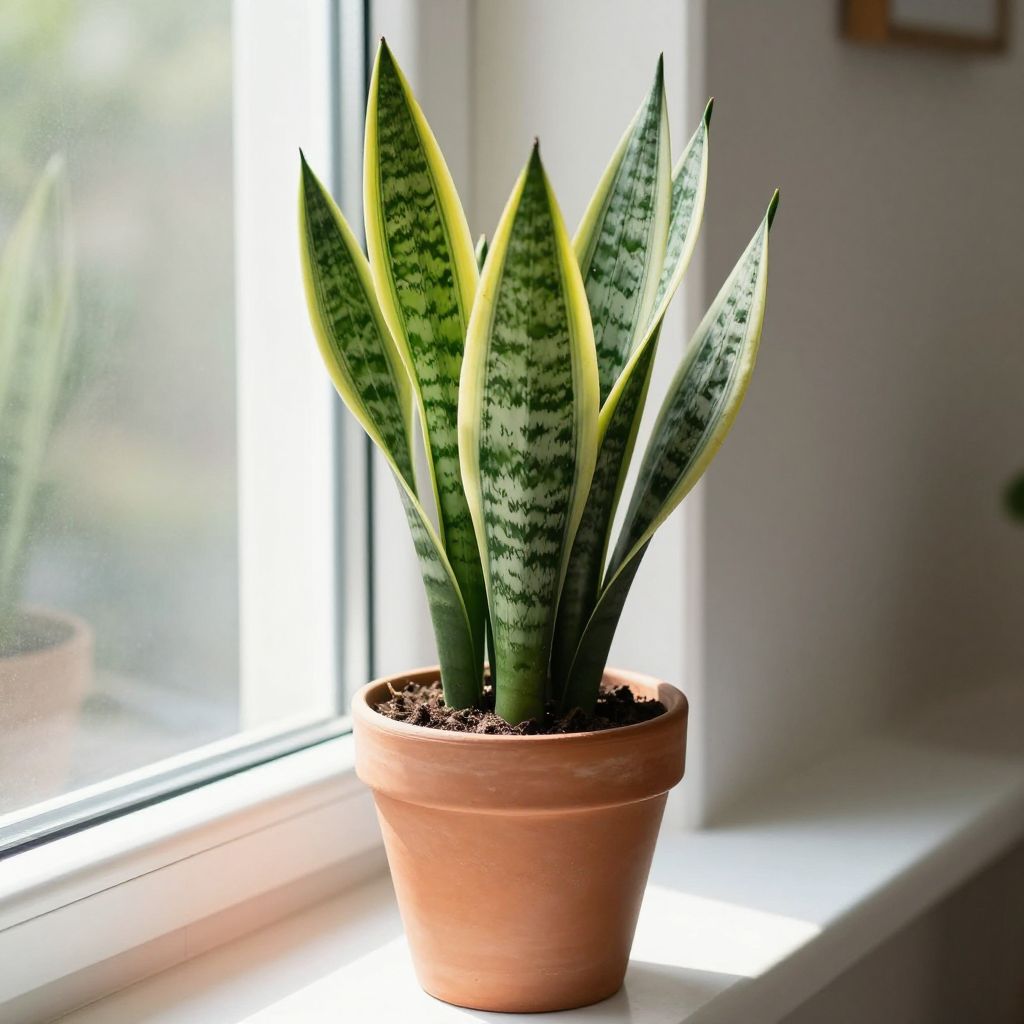
Does snake plant need sunlight? Yes, but it is one of the most forgiving houseplants when it comes to light. Snake plant, or Dracaena trifasciata (formerly Sansevieria trifasciata), grows best in bright, indirect light, but it can also tolerate lower-light rooms better than many indoor plants.
The key is balance: too little light slows growth and can weaken the plant, while too much direct sun can scorch the leaves. If you match the light level to the plant’s location and adjust watering accordingly, snake plant is easy to keep healthy.
Does snake plant need sunlight?
Snake plant does not need intense direct sunlight, but it does need some light to stay healthy. It grows best in bright, indirect light, yet it can survive in low to moderate light. In very dim spaces, growth slows and the plant may become stretched, pale, or weak.
How much light is best for snake plant?
Snake plant performs best in bright, indirect light for several hours a day. An east-facing window, a few feet back from a south- or west-facing window, or a bright room with filtered light usually works well. It can also adapt to lower light, but it will grow more slowly.
Best indoor light conditions
- Bright indirect light: Ideal for steady growth and strong leaf color.
- Medium light: Acceptable if you want a low-maintenance plant that grows slowly.
- Low light: Survives, but may need less water and will produce fewer new leaves.
Signs the light is too low
- Leaves lean toward the window
- New growth is thin or sparse
- Leaf color fades
- The plant stays the same size for long periods
Signs the light is too strong
- Yellow or bleached patches on leaves
- Brown, crispy tips or edges
- Leaves look dry and damaged on the sun-facing side
Can snake plant grow in low light?
Yes, snake plant can grow in low light better than many houseplants, which is why it is often recommended for offices, hallways, and rooms without much sun. However, “tolerates low light” does not mean “thrives in darkness.” If a room is very dim, the plant may survive but not grow well.
If you place snake plant in a low-light area, keep expectations realistic. You may see only occasional new leaves, and watering should be reduced because the soil dries more slowly when the plant is not actively growing.
Can snake plant take direct sun?
Snake plant can handle some direct sun, especially gentle morning sun, but harsh afternoon sun through a hot window can damage the leaves. Outdoors, it usually does best in partial shade or dappled light unless it has been gradually acclimated to stronger sun.
How to introduce more sun safely
- Move the plant into brighter light gradually over 1 to 2 weeks.
- Start with short periods of direct morning sun.
- Watch for yellowing, bleaching, or crispy patches.
- If damage appears, shift it back to filtered light.
Acclimation matters. A snake plant moved suddenly from a dim room to a sunny windowsill can scorch even though the plant is generally tough.
Indoor vs. outdoor light needs
Snake plant is most commonly grown indoors, where light is usually filtered through windows. Outdoors, it needs protection from intense midday sun in hot climates and from cold, wet conditions in cooler regions. If you grow it outside in a pot, treat it like a container plant that can be moved as the seasons change.
Indoor placement tips
- Place near a bright window with filtered light.
- Rotate the pot every few weeks so growth stays even.
- Avoid pressing the leaves against hot glass.
Outdoor placement tips
- Use bright shade or morning sun with afternoon shade.
- Protect from heavy rain if the soil stays wet too long.
- Bring the plant indoors before cold weather if your climate is chilly.
How light affects watering and growth
Light and water go together for snake plant care. In brighter light, the plant uses water faster and may need watering a little more often. In low light, the soil stays moist longer, so overwatering becomes a bigger risk. Most snake plant problems come from giving too much water to a plant that is already receiving too little light.
Match watering to light level
- Bright light: Check the soil more often because it may dry faster.
- Medium light: Let the pot dry well before watering again.
- Low light: Water sparingly and only when the soil is thoroughly dry.
Always check the potting mix rather than watering on a fixed schedule. Insert a finger or a wooden skewer into the soil; if it comes out dry and the pot feels light, it is usually time to water.
Soil, drainage, and pot choice
Snake plant needs fast-draining soil more than it needs rich soil. A loose potting mix helps prevent root rot, especially when the plant lives in lower light and dries slowly. A pot with drainage holes is one of the simplest ways to keep the plant healthy.
What to use
- A cactus or succulent potting mix
- Regular potting soil amended with perlite or pumice
- A container with drainage holes
What to avoid
- Heavy, compacted soil that stays wet
- Decorative pots without drainage unless you are very careful
- Oversized pots that hold too much moisture
If your snake plant is in a dim room, drainage becomes even more important because slow evaporation can keep the roots wet for too long.
Common problems caused by poor light
When snake plant is not getting the right amount of sunlight, the symptoms usually show slowly. The plant may not die quickly, but it can become weak, unattractive, and more prone to rot or pest issues.
Leggy or leaning growth
This usually means the plant is reaching for more light. Move it closer to a brighter window and rotate it regularly.
Soft, yellowing leaves
Yellow leaves can happen for several reasons, but in low light they often point to overwatering. Let the soil dry out fully and improve the light if possible.
Brown, crispy patches
These are often signs of too much direct sun, especially on plants that were not acclimated. Move the plant to filtered light and remove badly damaged leaves if needed.
Practical care tips for healthy growth
Snake plant is low-maintenance, but a few habits make a big difference. Good light, careful watering, and a breathable potting mix will do more for the plant than frequent feeding or constant attention.
- Give it bright, indirect light whenever possible.
- Turn the pot occasionally for even growth.
- Water only after the soil has dried out thoroughly.
- Use a pot with drainage holes.
- Keep it away from cold drafts and wet corners.
Fertilizer note
Snake plant does not need heavy feeding. If you choose to fertilize, do so lightly during active growth and avoid overfeeding, especially in low light. Too much fertilizer can stress the roots and worsen weak growth.
Propagation and light
If you propagate snake plant by division or leaf cuttings, light still matters. New divisions and cuttings root best in bright, indirect light, where they can grow without being scorched or kept too wet.
For leaf cuttings, patience is important. Keep the pot in a warm, bright spot and water lightly until roots form. Too much sun can dry out cuttings before they establish, while too little light can slow rooting.
Pests and diseases linked to poor growing conditions
Snake plant is usually pest-resistant, but weak plants can attract mealybugs or spider mites. Poor light combined with wet soil can also lead to root rot, which is one of the most serious problems for this plant.
How to prevent trouble
- Inspect leaves and leaf bases regularly.
- Wipe dust from leaves so they can absorb light efficiently.
- Remove soggy soil and repot if roots smell rotten or appear mushy.
- Isolate new plants for a short time before placing them near others.
Simple answer: what should you do?
If you are wondering, “Does snake plant need sunlight?” the best answer is: it needs light, but not much direct sun. Place it in bright, indirect light for best growth, or in lower light if that is what your space offers, then water less often and watch for signs of stress.
Start by checking your plant’s current location today. If it is stretching, fading, or leaning, move it a little closer to better light; if it has brown scorch marks, give it softer light and let the soil dry fully before watering again. For more indoor plant care guidance, you may also want to read about how to choose the right potting mix for houseplants and simple ways to tell when a houseplant needs water.