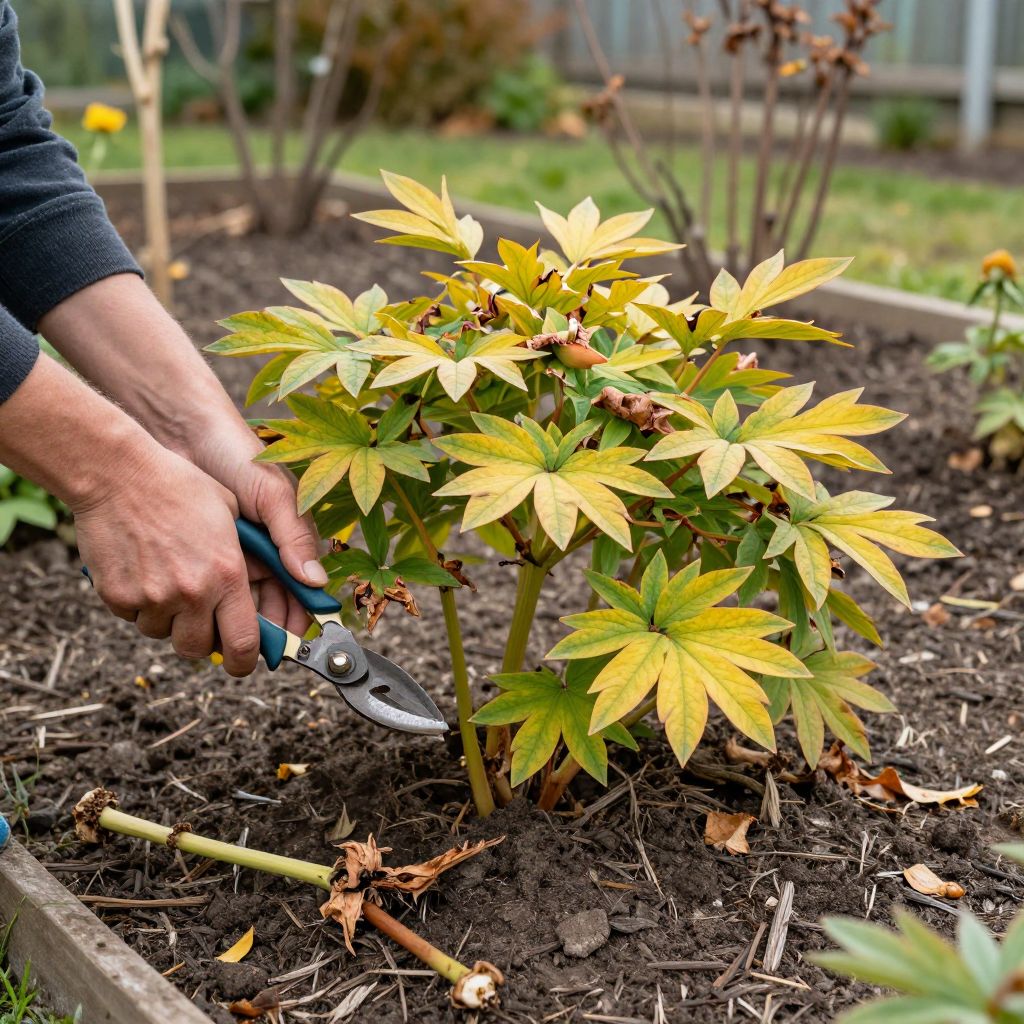
Wondering when to cut peonies without ruining next year’s blooms? The answer depends on which “cut” you mean: deadheading spent flowers, cutting stems for a vase, or cutting the plant back in fall. Each job has its own best timing, and getting it right helps peonies bloom strongly year after year.
Peonies are long-lived perennials, and most of their energy for next season is stored in the foliage and roots after flowering. If you cut too much too early, you can reduce bloom performance. If you wait for the right stage, you’ll keep the plant healthy and get the best flowers and garden display.
When To Cut Peonies?
Cut peonies after the blooms fade if you’re deadheading, but leave the foliage in place until fall. For cut flowers, harvest buds when they feel like soft marshmallows and the outer petals are just starting to loosen. Cut the plant to the ground only after frost has blackened the leaves, usually in autumn.
What “Cutting” Means for Peonies
Gardeners use “cut peonies” in three different ways, and the timing is not the same for each.
1. Deadheading spent blooms
This means removing faded flowers after they finish blooming. It keeps the plant tidy and prevents it from putting energy into seed production.
2. Cutting peonies for bouquets
This means harvesting stems for indoor arrangements. The best stage is earlier than full bloom, when buds are colored and ready to open indoors.
3. Cutting back peony foliage
This is the end-of-season cleanup. You should wait until fall, when the leaves naturally decline after frost.
Best Time to Deadhead Peonies
Deadhead peonies as soon as the flowers start to fade and petals drop. Snip off the spent bloom just above the first full set of healthy leaves. This keeps the plant looking neat and helps direct energy back into root and crown growth instead of seed formation.
Deadheading is especially useful on herbaceous peonies, which bloom once each spring and then spend the rest of the season building reserves. It does not usually trigger a second bloom, but it does help the plant stay vigorous.
How to deadhead correctly
- Wait until the bloom is fully finished and petals are browning or falling.
- Use clean, sharp pruners or scissors.
- Cut the flower stem back to just above a healthy leaf node or leaf set.
- Remove fallen petals from the soil if they are sticking and rotting.
Do not cut the whole stem down to the ground after flowering. The leaves below the bloom are still feeding the plant.
When to Cut Peonies for a Vase
The best time to cut peonies for arrangements is in the cool part of the day, usually early morning, when buds are firm but showing color. A good stage is when the bud feels like a soft marshmallow and the outer petals have begun to loosen. If you cut too early, some buds may not open well indoors.
Signs a peony stem is ready
- The bud is fully colored.
- The bud feels soft, not rock-hard.
- The outer petals are starting to separate.
- The stem is strong and upright.
How to cut peonies for flowers
- Choose stems with buds at the right stage, not fully open blooms unless you want immediate display.
- Use sharp, clean pruners or a knife.
- Cut stems at an angle to improve water uptake.
- Leave enough foliage on the plant so it can keep photosynthesizing.
- Place stems immediately in clean water.
If you want blooms to open more slowly, cut tighter buds. If you want a more immediate bouquet, choose buds that are already showing more color and slight petal movement.
When to Cut Peonies Back in Fall
Cut peonies back only after the foliage has turned yellow, brown, or blackened from frost. In many climates this happens in autumn, after the plant has finished storing energy for the next year. Cutting too early can weaken the plant because the leaves are still feeding the roots.
For herbaceous peonies, cut stems down to just above ground level once the foliage has died back naturally. For tree peonies, do not cut them to the ground; they are woody shrubs and need a different pruning approach.
Why fall timing matters
- The leaves help recharge the root system after blooming.
- Early cutting can reduce next year’s flower display.
- Waiting for frost helps the plant finish its seasonal cycle.
How to Cut Back Herbaceous Peonies
Herbaceous peonies die back to the ground each year. Once the foliage is clearly declining in fall, cut all stems down to 1 to 2 inches above the soil line. Remove the cut foliage from the bed rather than composting it if you suspect disease.
This cleanup helps reduce overwintering pests and fungal problems, especially in damp gardens where leaves can stay wet for long periods.
Tools you’ll need
- Clean bypass pruners or garden scissors
- Gloves, since some stems can be stiff
- A bucket or tarp for collecting debris
What About Tree Peonies?
Tree peonies are woody shrubs, so they should not be cut back like herbaceous peonies. They bloom on old wood, and heavy pruning can remove flower buds for the next season. If you need to shape them, do only light pruning after flowering or remove dead or damaged stems in late winter or early spring.
If you are unsure whether your plant is herbaceous or tree peony, look at the stems: herbaceous peonies die back completely each year, while tree peonies keep woody stems above ground.
Seasonal Timing by Climate
Peony timing shifts with your local weather, so use the plant’s stage of growth rather than the calendar alone. In colder regions, foliage may collapse quickly after the first hard frost. In milder areas, leaves may linger longer into fall.
Use these seasonal cues instead of a fixed date
- After bloom: deadhead spent flowers.
- Late spring to early summer: harvest cut flowers when buds are colored and soft.
- Fall after frost: cut herbaceous peonies to the ground.
If your peonies are in a warm climate and the leaves stay green longer, wait until natural decline begins. If disease is present, you may need to clean up earlier, but avoid removing healthy green foliage unless absolutely necessary.
Common Mistakes to Avoid
Most peony cutting problems come from cutting too soon or cutting too much foliage too early. A few simple habits will protect next year’s bloom cycle.
- Don’t cut green stems back right after flowering. The leaves are still working for the plant.
- Don’t remove all foliage for a tidy look in summer. That can weaken the crown.
- Don’t use dirty tools. Clean pruners help prevent spreading disease.
- Don’t leave diseased leaves on the soil. Remove them from the garden.
- Don’t prune tree peonies hard to the ground. They bloom on woody stems.
Peony Care After Cutting
After deadheading or cutting flowers, keep the plant growing well through the rest of the season. Healthy foliage is the key to strong blooms next year.
Good follow-up care
- Water deeply during dry spells, especially for newly planted peonies.
- Keep the soil evenly moist, not soggy.
- Mulch lightly if needed, but keep mulch away from the crown.
- Allow full sun where possible, since peonies bloom best with plenty of light.
- Avoid crowding from nearby plants that block airflow.
Peonies prefer well-drained soil. If your bed stays wet, the roots and crown can struggle, and cutting back won’t solve the real problem. Improving drainage and airflow is often more helpful than extra pruning.
Troubleshooting Poor Blooming After Cutting
If your peonies bloom poorly the year after you cut them, the issue is often timing or growing conditions rather than the cut itself.
Possible causes
- Cutting foliage too early reduced energy storage.
- Too much shade limited flower bud formation.
- Poor drainage stressed the roots.
- Planting too deep can reduce flowering in herbaceous peonies.
- Overcrowding reduced airflow and vigor.
If flowering declines, check sun exposure, soil drainage, and planting depth before assuming the peony needs more pruning. Mature peonies often need patience more than intervention.
Simple Rule to Remember
Deadhead after blooms fade, cut flowers when buds are soft and colored, and cut herbaceous peonies to the ground only after frost in fall. If you follow that rhythm, you’ll protect the plant’s energy and keep it blooming well for years.
For more practical seasonal guidance, you may also want to read about how to divide peonies and the best time to plant peonies if you are planning to expand your bed or move an established clump.