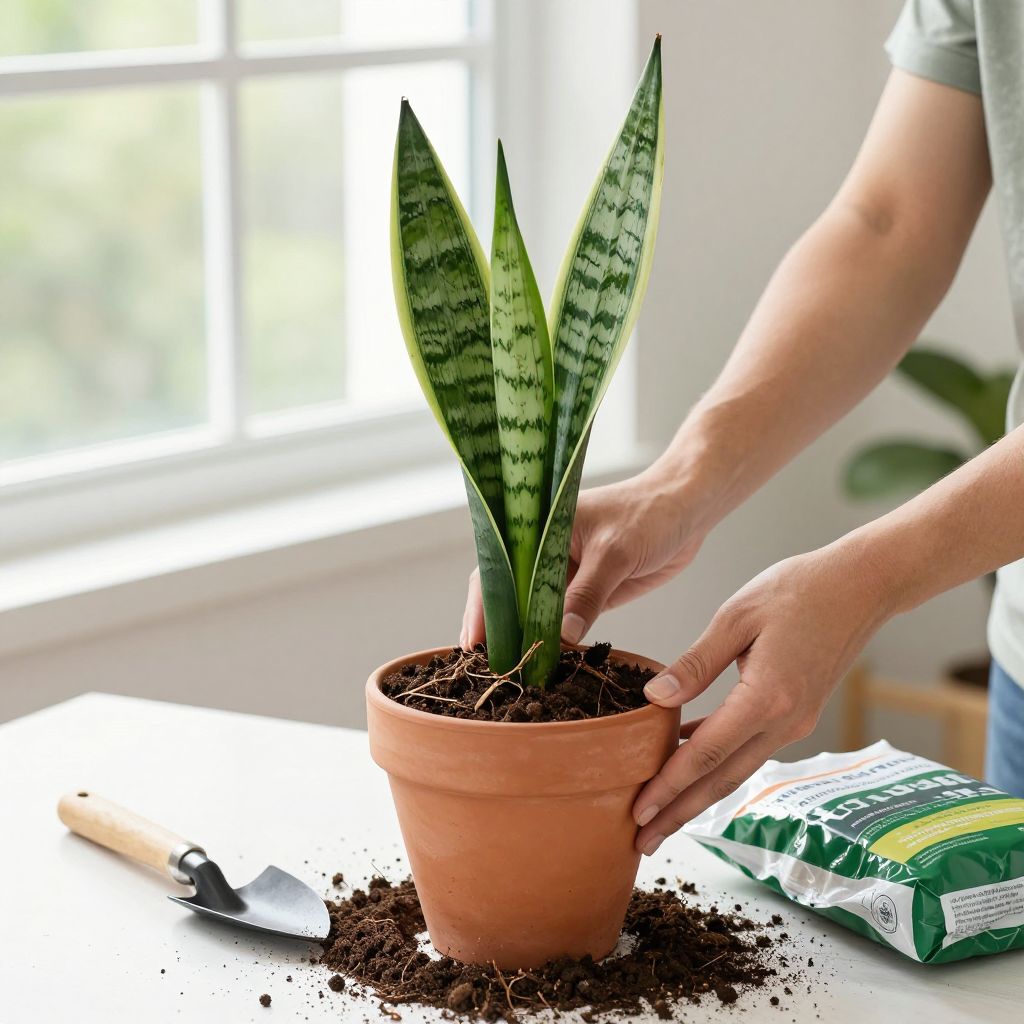
Wondering when to repot snake plant? The best time is usually in spring or early summer, when the plant is actively growing and can recover quickly from root disturbance. Repot sooner if roots are crowding the pot, soil stays wet too long, or the container is cracking or tipping.
Snake plants (Dracaena trifasciata, formerly Sansevieria) are slow growers, so they do not need frequent repotting. In fact, repotting too often can stress them. The goal is to move them only when they truly need more space, fresher mix, or better drainage.
When to repot snake plant?
Repot a snake plant in spring through early summer if possible, because warmer temperatures and brighter light support faster root recovery. Repot any time of year only if the plant is clearly rootbound, the pot is damaged, or the soil is staying soggy and causing decline.
Signs your snake plant needs repotting
Snake plants usually tell you when they need a new pot. Look for a combination of these signs rather than just one.
- Roots are circling the pot or pushing out of drainage holes.
- The plant is lifting itself up, splitting the pot, or tipping over.
- Water runs straight through because the root ball is packed tight.
- The mix stays wet for many days after watering.
- Leaves look crowded, and new growth has slowed noticeably.
- The pot is cracked, warped, or too small to stay stable.
A snake plant does not need repotting just because it looks full. Many actually prefer a slightly snug container, so only move it when there is a clear reason.
How to tell rootbound from healthy and happy
A mildly rootbound snake plant may still look great. If the leaves are firm, upright, and the plant dries out in a reasonable time, you may be able to wait until the next warm season. If roots are packed so tightly that water cannot soak in, it is time.
Best season for repotting snake plant indoors
For indoor plants, late spring is often ideal. Day length is increasing, light is stronger, and temperatures are usually more stable. That combination helps the plant settle into fresh soil with less risk of rot.
Why spring is better than winter
In winter, snake plants grow slowly and use less water. Freshly disturbed roots can sit in cool, damp soil too long, which raises the risk of rot. If you must repot in winter, keep the mix slightly on the dry side and avoid overwatering afterward.
What about summer and fall?
Early summer can still work well, especially indoors with bright light. Fall repotting is less ideal because growth begins to slow, but it can be done if the plant is failing in its current pot. Avoid repotting during cold drafts or when the plant is already stressed.
When to repot snake plant outdoors
If you grow snake plant outdoors in a warm climate or move it outside for summer, repot during mild, frost-free weather. Choose a period when nights are warm and the plant has several weeks of active growth ahead.
Outdoor plants may dry faster in sun and wind, so check the root zone carefully before deciding. If the plant is in a decorative pot outdoors, make sure the container has drainage holes and is heavy enough to resist tipping.
How often should you repot a snake plant?
Most snake plants only need repotting every 2 to 5 years, and some can stay in the same pot even longer if they are healthy. Fast-growing plants, small pots, or crowded clumps may need attention sooner.
To avoid unnecessary disturbance, inspect the plant once a year in spring. If the root ball still has room and the soil drains well, you can leave it alone.
How to repot a snake plant step by step
Repotting is straightforward, but the details matter. Use a pot with drainage holes and a fast-draining mix so the roots do not sit in excess moisture.
- Choose a pot only 1 to 2 inches wider than the current one for most plants.
- Prepare a gritty, well-draining mix, such as cactus/succulent soil amended with perlite or pumice.
- Water lightly a day or two before repotting if the soil is bone dry, so the root ball is easier to remove.
- Slide the plant out and gently loosen only the outer roots if they are tightly circling.
- Trim away any black, mushy, or rotten roots with clean scissors.
- Set the plant at the same depth it was growing before.
- Backfill with fresh mix and firm it lightly, but do not pack it down hard.
- Wait a few days before watering if you cut roots or the plant was very dry.
Choosing the right pot size
Do not jump to a much larger pot. A pot that is too big holds excess moisture and can slow growth. Snake plants prefer a container that fits their root system closely, with just enough room to expand.
Best soil for snake plant repotting
Use a mix that drains quickly and still holds a little moisture. A good option is a commercial cactus/succulent mix improved with extra perlite, pumice, or coarse sand. Regular potting soil alone is often too dense for snake plants.
What to do after repotting
After repotting, place the plant in bright, indirect light and keep it out of harsh direct sun for a few days if it was recently disturbed. This helps reduce stress while roots re-establish.
- Do not fertilize immediately after repotting.
- Water sparingly until you see new growth or the mix dries out naturally.
- Check that the pot drains freely after the first watering.
- Rotate the plant occasionally so growth stays even.
If the leaves feel a little loose at first, that can be normal while the roots settle. The plant should firm up over time.
Common repotting mistakes to avoid
Most snake plant problems after repotting come from too much moisture, too much space, or too much handling. Avoid these common errors.
- Repotting into a pot without drainage.
- Using heavy garden soil or a dense indoor mix.
- Upsizing the pot too much.
- Watering on a fixed schedule instead of checking soil dryness.
- Burying the crown deeper than before.
- Repotting during cold, dark, or very humid conditions when the plant is already slow growing.
Troubleshooting after repotting
Some temporary stress is normal, but certain symptoms mean you should adjust care quickly.
Leaves are soft or yellowing
This often points to excess water or poor drainage. Let the mix dry more thoroughly, and make sure the pot is not sitting in a saucer of water.
Plant is leaning or falling over
The pot may be too large, or the roots may not be anchored yet. Use a smaller, heavier container next time, and pack the mix lightly around the root ball without compressing it.
No new growth after repotting
Snake plants grow slowly, so patience matters. If the plant looks healthy and the leaves stay firm, wait. New growth is more likely in brighter light and warmer months.
Can you divide a snake plant when repotting?
Yes, if the clump is large enough. Division is a practical way to make new plants and reduce crowding at the same time. Separate sections only if each division has roots and at least a few healthy leaves.
Use a clean knife or pruners, and let cut surfaces dry briefly before potting in fresh mix. Keep divided plants slightly drier than usual for the first couple of weeks.
Quick guide: should you repot now or wait?
- Repot now if roots are escaping, the pot is breaking, or the soil stays wet too long.
- Wait for spring if the plant is healthy but simply a bit crowded.
- Repot carefully in winter only if the plant is suffering from rot, severe rootbound conditions, or container failure.
Conclusion
The best answer to when to repot snake plant is simple: do it in spring or early summer whenever possible, and only when the plant truly needs it. Check the roots, choose a small step up in pot size, and use a fast-draining mix to keep the plant healthy long term. If you are unsure, inspect the root ball now and decide whether it can wait until the next warm season.
If you want to keep improving your indoor plant care, look for related guides on how to water succulents and snake plants correctly and choosing the best potting mix for houseplants.