Wondering when is the best time to seed your lawn? The short answer is usually when your grass can germinate quickly and grow steadily without extreme heat, cold, or drought stress. For most cool-season lawns, that means late summer to early fall. For warm-season lawns, late spring to early summer is often best.
Timing matters because seed needs warm soil, consistent moisture, and enough time to establish before weather turns harsh. The “best” window depends on your grass type, local climate, and whether you are starting a new lawn or overseeding an existing one.
When is the best time to seed your lawn?
For most lawns, seed when soil temperatures and weather favor steady germination: cool-season grasses do best in late summer to early fall, while warm-season grasses are usually seeded in late spring to early summer. Avoid seeding during peak heat, drought, or just before frost, when seedlings struggle to establish.
Know your grass type before you choose a date
The most important step is identifying whether your lawn is made of cool-season or warm-season grass. Their growth cycles are different, so the same calendar date can be ideal in one region and poor in another.
Cool-season grasses
These grasses grow best in cooler weather and are commonly seeded in northern and transition-zone lawns. Examples include Kentucky bluegrass, perennial ryegrass, tall fescue, and fine fescues.
Best seeding window: late summer through early fall, often about 6 to 8 weeks before your area’s first expected frost.
Why this works: soil is still warm enough for germination, air temperatures are cooler, weeds are less aggressive, and seedlings have time to establish before winter.
Warm-season grasses
These grasses prefer heat and active summer growth. Examples include bermudagrass, zoysiagrass, centipedegrass, and bahiagrass.
Best seeding window: late spring to early summer, after soil has warmed and frost risk has passed.
Why this works: seedlings need warm soil and long, sunny days to establish before fall cool-down.
Why fall is usually best for cool-season lawns
Fall offers one of the most reliable conditions for lawn seeding in many climates. The soil is still warm from summer, which speeds germination, but the air is cooler, so young grass loses less moisture.
- Less weed pressure: many summer annual weeds are fading.
- Better moisture retention: cooler weather reduces evaporation.
- Stronger root growth: seedlings can focus on roots instead of fighting heat stress.
- More time before summer: the lawn can mature before the next hot season.
If you seed too late in fall, seedlings may sprout but fail to develop enough roots before freezing weather. If you seed too early in late summer, heat and drought can dry out the surface too quickly.
When spring seeding makes sense
Spring can work, especially if you missed the fall window or need to repair bare spots after winter damage. It is often the second-best option for cool-season lawns and the main seeding season for warm-season lawns.
Spring seeding for cool-season lawns
Spring seeding can succeed, but it comes with trade-offs. Young grass may face weed competition, warming temperatures, and summer stress before it is fully established.
Use spring seeding when you need to:
- Repair winter-killed patches
- Overseed thin turf
- Start a lawn after construction or soil work
- Fix damage from pets, traffic, or disease
If you seed in spring, plan to water carefully and mow correctly so seedlings can mature before summer heat arrives.
Spring seeding for warm-season lawns
Warm-season grasses generally need spring warmth to germinate well. Wait until nights are consistently mild and the soil is warm enough for active growth. Seeding too early can lead to slow germination, rot, or poor establishment.
How to tell if the timing is right in your yard
Calendar dates are helpful, but your local conditions matter more. A good seeding window depends on soil temperature, rainfall, and how soon harsh weather is expected.
Useful signs to look for
- Soil is workable and moist, not waterlogged or baked hard.
- Daytime temperatures are moderate, not extreme.
- Night temperatures are cooling down for cool-season grass, or staying warm for warm-season grass.
- Rainfall or irrigation is available to keep the top layer evenly moist.
- You have enough growing time before frost or summer stress.
If you can, check soil temperature rather than guessing by air temperature. Seed germination is driven more by soil warmth than by what the thermometer says at noon.
How to prepare the lawn before seeding
Good timing helps, but preparation determines how well seed actually takes. A well-prepared seedbed improves contact between seed and soil, which is essential for germination.
- Clear debris such as leaves, sticks, and dead grass.
- Loosen the top layer of soil if the area is compacted.
- Rake lightly so the surface is open but not fluffy.
- Add a thin layer of compost if the soil is poor, sandy, or low in organic matter.
- Level small low spots so water does not pool and drown seed.
- Choose the right seed mix for sun, shade, traffic, and climate.
For bare soil, aim for a fine, firm seedbed. For overseeding, the existing turf should be short and open enough for seed to reach the soil surface.
Seeding steps that improve germination
Once the timing is right, use a careful, even method. Uneven seeding can leave patchy results and make the lawn harder to mow and maintain.
Step-by-step seeding guide
- Mow the existing lawn low if overseeding, and bag clippings if they are heavy.
- Rake the surface to remove thatch and expose soil.
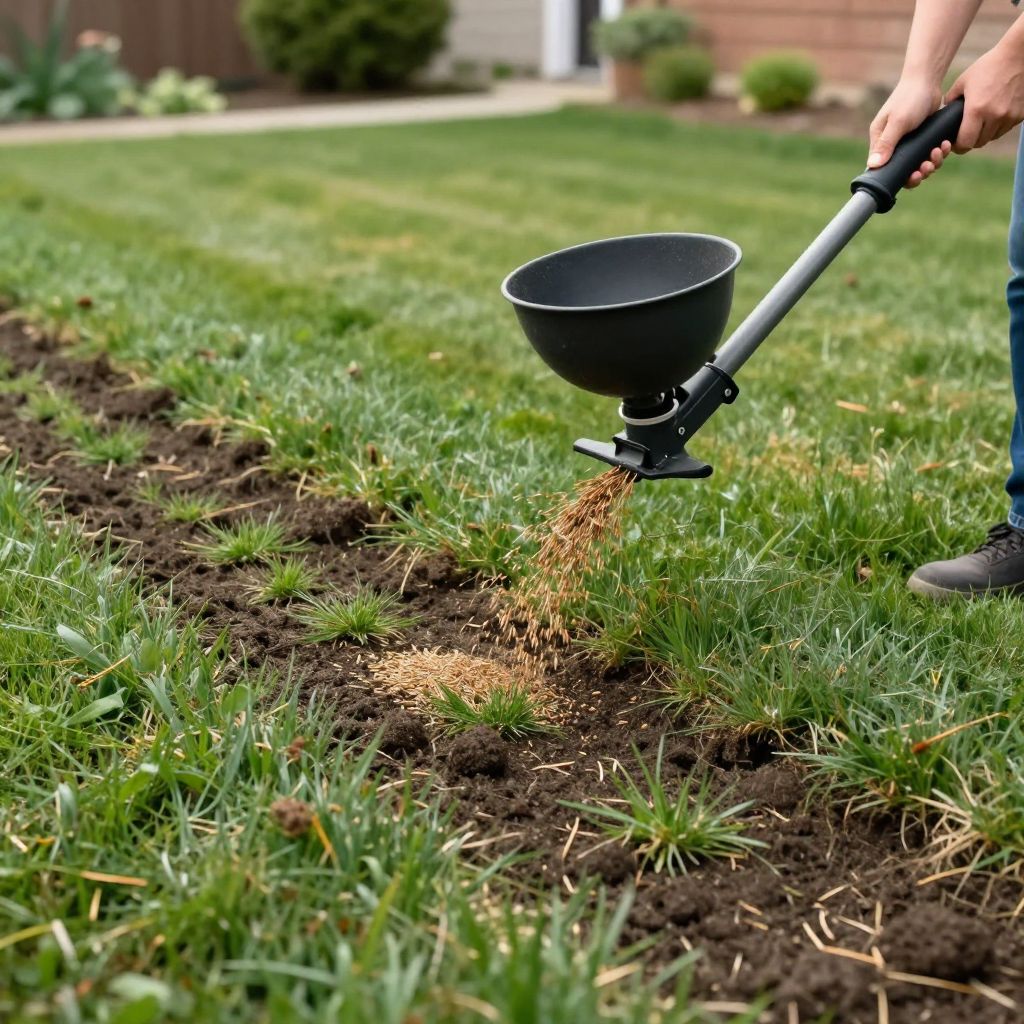
- Spread seed evenly using a broadcast or drop spreader for larger areas.
- Lightly rake again so seed is covered by a thin layer of soil, not buried deeply.
- Press seed into contact with the soil using a roller or by walking over the area gently.
- Water lightly and frequently to keep the top layer moist until germination.
Most lawn seed should be covered only lightly. If it is buried too deeply, it may fail to emerge. If it sits exposed on dry soil, birds, wind, and sun can reduce germination.
Watering after seeding: what matters most
New seed needs consistent moisture, especially in the first couple of weeks. The goal is to keep the surface damp without washing seed away or creating puddles.
- Water gently enough that the seed stays in place.
- Keep the top layer evenly moist until sprouts appear.
- After germination, gradually water less often but more deeply.
Drying out even once can stop germination or kill tiny seedlings. On the other hand, soggy soil can cause rot and poor root growth. If your soil drains slowly, water in shorter cycles and watch for puddling.
Common mistakes to avoid
Many lawn seeding problems come from timing or maintenance errors rather than bad seed. Avoid these common setbacks:
- Seeding too early in cold soil or before frost danger has passed.
- Seeding too late for the grass to establish before stress arrives.
- Using the wrong grass type for your climate and sun exposure.
- Skipping soil prep and seeding onto compacted ground.
- Watering inconsistently, which leads to patchy germination.
- Mowing too soon or too short, which can stress seedlings.
- Applying heavy fertilizer at the wrong time, which can burn young grass or push weak top growth.
What to do after the grass sprouts
Once seedlings emerge, the job is not finished. Young grass is fragile, and the first month of care often determines whether the lawn fills in well.
Mowing
Wait until the new grass is tall enough to mow without pulling up. Use a sharp blade and remove only a small portion of the leaf blade at a time. A dull mower tears tender seedlings and slows recovery.
Traffic control
Limit foot traffic, pets, and heavy equipment on newly seeded areas. Even brief compaction can crush seedlings or create bare tracks.
Weed control
Avoid aggressive weed treatments on very young grass unless the product is specifically labeled for new lawns. Hand-pulling small weeds is often safer until the lawn is established.
Troubleshooting poor germination
If seed is not sprouting well, check the conditions before assuming the seed was bad. The most common causes are temperature, moisture, and soil contact.
Possible causes and fixes
- Seed stayed too dry: increase light, frequent watering.
- Seed washed away: reduce water force and improve surface preparation.
- Soil was too cold or too hot: wait for a better seasonal window.
- Seed was buried too deep: rake lightly and reseed thin areas.
- Birds or wind removed seed: cover lightly with soil or compost.
- Poor drainage: improve grading or drainage before reseeding.
If a section repeatedly fails, test that spot for compaction, shade, or drainage problems. A lawn seed mix cannot overcome a site that stays wet, stays dry, or gets too little sun for the grass type.
Best timing by situation
Different lawn projects call for slightly different timing, even within the same season.
New lawn from bare soil
Choose the main seeding window for your grass type. Bare soil dries quickly, so timing and irrigation matter even more than with overseeding.
Overseeding a thin lawn
Fall is usually ideal for cool-season turf because existing grass is less stressed and young seedlings face fewer weeds. For warm-season turf, overseed when the lawn is actively growing and can recover quickly.
Repairing small patches
Small repairs can be done during the main seeding season, but they still need the same moisture and soil-contact care as a full lawn.
Conclusion: choose the season that matches your grass
If you are asking when is the best time to seed your lawn, start with your grass type and local climate. In general, seed cool-season lawns in late summer to early fall, and warm-season lawns in late spring to early summer. Then prepare the soil, keep it evenly moist, and protect seedlings until they are established.
For more lawn care help, you may also want to read about overseeding thin turf and improving soil drainage before planting.