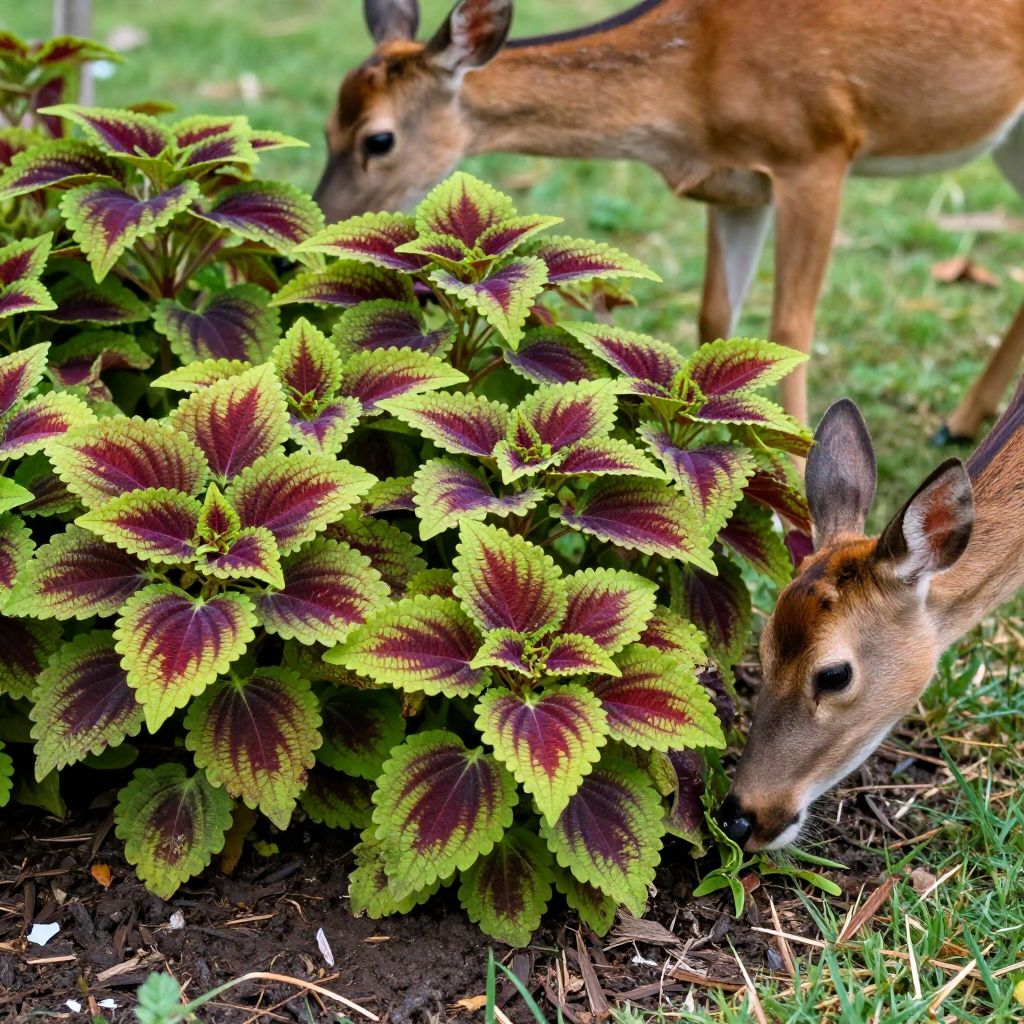
Are coleus deer resistant? If deer visit your garden, this is an important question before you plant these colorful foliage plants. Coleus can be one of the easiest ways to add bold color in beds, borders, and containers, but deer pressure can quickly change how useful a plant really is.
The short answer is that coleus is not reliably deer resistant. Deer may avoid it when plenty of preferred plants are available, but they will browse coleus in many gardens, especially during dry weather, high deer pressure, or when young plants are tender and easy to reach.
Are coleus deer resistant?
Coleus (Plectranthus scutellarioides, formerly Solenostemon scutellarioides) is best described as deer tolerant only in some situations, not deer proof. Its textured, aromatic foliage may discourage browsing a little, but hungry deer often sample it anyway. If deer are common in your area, plan on protection rather than relying on the plant alone.
Why deer may still eat coleus
Deer choose plants based on availability, taste, season, and pressure from their environment. A plant that seems “resistant” in one yard may be eaten in another, especially if deer are hungry or other food is scarce.
Factors that increase browsing
- Young, tender growth is more appealing than mature foliage.
- Dry weather can push deer to sample plants they normally ignore.
- High deer populations reduce their pickiness.
- Easy access near woods, hedges, or unfenced beds increases damage.
- Mixed plantings with very palatable flowers nearby can lead deer to nibble coleus too.
If deer are only occasional visitors, coleus may survive with little damage. If deer regularly feed in your yard, expect some risk no matter how colorful or strongly scented the foliage is.
How to grow coleus successfully when deer are a concern
Even though deer resistance is limited, coleus is still worth growing if you protect it well. It performs best in warm weather, in rich soil that drains well, and in locations matched to the amount of sun the cultivar can handle.
Best growing conditions
- Light: Bright shade to partial sun, depending on the variety. Many modern cultivars tolerate more sun than older types, but hot afternoon sun can scorch leaves.
- Soil: Moist, fertile, well-drained soil.
- Drainage: Avoid soggy ground, which can lead to root problems.
- Temperature: Coleus is frost-tender and grows best in warm conditions.
In containers, use a quality potting mix with good drainage holes. In beds, improve heavy soil with compost so roots can spread and excess water can move away.
Planting tips that help reduce deer damage
- Place coleus close to the house or patio where deer are less comfortable lingering.
- Use it as an accent in containers on porches, decks, and entryways.
- Plant in groups so a few nibbled stems do not ruin the display.
- Keep the soil evenly moist so stressed plants do not become more vulnerable.
- Protect new transplants with temporary fencing or netting until they establish.
Best ways to protect coleus from deer
If you want reliable results, combine plant choice with physical protection. Deer deterrents can help, but no single method works perfectly in every garden.
Effective protection methods
- Fencing: The most dependable option. A tall enough barrier is usually more effective than sprays alone.
- Container growing: Move plants to a deck, porch, or other protected area.
- Repellent sprays: These may reduce browsing, but reapply after rain and follow label directions carefully.
- Motion-activated devices: Useful in some gardens, though deer can adapt over time.
- Companion planting: Can help visually or strategically, but do not count on it as a stand-alone solution.
Important: Repellents work best as part of a rotation or combined strategy. If you use only one method, deer may learn to ignore it.
Common mistakes to avoid
- Planting coleus in a deer corridor and expecting it to be ignored.
- Relying on scent-based deterrents alone during peak deer pressure.
- Letting young plants sit unprotected after transplanting.
- Overwatering, which weakens roots and can make plants less resilient overall.
- Putting coleus in full hot sun without checking whether the cultivar can handle it.
Watering, pruning, and maintenance for healthy coleus
Healthy coleus is better able to recover from minor browsing and regrow after pinching or trimming. Good care also keeps the foliage dense, which makes damage less noticeable.
Watering guidance
Water when the top inch of soil begins to dry, adjusting for weather, pot size, and soil type. Containers usually need more frequent attention than garden beds, especially during hot spells.
- Water deeply rather than giving frequent shallow splashes.
- Keep soil evenly moist, not waterlogged.
- Check containers often in summer because they dry quickly.
Pruning and pinching
Pinch back growing tips to encourage bushier plants. This helps coleus fill out and can reduce the impact of deer nipping a few stems.
- Remove flower spikes if you want the plant to focus on foliage.
- Trim leggy stems to restore a compact shape.
- Use clean pruners to reduce the chance of disease spread.
Feeding and soil care
Coleus does not need heavy fertilizing. A compost-rich bed or a balanced, light feeding program is usually enough. Too much nitrogen can produce soft growth that may be more attractive to pests and less sturdy in the landscape.
Pests and diseases that can complicate deer damage
When deer browse coleus, the plant may respond with fresh growth that is vulnerable to other problems. Keeping plants healthy helps them recover faster.
Watch for these issues
- Slugs and snails: They can chew foliage, especially in damp shade.
- Whiteflies: Common on stressed or crowded plants.
- Root rot: Usually caused by poor drainage or overwatering.
- Sun scorch: Leaves may fade, curl, or crisp in intense afternoon sun.
If deer have nipped your plants, inspect the remaining foliage for additional damage. Remove badly damaged stems, improve growing conditions, and watch for new pest activity on tender regrowth.
Can you use coleus in deer-prone landscaping?
Yes, but use it strategically. Coleus works best where you can monitor it closely and where deer pressure is moderate rather than severe. In heavily browsed gardens, treat it as a seasonal accent instead of a low-maintenance foundation plant.
Good placement ideas
- Front porches and entry containers
- Raised beds near the house
- Patio planters
- Protected shaded borders
- Mixed containers with other color plants you can move if needed
If you want a more deer-resistant border, use coleus as a temporary color plant and pair it with stronger deer-resistant choices around the edge. That way, if browsing occurs, the whole bed does not collapse visually.
What to do if deer have already eaten your coleus
Do not give up too quickly. Coleus often recovers well if the roots and lower stems are intact. The next step depends on how much damage occurred.
- Check the stems. If only the tips were browsed, the plant may branch out naturally.
- Prune cleanly. Remove torn or broken stems back to healthy growth.
- Water consistently. Keep the plant from drying out while it regrows.
- Protect the plant immediately. Add fencing, netting, or repellent before fresh growth appears.
- Replace heavily damaged plants if the main stems were stripped or the plant was eaten repeatedly.
If deer return often, consider moving future coleus to containers or a more protected spot. Repeated browsing can keep the plant too small to thrive.
Bottom line for gardeners
Coleus is beautiful, colorful, and easy to grow, but it is not a dependable deer-resistant plant. In some gardens deer may leave it alone, yet in many others they will browse it readily. If you want to grow coleus where deer are active, use protection, choose a safer location, and keep the plants healthy so they can recover quickly.
If you are planning a deer-aware garden, it also helps to learn what deer prefer to eat so you can place your most vulnerable plants more carefully. For more practical guidance, see what to feed deer and use that knowledge to understand browsing patterns in your area.