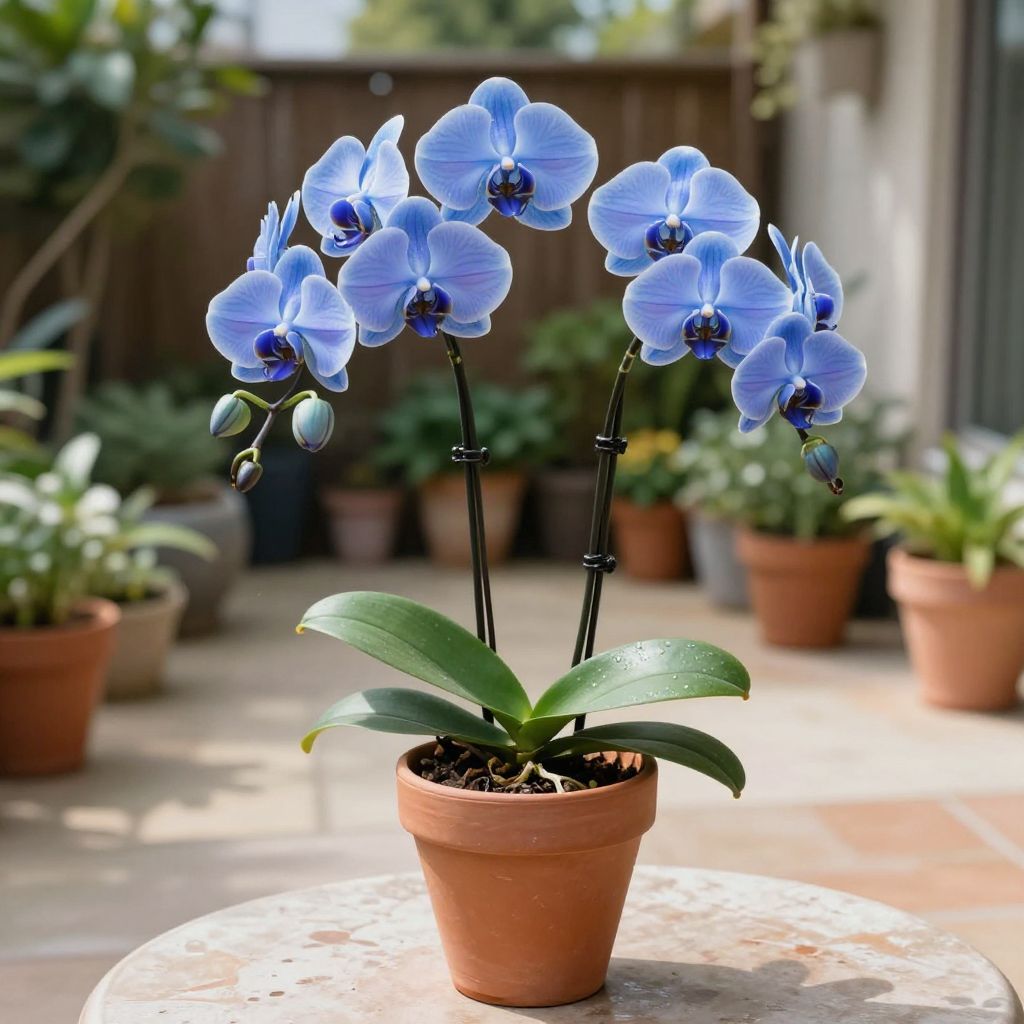
Are blue orchids real? Yes—but the answer depends on what you mean by “real.” Some orchids naturally produce blue or blue-violet flowers, while many of the vivid electric-blue orchids sold in shops are white orchids that have been dyed.
If you want a true blue-flowering orchid, you need to know which types can actually bloom in blue tones and how to care for them properly. The good news is that with the right plant selection and growing conditions, you can enjoy beautiful blue, blue-lavender, or blue-purple orchid blooms without being misled by dyed flowers.
Are Blue Orchids Real?
Yes, blue orchids are real in the sense that some orchids naturally bloom in blue or blue-tinged shades, but intense “sky blue” flowers are uncommon. Most bright blue orchids sold in stores are dyed, especially white Phalaenopsis orchids injected with blue dye. Natural blue orchids tend to look more lavender-blue, violet-blue, or slate-blue.
How to Tell a Natural Blue Orchid from a Dyed One
Before you buy, look closely at the flowers, stem, and label. Dyed orchids are common in retail displays, and they often lose their blue color in the next bloom cycle.
Signs the orchid has been dyed
- Unnaturally intense color concentrated in the petals, especially a flat electric blue.
- Blue dye visible at the base of the flower spike or in the stem.
- White flowers underneath the blue tint.
- New blooms on the same plant opening white or pale pink later.
Signs of a naturally blue-toned orchid
- Color is softer, often blue-lavender or blue-purple rather than neon blue.
- The plant label names a species or hybrid known for blue tones.
- Flowers look evenly colored without obvious dye staining.
- Future blooms are more likely to resemble the original flower color, though intensity can vary.
Which Orchids Can Look Blue?
True blue is rare in orchids, but several groups can produce blue-toned flowers. These are the ones most often associated with natural blue coloration or blue-like shades in the garden and collection.
Common orchid types with blue or blue-tinged flowers
- Vanda species and hybrids: often show blue, violet-blue, or purple-blue flowers with strong color saturation.
- Cattleya hybrids: may produce blue-lilac or blue-purple blooms, especially in certain breeding lines.
- Phalaenopsis hybrids: some have naturally cool lavender-blue tones, though most bright blue retail plants are dyed.
- Dendrobium types: a few hybrids can show cool violet-blue shades.
If you are shopping for a plant specifically for blue flowers, ask for the exact hybrid name rather than relying on the display color alone. A reputable orchid seller should be able to tell you whether the bloom color is natural or enhanced.
Growing Facts: What Blue Orchids Need
Blue-flowering orchids are not a separate “blue orchid” category in care. Their needs depend on the genus. In general, most orchids with blue or blue-toned blooms need bright indirect light, excellent drainage, airy roots, and careful watering that matches the plant’s growth stage and your climate.
Light
Most orchids with blue flowers do best in bright light without harsh midday sun. Indoors, an east-facing window is often a good starting point, while south- or west-facing windows may need a sheer curtain.
- Too little light can reduce flowering.
- Too much direct sun can scorch leaves and stress buds.
- Leaves should usually be medium green, not very dark green, if the plant is getting enough light.
Temperature and humidity
Orchids vary, but many popular blue-toned types prefer warm to intermediate conditions. Most also appreciate moderate humidity and good air movement.
- Avoid cold drafts from windows or air conditioners.
- Keep humidity moderate rather than soggy and stagnant.
- Use airflow to help prevent fungal problems.
Potting mix and drainage
Never plant orchids in regular garden soil. Their roots need air. Use a chunky orchid mix suited to the plant type, such as bark-based media, sphagnum moss, or a blend designed for epiphytic orchids.
- Choose a pot with plenty of drainage holes.
- Use a mix that stays lightly moist but never waterlogged.
- Repot when the medium breaks down, becomes sour, or holds too much water.
How to Care for a Blue Orchid Indoors
Indoor orchid care is mostly about balance: enough light, not too much water, and good airflow. If you can mimic the plant’s natural growing conditions, you have a much better chance of repeat blooms.
Watering
Water when the potting mix is nearly dry but not bone dry for long periods. The exact timing depends on pot size, temperature, humidity, light, and the medium you use.
- Check the medium with your finger or a wooden skewer.
- Water thoroughly until it drains out the bottom.
- Empty any saucer so roots do not sit in water.
- Let the mix approach dryness before watering again.
Common mistake: watering on a fixed schedule without checking the plant. Orchids need adjustment through the seasons, especially when growth slows in cooler months.
Fertilizing
Use a fertilizer made for orchids or a balanced, diluted houseplant fertilizer if appropriate for your orchid type. Feed lightly during active growth, and reduce feeding when growth slows.
- Flush the pot occasionally with plain water to prevent salt buildup.
- Do not overfertilize in an attempt to intensify flower color.
- Weak, steady feeding is safer than strong doses.
Pruning and after-bloom care
After flowering, remove spent blooms and inspect the plant for new growth. Whether you cut the flower spike depends on the orchid type and whether the stem is still healthy.
- Trim dead or damaged flower spikes with clean, sterilized tools.
- Leave healthy green spikes alone if the species commonly reblooms from them.
- Remove yellowing leaves naturally only when they detach easily.
Can You Make a White Orchid Blue?
You can dye a white orchid blue, but that does not make it a naturally blue orchid. Commercial dyeing is a temporary color treatment, not a stable flower trait. The next bloom is usually white or the plant’s original color.
If you see a dyed orchid and still want it, you can grow it like any other orchid. Just remember that the blue color is temporary and may fade as the flowers age.
Common Problems with Blue Orchids
Most problems are not caused by the color itself. They come from improper light, poor watering, or unsuitable potting media. Watch for these issues and correct them early.
1. Flowers fade quickly
This can happen from heat, direct sun, or natural aging. Keep the plant in stable conditions and out of harsh sun.
2. Leaves wrinkle or shrivel
That often means the roots are not taking up water well. Check for root rot, compacted mix, or a pot that dries too fast.
3. Buds drop before opening
Bud blast can result from sudden temperature changes, low humidity, moving the plant frequently, or inconsistent watering.
4. Root rot
Overwatering and poor drainage are the main causes. Healthy orchid roots should be firm, not mushy. Repot if the mix stays wet too long.
5. Pests
Common orchid pests include mealybugs, scale, and spider mites. Check leaf joints, undersides of leaves, and flower spikes regularly.
- Isolate new plants before placing them near others.
- Wipe small infestations off early.
- Improve airflow and avoid overly crowded plants.
How to Choose a Blue Orchid That Will Do Well
The best choice is not always the brightest flower on the table. Select a plant with healthy roots, firm leaves, and a trustworthy label. If you want repeat blooms, buy from a seller that clearly identifies the orchid genus and bloom type.
- Look for roots that are plump and green or silvery, not brown and collapsed.
- Choose leaves that are firm and free of spotting.
- Avoid plants sitting in water or packed into soggy decorative sleeves.
- Ask whether the flower color is natural or dyed.
Can Blue Orchids Be Grown Outdoors?
Some orchids with blue-toned flowers can grow outdoors in warm, frost-free climates, but only if their light, temperature, and humidity needs match your local conditions. In cooler regions, most gardeners grow them indoors or in a greenhouse.
If you move an orchid outdoors for summer, acclimate it gradually. Sudden sun exposure can burn leaves, and outdoor weather can dry pots faster than you expect.
Propagation and Repeat Blooming
Orchid propagation depends on the genus, and it is not as simple as dividing a houseplant. Some orchids can be divided when large and healthy, while others are best left alone until they naturally produce new growth.
- Only divide mature plants with multiple growth points.
- Use sterile tools to reduce disease risk.
- Repot into fresh orchid mix when roots outgrow the container or the medium breaks down.
To encourage repeat blooming, focus on the basics: proper light, stable temperatures, and consistent but careful watering. A healthy plant is much more likely to flower again than one pushed with excess fertilizer or kept too wet.
Final Takeaway
So, are blue orchids real? Yes, but the most vivid blue orchids sold in stores are often dyed, while naturally blue orchids usually appear blue-lavender or blue-purple. If you want a true blue-toned orchid, buy from a reliable source, match the plant’s care to its genus, and avoid overwatering.
For more practical orchid care, you may also enjoy reading about how to repot orchids and orchid watering basics once you have chosen your plant.