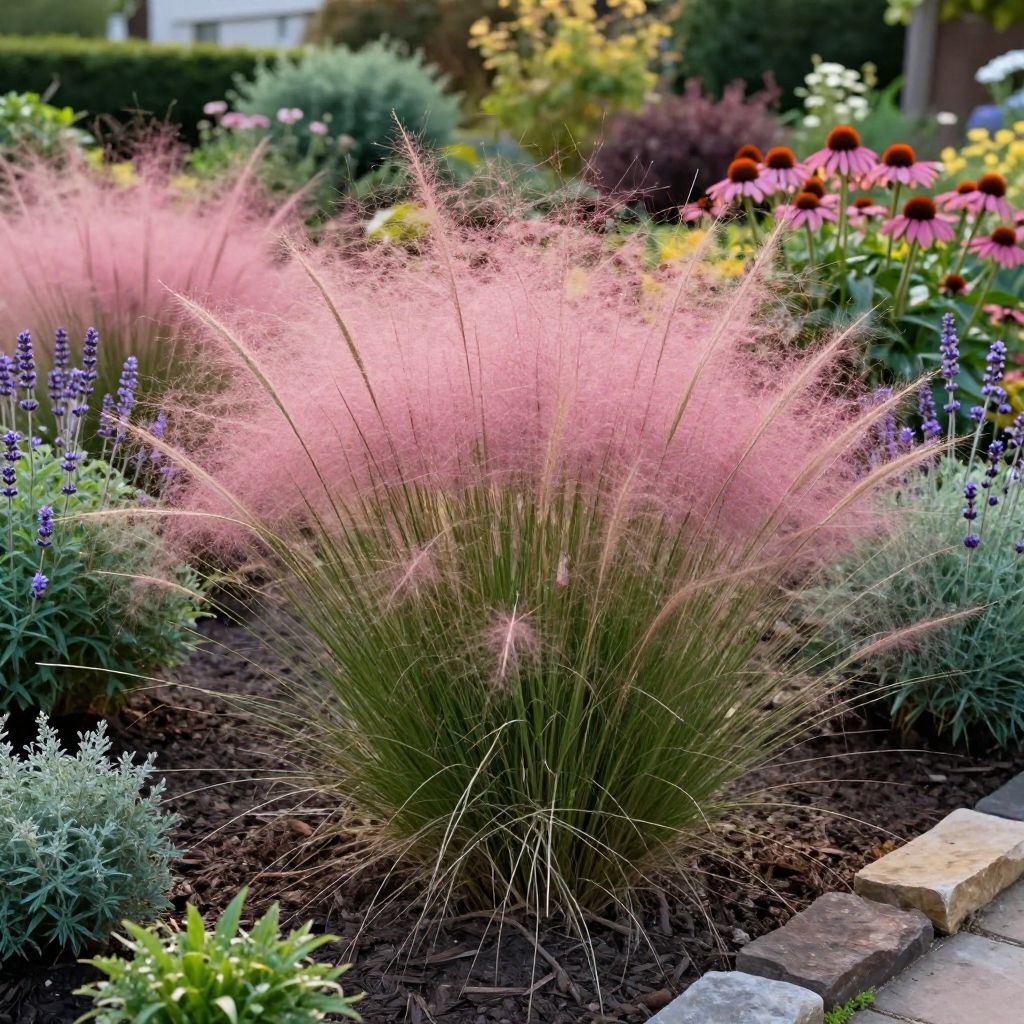
What should you plant with pink muhly grass so the planting looks intentional instead of random? The best companions echo its airy, rosy plumes while giving the bed structure, seasonal color, and texture before and after bloom.
Pink muhly grass (Muhlenbergia capillaris) is at its best when paired with plants that like full sun, sharp drainage, and a relatively low-maintenance routine. The right neighbors will complement its fine texture and keep the landscape attractive long after the pink haze fades.
What to plant with pink muhly grass?
Plant pink muhly grass with sun-loving perennials, ornamental grasses, and drought-tolerant shrubs that share similar soil and water needs. Good companions include coneflowers, black-eyed Susans, salvia, sedum, switchgrass, little bluestem, and compact shrubs such as dwarf yaupon holly or rosemary in mild climates.
Why companion planting matters with pink muhly grass
Pink muhly grass is a statement plant. Its fine blades and cloudlike pink flower plumes can look sparse next to bulky or overly busy plants, so companions should either contrast it cleanly or repeat its light, airy feel.
Think about three jobs for companion plants: adding color before bloom, holding the bed together after the pink plumes fade, and creating height or structure without crowding the grass.
What pink muhly grass needs first
- Full sun: Best flowering happens in bright light.
- Well-drained soil: This grass dislikes soggy roots.
- Moderate to low water once established: Too much water can reduce vigor.
- Room to spread: Leave space so the clumps keep their graceful shape.
Best plant partners for pink muhly grass
1. Coneflowers
Coneflowers (Echinacea) are one of the easiest companions for pink muhly grass. Their upright stems and daisy-like blooms give the bed a more substantial shape while the grass softens the edges.
Choose purple, white, or soft pink varieties for a cohesive look. They also attract pollinators, which helps the planting feel lively through summer.
2. Black-eyed Susans
Black-eyed Susans (Rudbeckia) add a strong yellow contrast that makes pink muhly grass stand out even more. Their cheerful flowers bridge the gap between summer and fall, when muhly begins to shine.
This pairing works especially well in cottage-style borders, roadside-style plantings, and pollinator gardens.
3. Salvia
Salvia brings vertical flower spikes that echo the upright movement of muhly grass without competing with it. Blue, purple, or magenta salvias look especially good beside the pink plumes.
Use shorter perennial salvias near the front of the bed and taller types farther back so the planting layers cleanly.
4. Sedum
Stonecrop sedum, especially upright types, is a smart low-water companion. Its fleshy leaves and late-season flower heads contrast well with the fine, feathery texture of pink muhly grass.
This is a strong choice for dry borders, gravel gardens, and sunny slopes where both plants can stay relatively low maintenance.
5. Little bluestem
Little bluestem (Schizachyrium scoparium) pairs beautifully with pink muhly grass because the two grasses share a naturalistic look but differ in color and form. Little bluestem adds blue-green summer foliage and warm copper tones in fall.
Use it when you want a prairie-style planting with movement and seasonal change.
6. Switchgrass
Switchgrass (Panicum virgatum) offers a taller, more upright backdrop for pink muhly grass. It helps anchor the design and gives the bed a layered look.
Just be careful with size. Some switchgrass varieties get large, so choose a cultivar that fits your space and won’t shade out the muhly.
7. Russian sage
Russian sage adds airy lavender-blue flowers and silvery foliage that blend beautifully with the soft texture of pink muhly grass. It thrives in hot, sunny, well-drained sites, making it a natural partner in many dry landscapes.
Give it enough room, since it can become broad and woody over time.
8. Rosemary in mild climates
Rosemary can work well with pink muhly grass in warm regions where both plants enjoy sun and drainage. Its evergreen structure provides year-round form, which is useful once the grass goes dormant.
If winters are cold in your area, treat rosemary as a climate-specific option rather than a universal companion.
9. Compact ornamental shrubs
Small shrubs can help frame pink muhly grass and keep the planting from looking too loose. Good choices in suitable climates include dwarf yaupon holly, compact junipers, or other low-water shrubs that stay tidy.
Use shrubs sparingly so the grass remains the star of the show.
Design ideas for planting pink muhly grass
For a soft, romantic border
Combine pink muhly grass with coneflowers, salvia, and a few white-flowering perennials. This creates a gentle color palette that feels airy and refined.
Repeat each plant in groups rather than scattering single plants. Repetition makes the bed look designed, not accidental.
For a prairie or meadow look
Pair pink muhly grass with little bluestem, switchgrass, black-eyed Susans, and native wildflowers suited to your region. This style works best when plants are grouped in drifts and allowed to move naturally.
Leave open space between clumps so the planting has a relaxed, meadow-like rhythm.
For a modern landscape
Use pink muhly grass with a limited palette: a few structural shrubs, one or two flowering perennials, and gravel or mulch for clean lines. The pink plumes become the focal point against a simple background.
Modern plantings look best when you avoid too many flower colors at once.
How to plant pink muhly grass with companions
Before planting, check mature size for every plant in the design. Pink muhly grass can form a rounded clump, so it needs enough space to keep its shape and to avoid being crowded by faster-growing neighbors.
- Choose a sunny site with well-drained soil.
- Lay out the plants on the ground before digging so you can check spacing.
- Place taller plants toward the back or center, depending on the bed shape.
- Keep companions far enough away that air can move between them.
- Water thoroughly after planting, then monitor moisture as roots establish.
Good spacing matters more than perfect plant lists. Even excellent companions will fail visually if they are packed too tightly.
Spacing tips
- Leave room for pink muhly grass to reach its mature width.
- Group companions in odd numbers for a natural look.
- Avoid placing aggressive spreaders right against the base of the grass.
- Use mulch to reduce weeds, but keep it off the crown of the plant.
Soil, watering, and care for mixed plantings
Pink muhly grass does best in average to lean soil that drains well. If your soil stays wet, improve drainage before planting rather than trying to compensate later with less watering.
In mixed beds, water newly planted companions enough to help them establish, but don’t keep the whole area constantly moist. Once established, pink muhly grass usually prefers less frequent watering than many flowering perennials.
Mulch and compost
A light layer of mulch can help suppress weeds and moderate soil temperature. Use it sparingly around the base of the plants so crowns do not stay damp.
If your soil is very poor, a modest amount of compost mixed into the planting area can help at planting time. Avoid over-enriching the bed, since rich soil can encourage floppy growth in some companion plants and may not suit the grass.
Pruning and seasonal cleanup
Pink muhly grass is usually left standing through fall and winter for its texture and movement. Cut it back in late winter or very early spring before new growth starts, if needed in your climate.
For companion plants, remove spent stems and tidy the bed as each plant requires. The goal is to keep the grass looking graceful, not over-sheared.
Common mistakes to avoid
- Planting shade lovers nearby: Pink muhly grass needs sun, and shade plants often struggle in the same spot.
- Using thirsty plants in dry soil: This creates uneven watering needs and weak growth.
- Overcrowding: Dense plantings can hide the muhly grass and reduce airflow.
- Choosing heavy, wet soil: Poor drainage can lead to decline.
- Ignoring mature size: Some shrubs and grasses will outgrow the design quickly.
Pests, diseases, and troubleshooting
Pink muhly grass is generally low maintenance, but problems usually come from site conditions rather than pests. If the plant looks weak, the first thing to check is drainage and sunlight.
Signs the planting is not working
- Few or no pink plumes: Often caused by too little sun or too much nitrogen.
- Flopping or weak growth: May indicate too much shade or overly rich soil.
- Yellowing or decline: Often linked to wet feet or root stress.
- Weedy gaps between plants: Usually a spacing or mulch issue.
If the bed is too crowded, thin or relocate competing plants. If the soil stays wet, consider raising the bed or choosing a better-drained site for future plantings.
Best companion combinations by style
Low-water border
- Pink muhly grass
- Russian sage
- Sedum
- Little bluestem
Pollinator-friendly garden
- Pink muhly grass
- Coneflowers
- Black-eyed Susans
- Salvia
Clean modern planting
- Pink muhly grass
- Compact shrub
- One flowering perennial repeated in drifts
- Mulch or gravel for a neat finish
Final thoughts
The best answer to what to plant with pink muhly grass is simple: choose sun-loving, well-drained companions that match its easygoing nature and highlight its airy pink bloom. Perennials like coneflowers, black-eyed Susans, salvia, and sedum are dependable choices, while other grasses and compact shrubs add structure.
If you’re planning a new bed, start by sketching the mature size of each plant and grouping them in repeating drifts. For more ideas on building a balanced sunny border, you may also want to read about ornamental grass garden design and drought-tolerant perennial companion plants.