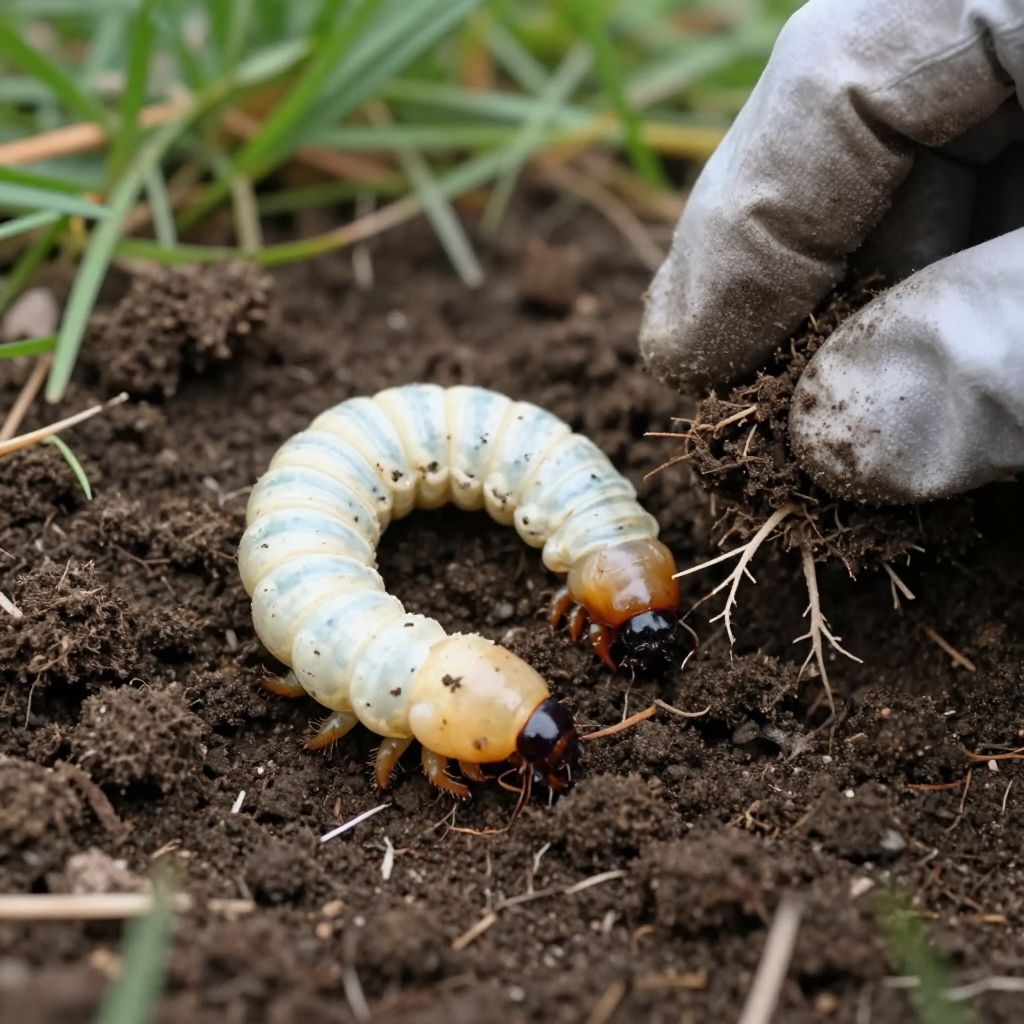
What does a grub look like in the garden, and how do you tell if it’s the pest damaging your lawn or soil? Grubs are the immature, C-shaped larvae of certain beetles, and they often live just below the soil surface where they feed on roots. Knowing what they look like helps you decide whether they’re harmless decomposers or a problem worth managing.
Most gardeners first notice grubs when turf thins, seedlings wilt, or birds and animals start digging. A careful look at the larvae, the damage pattern, and the season can tell you a lot before you reach for any control method.
What does a grub look like?
A garden grub is usually a creamy white to grayish larva with a brown head, three pairs of small legs near the head, and a soft, curved body shaped like a “C.” Most are about 1/4 to 1 inch long, depending on age and species. They live in soil and feed on roots, organic matter, or decaying plant material.
Key features to look for
- C-shaped body when disturbed or resting
- White or cream-colored body with a darker head
- Six small legs near the front end
- Soft, plump body that may look slightly translucent
- Brown or tan head capsule
Some grubs are nearly white, while others may look more yellowish or gray. The size, body thickness, and the pattern of hairs or spines can vary by beetle species, but the classic curved shape is the easiest clue for home gardeners.
How to tell grubs from other soil insects
Not every pale larva in the soil is a grub. The easiest way to avoid misidentification is to compare body shape, legs, and where you found it. Grubs are beetle larvae; other common garden larvae, such as fly maggots, usually lack legs and do not have the same C-shape.
Common look-alikes
- Wireworms are hard, thin, and yellow-brown, not C-shaped.
- Cutworms are smooth caterpillars with more obvious segmentation and a different body posture.
- Fly larvae are legless and often tapered, not stout and curved.
- Root weevil larvae are usually legless, curved, and found in pots or around roots, but they are more hump-backed than typical lawn grubs.
If the insect is soft-bodied, pale, curved, and has legs near the head, you are probably looking at a beetle grub. If it is hard, straight, or legless, it is likely something else.
Where grubs live and what they do in the garden
Grubs live underground in lawns, beds, compost-rich soil, and sometimes in containers. They feed at or below the root zone, which is why damage often appears above ground as yellowing, wilting, or loose turf that lifts easily like a carpet.
Some grubs are more damaging than others. A few species feed mainly on decaying organic matter and are not a major problem, while others can seriously injure turfgrass roots or young transplants if populations are high.
Signs that grubs may be causing trouble
- Patches of grass turn dull green, then yellow or brown
- Turf feels spongy and lifts easily
- Birds, skunks, raccoons, or moles dig in the lawn
- Seedlings wilt even when soil moisture seems adequate
- Plants show poor root growth when you inspect them
These symptoms can also come from drought, compaction, disease, or poor drainage, so it helps to inspect the soil before assuming grubs are the cause.
How to check for grubs in your lawn or beds
The most reliable way to confirm grubs is to dig a small sample area and look directly in the root zone. This is better than guessing from surface symptoms alone, especially because drought stress and grub damage can look similar at first.
- Choose a damaged or suspicious area.
- Cut and lift a square of turf about 1 foot by 1 foot, or dig into the top 2 to 4 inches of soil in a bed.
- Break apart the soil gently and inspect roots and soil clumps.
- Count the grubs you find and note their size.
- Check several spots, because damage is often patchy.
Finding one or two grubs in a sample does not always mean you need to act. A larger population, repeated damage, or many grubs in multiple samples is more concerning.
What to look for in the soil
- Curved larvae near roots
- Chewed or shortened roots
- Loose turf with reduced root anchoring
- Soil with many beetle larvae at similar sizes
When grubs are most visible
Grubs are easiest to find when they are actively feeding near the surface, but timing varies with species and climate. In many regions, they are more noticeable from late summer through early fall, when young larvae are feeding and turf damage becomes obvious.
In cooler weather, some grubs move deeper into the soil and are harder to spot. In warm, moist soil, they may be closer to the surface and easier to detect during inspection.
Seasonal clues
- Spring: Older grubs may be larger and may have caused earlier root damage.
- Summer: Beetles may be active above ground, laying eggs in turf or garden soil.
- Late summer to fall: Young grubs are often feeding near the surface.
- Winter or cold periods: Grubs may be deeper and less active.
Because local weather changes grub behavior, always adjust your expectations to your climate and soil temperature rather than relying on a fixed calendar date.
Are grubs always bad?
No. Some beetle larvae help break down organic matter in compost, mulch, or rich soil, and not every grub population needs treatment. The key question is whether they are harming roots, turf, or young plants in a way that justifies action.
If you find grubs in compost or garden beds but plants look healthy, they may be part of normal soil life. In that case, the best approach is usually to monitor rather than intervene.
When to worry
- Large numbers are present in a small area
- Plants are declining and roots are being eaten
- Turf is thinning rapidly
- Animals are digging up the area repeatedly
How to manage grubs in a garden-friendly way
Good grub management starts with correct identification and healthy growing conditions. Strong, well-rooted plants tolerate some root feeding better than stressed plants, so improving soil and watering practices is often the first step.
Practical control steps
- Confirm the problem by checking the soil and counting grubs.
- Improve plant vigor with proper watering, drainage, and soil structure.
- Reduce stress on lawns and beds by avoiding compaction and overfertilizing.
- Hand-remove small numbers of grubs when feasible.
- Use targeted controls only when populations are clearly causing damage.
For lawns, mowing a little higher can help grass recover more quickly from stress. For garden beds, adding compost and maintaining even moisture can encourage stronger root growth, which makes plants more resilient.
What not to do
- Do not assume every pale larva is a harmful grub
- Do not water heavily every day unless your soil dries quickly
- Do not apply treatments without checking whether grubs are truly present
- Do not confuse drought symptoms with pest damage
How soil, watering, and drainage affect grub damage
Healthy soil can reduce the impact of grubs because plants with better roots recover more easily. Poor drainage, compacted soil, and inconsistent watering stress roots and make damage look worse.
If your garden soil stays soggy, roots may already be weak, and grub feeding can compound the problem. If the soil is too dry, turf and seedlings may wilt even when grub numbers are low, so check moisture before diagnosing pests.
Helpful soil habits
- Keep soil evenly moist, not waterlogged
- Improve drainage with compost and organic matter where appropriate
- Avoid excessive foot traffic on lawns and beds
- Use mulch to moderate soil moisture swings
Preventing grub problems in future seasons
Prevention is mostly about reducing conditions that favor heavy infestations and maintaining plant health. A healthy lawn or bed is less likely to show severe damage from a moderate number of grubs.
Simple prevention habits
- Inspect turf and beds regularly during the growing season
- Watch for birds or animals digging in one area repeatedly
- Keep lawns from becoming overly stressed by drought
- Do not overapply nitrogen fertilizer, which can create weak, lush growth
- Remove thatch buildup in lawns if it becomes excessive
If you have a recurring grub issue, note when damage appears, where it occurs, and what the larvae look like. Those details make it easier to match the pest to the right management approach later.
Quick identification checklist
If you are still wondering what does a grub look like, use this quick checklist when you inspect the soil.
- Soft-bodied larva
- White, cream, or pale gray color
- Brown head
- Three pairs of legs near the head
- C-shaped when disturbed
- Found in soil, turf, or around roots
If most of those traits match, you are likely looking at a beetle grub. From there, the next step is deciding whether the population is light enough to ignore or heavy enough to manage.
For more practical garden troubleshooting, you may also want to read about common garden pests and how to identify them and lawn care basics for healthier turf.