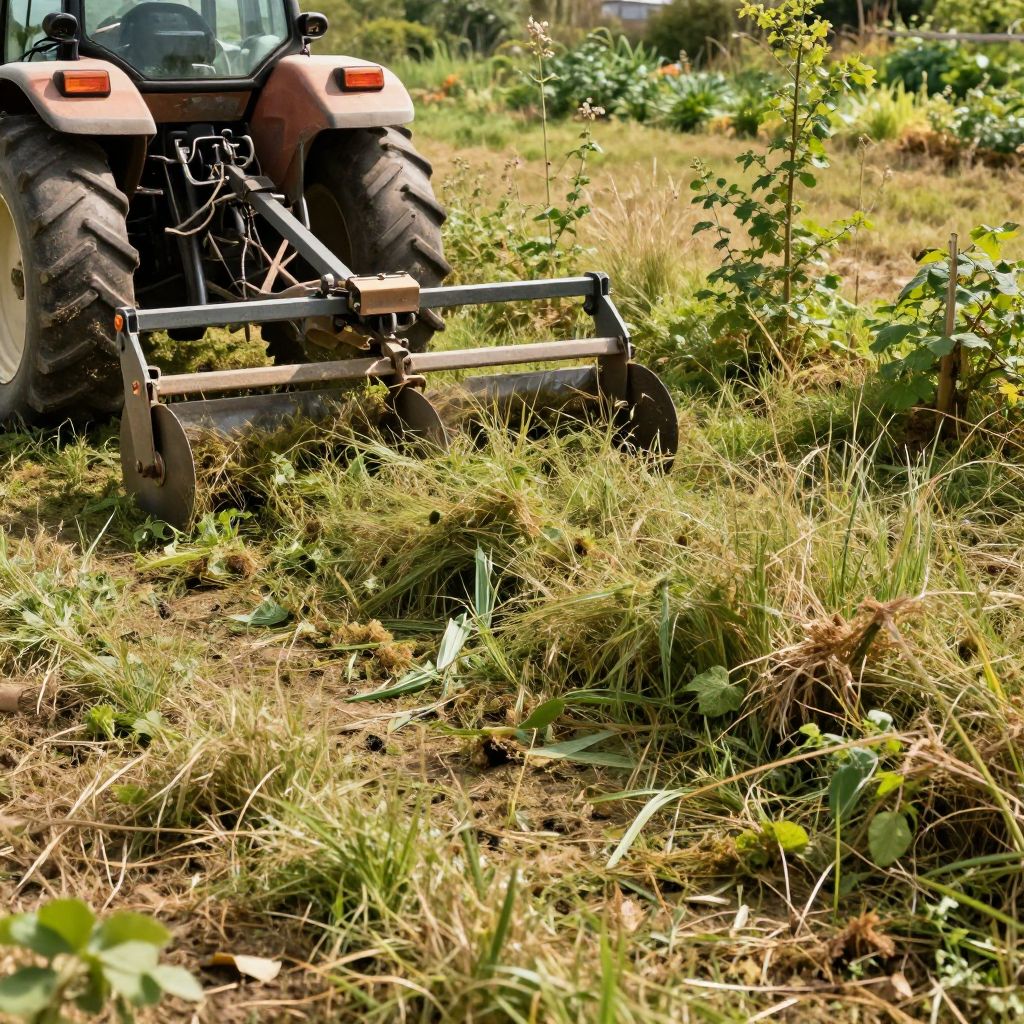
If you’ve heard the term and wondered, “What is bush hogging?” you’re probably trying to figure out whether it’s a gardening task, a land-clearing method, or something your property needs. In practical terms, bush hogging is a heavy-duty mowing method used to cut back tall weeds, brush, saplings, and overgrown grass on larger outdoor areas.
It’s not the same as lawn mowing. Bush hogging is usually done with a tractor-mounted rotary cutter, and it’s most useful when you need to reclaim neglected ground, maintain field edges, or manage rough vegetation before you can do finer landscaping or planting work.
What is bush hogging?
Bush hogging is the process of cutting down dense, overgrown vegetation with a rotary cutter, often called a bush hog. It is used on rough land where a standard mower would clog, stall, or be damaged. For gardeners and landowners, it’s a maintenance and site-preparation tool rather than a finishing cut.
How bush hogging fits into gardening and land care
In a home-garden setting, bush hogging is most often used on larger properties, orchard rows, fence lines, drainage ditches, meadow edges, and neglected areas that need to be opened up before planting or regular upkeep. It helps you reset an area so you can later mow, mulch, seed, or landscape it more precisely.
Where it makes sense
- Overgrown pasture or field margins
- Brushy areas with thick weeds and tall grass
- Old garden plots that have gone wild
- Fence lines, hedgerows, and access paths
- Rough ground around barns, sheds, and outbuildings
Where it does not belong
- Established lawns that need a clean finish
- Areas with hidden rocks, stumps, wire, or debris
- Delicate ornamental beds
- Steep slopes that are unsafe for equipment
What equipment is used for bush hogging?
The term usually refers to a tractor with a rear-mounted rotary cutter. The cutter has a heavy deck and one or more swinging blades designed to handle rough vegetation. Smaller properties may use walk-behind brush cutters or heavy-duty clearing mowers, but the classic bush hogging setup is tractor-based.
Common tools and attachments
- Tractor-mounted rotary cutter for large areas
- Brush cutter or string trimmer for edges and small spots
- Chainsaw or pruning saw for woody stems too large for the cutter
- Rake, loader, or hand tools for cleanup after cutting
- PPE such as eye protection, hearing protection, gloves, and sturdy boots
When to bush hog and when to wait
Timing depends on your goal and local conditions. Bush hogging is often done when vegetation is actively growing enough to cut cleanly, but not so wet that the ground is damaged. Avoid very soft soil after heavy rain, since tractor tires can rut the area and compact the soil.
Seasonal considerations
- Spring: Good for reclaiming growth before it becomes too tall and woody.
- Summer: Useful for keeping rough areas manageable, especially after fast growth.
- Late season: Helpful for clearing before winter, but watch for nesting wildlife and uneven ground hidden by growth.
- Wet periods: Best avoided if soil compaction or slipping is a concern.
How to bush hog an area safely
Start by walking the area first. Look for rocks, fencing, irrigation parts, holes, stumps, branches, and anything that could be thrown by the blades or damage the cutter. Mark hazards clearly, then work slowly and overlap passes so you don’t leave strips of uncut growth.
- Inspect the site. Remove or mark debris, wire, toys, branches, and hidden obstacles.
- Check the equipment. Confirm the cutter is attached correctly and the blades are in good condition.
- Set the cutting height. Start higher if the area is very rough, then lower later if needed.
- Cut in passes. Work in straight, overlapping rows for even coverage.
- Go slowly. Thick brush may require more than one pass.
- Stop for jams or vibration. Unusual shaking can signal blade damage or a hidden object.
Important safety habits
- Keep bystanders and pets far away from the work zone.
- Never assume the area is clear just because the vegetation looks soft.
- Wear eye and ear protection whenever operating cutting equipment.
- Do not cut near roads, ditches, or embankments without checking visibility and footing.
How bush hogging affects soil and future planting
Bush hogging clears top growth, but it does not prepare soil the way tilling, composting, or bed-building does. After the vegetation is cut, you may still need to address compaction, drainage, weeds, and soil fertility before planting anything meaningful.
What to do after cutting
- Rake or remove heavy debris if it will interfere with planting or mowing.
- Check for compacted soil, especially where machinery traveled repeatedly.
- Add compost only after you know what the soil needs.
- Seed or mulch bare areas if erosion is a concern.
- Plan follow-up mowing or trimming to keep regrowth manageable.
If the area will become a garden, orchard, or pollinator strip, bush hogging is only the first step. You may need soil testing, weed suppression, edging, or bed shaping before you can plant successfully.
Common mistakes to avoid
One of the biggest mistakes is treating bush hogging like lawn mowing. The equipment and the job are much rougher, and the area usually contains hidden hazards. Another common error is cutting too low on uneven ground, which can scalp the soil or hit obstacles.
- Skipping the site inspection and damaging equipment on hidden debris
- Cutting too fast through dense brush and leaving uneven results
- Working on wet ground and creating ruts or compaction
- Leaving woody regrowth unchecked so the area becomes overgrown again quickly
- Assuming one pass is enough when thick vegetation may need staged clearing
How to manage regrowth after bush hogging
Once an area is cleared, maintenance matters. Many rough areas grow back quickly, especially if the soil is fertile and the climate is warm. Regular follow-up cutting, spot weeding, or reseeding can keep the area from returning to brush.
Practical follow-up options
- Spot-mow or trim edges every few weeks during active growth
- Mulch or seed exposed soil to reduce weed pressure
- Remove invasive woody seedlings before they establish
- Improve drainage if standing water encourages aggressive weeds
- Use fencing or borders if you want to keep a clear transition between wild and managed areas
How bush hogging compares with mowing, brush cutting, and clearing
These terms are related, but they are not identical. Bush hogging is the roughest of the common cutting methods. It is meant for heavy vegetation and larger areas, while mowing is for maintained grass and brush cutting is usually for smaller or more precise work.
- Mowing: Best for lawns and regularly maintained grass
- Brush cutting: Useful for smaller patches of weeds or light brush
- Bush hogging: Best for large, rough, overgrown areas
- Clearing: May involve removing larger woody growth, stumps, or debris before cutting
Should you do it yourself or hire help?
If you have the right tractor, experience, and a site that is reasonably open, bush hogging can be a practical DIY task. If the land is steep, full of hidden hazards, or too large for your equipment, hiring an experienced operator is often safer and more efficient.
DIY is more realistic when
- The area is fairly open and level
- You know how to operate the tractor safely
- There are few hidden obstacles
- You only need periodic maintenance, not major clearing
Hire help when
- The land has stumps, wire, rocks, or debris
- The slope is unsafe or visibility is poor
- You need a large area cleared quickly
- You are unsure whether the site is suitable for heavy equipment
Conclusion
So, what is bush hogging? It’s a rough-cut vegetation management method used to clear tall weeds, brush, and overgrowth on larger outdoor areas. If you’re planning to reclaim a neglected space, start with a careful site inspection, choose the right equipment, and follow up with soil and maintenance work so the area stays manageable.
For related reading, you may also want to learn more about composting basics for improving rough soil and how to assess and improve garden drainage.