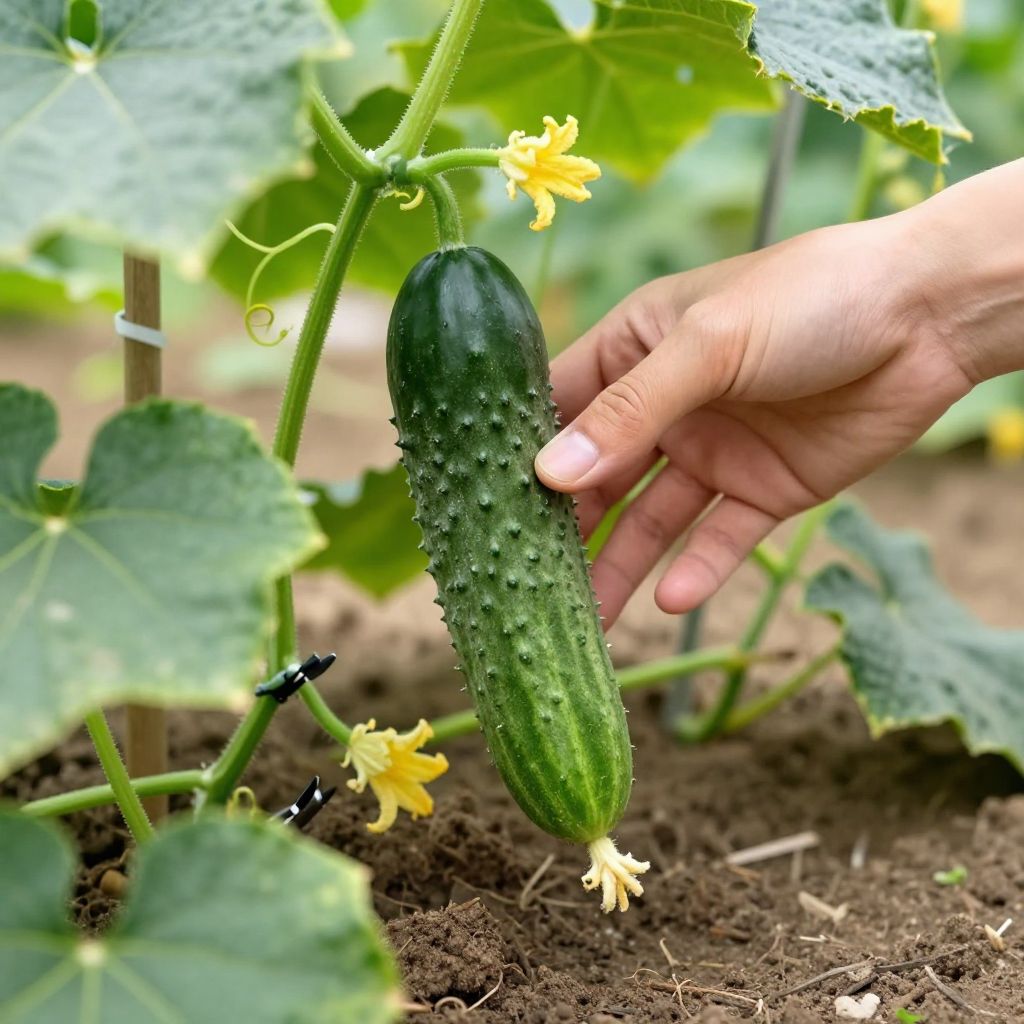
Wondering when is a cucumber ready to pick? The answer depends on the variety, your weather, and how quickly the fruit is growing, but most cucumbers are best harvested young, firm, and evenly colored before the seeds become large and the skin turns dull. Picking at the right stage keeps the plant producing and gives you better flavor and texture.
If you wait too long, cucumbers can become bitter, seedy, and tough. If you pick too early, they may be underdeveloped and lack size, so the goal is to learn the signs of maturity for the type you’re growing.
When is a cucumber ready to pick?
A cucumber is ready to pick when it has reached the size for its variety, feels firm, has a rich green color, and still has a slightly glossy skin. Most slicing cucumbers are harvested at about 6 to 8 inches long, while pickling types are often best at 2 to 4 inches. Pick before the fruit turns yellow or overgrown.
How to tell if a cucumber is ready
Size matters, but it is not the only clue. A cucumber can look large enough and still be past its best if it has started to yellow or soften.
Key ripeness signs
- Even color: Look for a deep green or the expected mature color for the variety.
- Firm texture: A ready cucumber should feel solid, not spongy or soft.
- Right size: Check the seed packet or plant tag for the expected harvest length.
- Glossy skin: Many cucumbers are best when the skin still has a slight shine.
- Small seeds: If you cut one open and the seeds are large and hard, it was likely left too long.
Signs it is overripe
- Skin turns pale, yellow, or orange
- Fruit becomes thick or bulges in the middle
- Texture feels rubbery or soft
- Seeds are large and watery
- Flavor turns bitter or bland
Seasonal timing: how long cucumbers take to mature
Most cucumbers are harvested about 50 to 70 days after sowing, but timing varies by variety, temperature, and growing conditions. Warm weather speeds growth, while cool nights slow it down. In containers or poor soil, fruit may develop more slowly than in a well-fed garden bed.
What affects harvest timing
- Variety: Bush, vining, slicing, and pickling cucumbers mature at different sizes and speeds.
- Temperature: Cucumbers grow best in warm conditions and slow down in cool weather.
- Sunlight: Full sun helps plants produce fruit faster and more evenly.
- Water consistency: Irregular watering can slow growth and affect flavor.
- Soil fertility: Rich, well-drained soil supports steady fruiting.
In a typical outdoor garden, harvest often begins in midsummer and continues as long as plants stay healthy and temperatures remain favorable. In a greenhouse, hoop house, or warm patio container, cucumbers may produce earlier or longer, depending on light and heat.
How often to check cucumbers at harvest time
Once plants start producing, check them every day or two. Cucumbers can grow surprisingly fast, especially during warm spells, and a fruit that looked perfect yesterday may be oversized today.
Frequent picking encourages more fruit. If mature cucumbers stay on the vine, the plant often slows down production and may stop setting as many new fruits.
Best harvest routine
- Walk the row or inspect each container plant closely.
- Look under leaves, where cucumbers often hide.
- Harvest any fruit that matches the ideal size and color.
- Remove overripe or damaged fruit so the plant can keep producing.
- Check again in a day or two during peak season.
Harvesting different types of cucumbers
Not all cucumbers should be picked at the same size. The best harvest stage depends on whether you are growing slicing cucumbers, pickling cucumbers, or specialty types.
Slicing cucumbers
These are usually harvested when they are medium to large, often around 6 to 8 inches long, though some varieties are smaller or larger. They should still be tender, straight, and evenly colored.
Pickling cucumbers
Pickling cucumbers are usually best when small and crisp, often 2 to 4 inches long. If you wait too long, they can become seedy and lose the texture that makes them good for pickling.
Burpless or specialty types
These may have thinner skins and different harvest sizes, so follow the variety label if available. Some are best picked slightly smaller to keep the texture tender and the flavor mild.
How to harvest cucumbers without damaging the plant
Use clean scissors, pruners, or a sharp knife to cut the stem just above the fruit. Pulling cucumbers by hand can snap vines, bruise the fruit, or damage nearby flowers and developing cucumbers.
Simple harvesting steps
- Hold the vine gently with one hand.
- Cut the stem about 1/4 to 1/2 inch above the cucumber.
- Place harvested fruit in a basket or shallow container.
- Avoid twisting hard on the vine.
If the fruit is hidden, lift leaves carefully rather than tugging on stems. Cucumber vines are brittle, especially when dry or stressed by heat.
What happens if you pick cucumbers too early or too late?
Picking too early usually gives you smaller fruit with less developed flavor, although very small cucumbers can still be useful if you want tiny pickles. Picking too late often leads to bitter, seedy, and tough cucumbers that are less enjoyable to eat.
Too early
- Smaller size
- Less developed flavor
- Lower yield from the plant if you harvest before it reaches a usable stage
Too late
- Seeds enlarge quickly
- Skin becomes hard or yellow
- Fruit may taste bitter
- Plant may slow down production
If you are unsure, harvest one cucumber and cut it open. That quick check tells you a lot about seed size, flesh quality, and whether the rest of the crop should be picked sooner.
Growing conditions that help cucumbers ripen properly
Healthy plants produce better fruit, so harvest timing starts with good growing conditions. Cucumbers prefer full sun, fertile soil, steady moisture, and support if you are growing vining types.
Soil and drainage
Use soil that drains well but still holds moisture. Compost helps improve texture and fertility, especially in sandy or heavy soils. Poor drainage can stress roots and reduce fruit quality.
Watering
Keep soil evenly moist, especially while plants are flowering and setting fruit. Irregular watering can cause misshapen cucumbers, stress the plant, and contribute to bitterness.
Water at the base of the plant if possible. Wet leaves can increase disease pressure, especially in humid weather.
Sunlight and spacing
Cucumbers need plenty of sun to ripen well. Crowded plants can trap moisture and reduce airflow, which makes disease more likely and can hide fruit from view.
- Give vining cucumbers room to spread or train them on a trellis.
- Remove weeds that compete for water and nutrients.
- Keep foliage open enough to spot fruit easily.
Common problems that affect harvest timing
Sometimes a cucumber looks ready but does not develop well because the plant is under stress. Watching for these issues can help you decide whether to harvest now or wait a little longer.
Bitter fruit
Bitter cucumbers can result from heat stress, inconsistent watering, or overripeness. Harvest promptly and keep plants evenly watered to reduce the problem.
Misshapen cucumbers
Curved or uneven fruit can happen when pollination is poor or the plant is stressed. These cucumbers are often still edible if harvested at the right size, but they may not store as well.
Powdery mildew and leaf decline
If leaves are heavily affected by disease late in the season, fruit may mature more slowly. Harvest any usable cucumbers promptly before the plant weakens further.
Can you let cucumbers get bigger for seeds?
Yes, if you want to save seed, let one or more fruits fully mature on the vine until they are much larger than eating size and begin to yellow. However, this is different from harvest for fresh eating, and leaving fruit on the plant will usually reduce production.
For most home gardeners, it is better to pick cucumbers young and tender for the table, then allow only selected fruits to mature fully if seed saving is your goal.
Quick checklist for harvest day
- Fruit matches the expected size for the variety
- Skin is still green and glossy
- Cucumber feels firm and crisp
- No yellowing, soft spots, or swelling
- Seeds are still small if you cut one open
Conclusion
The best way to know when is a cucumber ready to pick is to combine size, color, and texture rather than relying on size alone. Harvest young, firm cucumbers regularly, and keep checking the vines every day or two during peak season. If you are unsure, pick one and inspect it so you can time the rest of the crop correctly.
For more practical harvest advice, you may also find related gardening reading helpful, such as how to tell when vegetables are ready to harvest and growing cucumbers in containers.