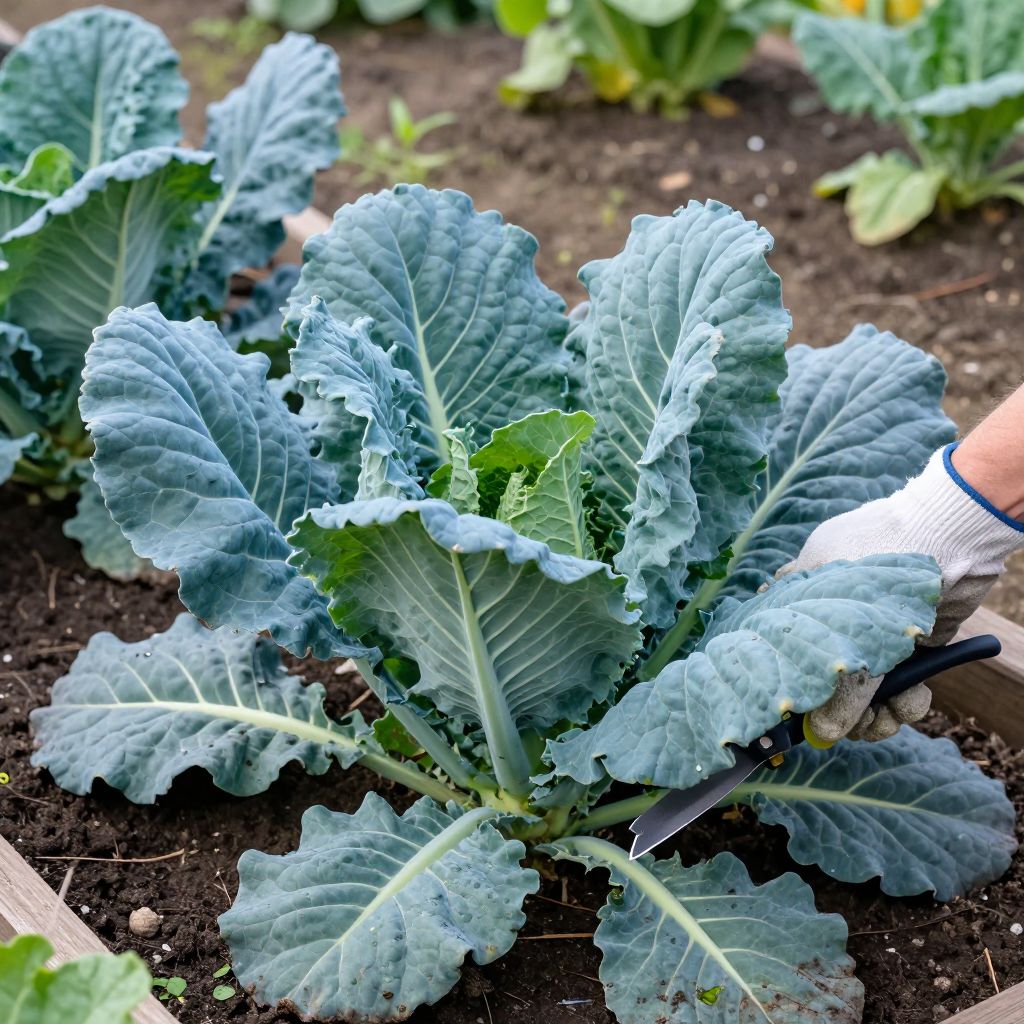
Wondering when to harvest collard greens so they’re tender, flavorful, and still keep producing? The best harvest time depends on leaf size, plant vigor, and weather, but you can usually start picking outer leaves once the plant is well established and the leaves are large enough to use.
Harvesting at the right stage helps you get better texture and encourages the plant to keep growing. If you wait too long, leaves can become tough or bitter, especially in warm weather.
When to harvest collard greens?
Harvest collard greens when the outer leaves are about 8 to 10 inches long, dark green, and firm, while the center of the plant is still actively growing. You can begin with a few mature leaves at a time, or cut the whole plant if it is fully developed or the season is ending.
How to tell collard greens are ready
Collards are harvested for their leaves, so maturity is less about a fixed calendar date and more about leaf size and plant health. Most gardeners can start taking outer leaves once the plant has a sturdy stem and several large leaves.
Signs the leaves are ready
- Leaf size: Outer leaves are usually 8 to 10 inches long, though smaller leaves can also be picked.
- Leaf color: Healthy leaves are deep green and look full, not pale or thin.
- Texture: Leaves feel firm but still flexible, not leathery.
- Plant shape: The center is still producing new growth.
What affects harvest timing
Weather, soil fertility, and variety all influence how quickly collards reach harvest size. In cool weather, growth is slower but flavor is often better. In hot weather, plants may bolt, become bitter, or slow down if stressed.
- Cool temperatures: Often improve flavor and leaf quality.
- Heat stress: Can make leaves tougher and more pungent.
- Soil moisture: Uneven watering can slow growth and reduce tenderness.
- Nutrient balance: Rich, well-drained soil supports larger, healthier leaves.
How to harvest collard greens without hurting the plant
The safest method is to pick the oldest outer leaves first and leave the center growing point intact. This lets the plant keep producing new leaves for weeks or even longer, depending on weather and pest pressure.
- Choose the largest outer leaves near the bottom of the plant.
- Use clean scissors, garden snips, or a sharp knife.
- Cut the leaf stem close to the main stalk, or snap it off gently if it comes away cleanly.
- Leave the central cluster of smaller leaves untouched.
- Harvest a few leaves from each plant instead of stripping one plant bare.
Do not remove too many leaves at once. A good rule is to leave at least one-third to one-half of the foliage on the plant so it can keep photosynthesizing and recovering.
Whole-plant harvest vs. leaf-by-leaf picking
Leaf-by-leaf harvesting is best if you want ongoing production. Whole-plant harvest makes sense when plants are crowded, the season is ending, or you want all the leaves at once before a hard freeze or bolting.
- Leaf-by-leaf: Best for extended harvests and home gardens.
- Whole plant: Useful for a final harvest or when plants are no longer productive.
Best time of day to harvest collards
Harvest in the morning if possible, after the dew has dried but before afternoon heat builds. Leaves are often crisper and less wilted, which helps both flavor and storage.
If you must harvest later in the day, pick leaves from well-watered plants and move them into shade quickly. Heat can make harvested greens limp fast.
How often can you harvest collard greens?
You can usually harvest collards repeatedly as long as the plant keeps producing new outer leaves. In active growth, many gardeners pick every few days or once a week, depending on plant size and how much they need.
Frequent light harvests are better than waiting for a huge crop all at once. This keeps the plant younger-looking and helps prevent oversized, coarse leaves from building up.
How much to take each time
- Take the largest lower leaves first.
- Leave the top growing point and smaller inner leaves.
- Rotate among plants so none are overharvested.
What happens if you harvest collards too late?
Older collard leaves can become tougher, more fibrous, and stronger in flavor. Warm weather, drought stress, or flowering can make this happen faster. Once the plant starts bolting, leaf quality usually drops quickly.
If your collards are already large and coarse, you can still harvest them, but expect a firmer texture. For the best eating quality, pick leaves before they become oversized and heavily veined.
Common harvest mistakes to avoid
Many collard problems come from harvesting too aggressively or waiting too long. A few simple habits will help you keep plants productive and leaves in better condition.
- Stripping the plant bare: This slows regrowth and can stress the plant.
- Picking only the youngest leaves: That often delays the plant’s natural growth pattern.
- Harvesting in extreme heat: Leaves wilt faster and may taste harsher.
- Using dull tools: Ragged cuts can damage stems and invite disease.
- Ignoring pests: Chewed or damaged leaves are best removed during harvest.
Growing conditions that improve harvest quality
Healthy collards produce better leaves, so harvest timing starts with good growing conditions. Collard greens prefer fertile, moisture-retentive soil with good drainage and steady sunlight.
Soil and compost
Work compost into the bed before planting if your soil is poor or thin. Rich organic matter helps retain moisture and supports steady leaf growth, which matters when you want repeated harvests.
Sunlight
Collards grow best in full sun in many gardens, though partial shade can help in hot climates. Too much shade can slow growth and reduce leaf size, which delays harvest.
Watering
Keep soil evenly moist, especially during active leaf growth. Irregular watering can make leaves tough or cause plants to stall, which affects when and how much you can harvest.
Pests and disease issues to watch for before harvesting
Before you pick, inspect the leaves for holes, discoloration, or sticky residue. Common brassica pests such as cabbage worms, aphids, and flea beetles can damage leaves and reduce usable harvests.
What to check
- Chewed holes or missing leaf tissue
- Clusters of aphids on new growth
- Yellowing leaves that may signal stress
- Powdery or spotted foliage that could indicate disease
If damage is minor, remove the worst leaves and continue harvesting healthy ones. If the plant is heavily infested or diseased, it may be better to harvest what you can and remove the plant to protect nearby crops.
How to store collard greens after harvest
Handle harvested collards gently so they stay crisp. Shake off debris, remove obviously damaged leaves, and keep them cool as soon as possible.
- Store unwashed leaves in a breathable bag or container in the refrigerator.
- Keep them slightly dry to reduce rot.
- Use them as soon as practical for the best texture and flavor.
If leaves wilt after picking, a short soak in cool water can help revive them before storage or use. Dry them well afterward to avoid excess moisture in the fridge.
Quick harvest checklist
- Pick outer leaves first.
- Harvest when leaves are large, dark green, and firm.
- Use clean, sharp snips or a knife.
- Leave the center growing point intact.
- Harvest in the morning when possible.
- Watch for bolting, heat stress, and pest damage.
Conclusion
If you’re asking when to harvest collard greens, the simplest answer is: start with the outer leaves once they’re large enough to use, and keep picking them regularly before they get tough. Watch the plant, not just the calendar, and you’ll get better flavor and a longer harvest window.
For more practical brassica growing advice, you may also want to read about how to grow leafy greens in cool weather and common vegetable garden pest control tips.