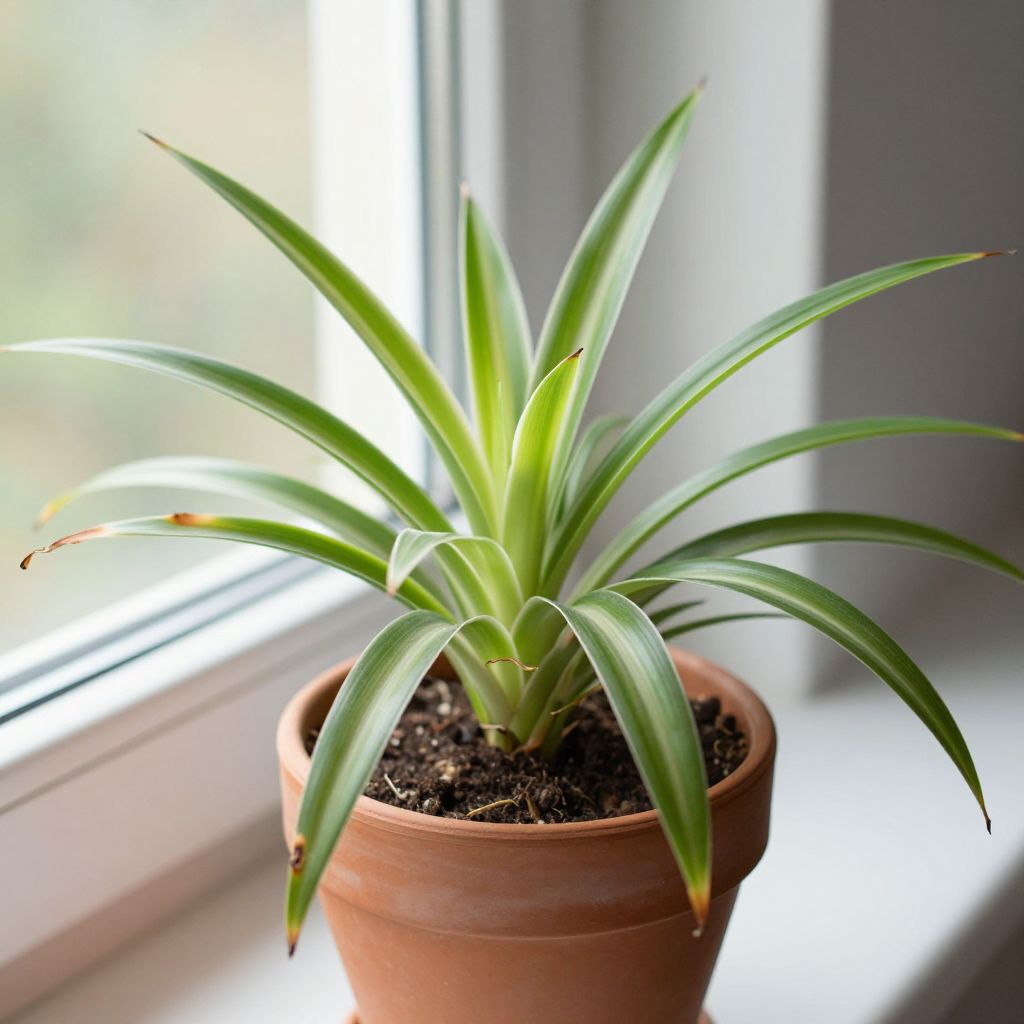
Why is my spider plant turning brown? In most cases, the browning is a care issue rather than a serious disease: dry air, inconsistent watering, mineral buildup, too much sun, or a pot that’s become rootbound. The good news is that spider plants are resilient, and once you identify the cause, they usually recover well.
The key is to look closely at where the browning appears. Brown tips point to a different problem than brown leaves, and outdoor plants may show stress from weather that indoor plants never face. A few simple checks can help you fix the issue before more foliage is affected.
Why Is My Spider Plant Turning Brown?
Spider plants usually turn brown because of water stress, low humidity, excess salts from tap water or fertilizer, too much direct sun, or poor drainage. Brown tips are especially common and often signal a buildup of minerals or inconsistent watering, while larger brown patches can indicate sun scorch, root problems, or cold damage.
Start by Identifying the Type of Browning
Not all browning means the same thing. Where the damage appears gives you the best clue about what to change first.
Brown tips
Brown tips are the most common spider plant complaint. They often develop from dry indoor air, fluoride or salt buildup, or watering that swings between too dry and too wet.
Brown leaf edges or patches
Large brown areas usually suggest stronger stress, such as too much direct sun, cold drafts, fertilizer burn, or root issues from soggy soil.
Entire leaves turning brown
If whole leaves are browning and dying back, check for root rot, severe underwatering, or damage from pests and temperature extremes.
Common Causes and How to Fix Them
1. Inconsistent watering
Spider plants like evenly moist soil, but not wet soil. If the root ball dries out too much and then gets heavily watered, leaf tips often brown and the plant looks tired.
Check the top 1 to 2 inches of soil with your finger. If it feels dry at that depth, water thoroughly until excess drains out, then empty the saucer.
- Water when the upper layer of soil is dry, not on a fixed calendar.
- Use a pot with drainage holes.
- Soak the root zone evenly, then let excess water escape.
2. Low humidity indoors
Spider plants tolerate average home conditions, but very dry air can cause brown tips, especially in winter when heating systems run often. This is more likely if the plant sits near a vent or radiator.
To improve humidity, group plants together, use a pebble tray with water beneath the pot, or move the plant to a naturally more humid room if light levels are still adequate.
3. Tap water minerals, fluoride, or salt buildup
Spider plants are sensitive to minerals and salts that can accumulate in potting soil. This often shows up as crisp brown tips even when you water correctly.
If your tap water is hard or heavily treated, try using filtered water, rainwater, or distilled water for a few weeks and see whether new growth improves. You can also flush the pot occasionally by running plenty of water through the soil and letting it drain fully.
- Flush the pot until water runs freely from the drainage holes.
- Do this only when the soil is already due for watering.
- Use a saucer only to catch runoff, not to hold standing water.
4. Too much direct sunlight
Spider plants prefer bright, indirect light. Strong direct sun, especially through a hot window, can scorch the leaves and create brown, papery patches.
If the plant is near a south- or west-facing window, move it back a few feet or filter the light with a sheer curtain. Outdoors, place it in bright shade or dappled light rather than full midday sun.
5. Fertilizer burn
Too much fertilizer can damage spider plant roots and leave the leaf tips brown. This is more likely if you feed frequently or apply fertilizer to a dry potting mix.
Use fertilizer sparingly, especially during low-light months when growth slows. If you suspect overfeeding, pause fertilizing and flush the soil thoroughly with water to help wash out excess salts.
6. Rootbound plants
Spider plants often fill their pots with roots. When that happens, they may dry out quickly, grow slowly, and develop brown tips more easily.
Check the drainage holes. If roots are circling densely or pushing out of the bottom, repot into a container just one size larger with fresh, well-draining potting mix.
- Choose a pot only 1 to 2 inches wider than the current one.
- Use a light indoor potting mix, not garden soil.
- Repot when roots crowd the container, usually every 1 to 2 years for active plants.
7. Poor drainage or root rot
Constantly wet soil can cause roots to decline, and the leaves may turn brown as the plant struggles to take up water. The soil may smell sour, and the base of the plant may feel soft.
If you suspect root rot, remove the plant from the pot and inspect the roots. Healthy roots are firm and light-colored; rotten roots are dark, mushy, and may break apart easily. Trim damaged roots, repot into fresh mix, and reduce watering.
8. Temperature stress
Spider plants dislike cold drafts, hot blasts from heaters, and sudden temperature swings. Browning can appear after exposure to a chilly window, an open door, or outdoor weather that drops too low.
Keep the plant in a stable indoor spot away from vents and drafty glass. If you move it outdoors for summer, acclimate it gradually and bring it back inside before cool nights arrive.
9. Pests
Spider plants are not pest magnets, but spider mites, aphids, and mealybugs can weaken leaves and cause discoloration. Fine webbing, sticky residue, or cottony clusters are warning signs.
Inspect the undersides of leaves and the crown. If you find pests, isolate the plant and rinse it well. For light infestations, wipe leaves with a damp cloth or use insecticidal soap according to the label directions.
How to Diagnose the Problem Step by Step
If you are unsure what is causing the browning, work through the plant in order. This helps you avoid changing too many things at once.
- Check the soil moisture. Feel the top 1 to 2 inches and note whether the pot is dry, damp, or soggy.
- Inspect the light. Look for direct sun hitting the leaves for several hours a day.
- Look at the pot. Make sure it has drainage holes and is not sitting in water.
- Examine the roots if needed. Lift the plant from the pot if rot or rootbound growth seems likely.
- Review your water and fertilizer routine. Consider mineral-heavy tap water or frequent feeding.
- Check for pests. Look closely at leaf undersides and the crown.
How to Trim Brown Tips and Damaged Leaves
You can clean up the plant without harming it. Trimming improves appearance, but it will not fix the underlying cause, so pair pruning with better care.
- Use clean, sharp scissors or snips.
- Cut brown tips following the natural point of the leaf for a neat look.
- Remove fully brown leaves at the base.
- Disinfect tools if pests or rot are suspected.
If only the tip is brown, you can trim just the damaged portion. Leave a thin brown margin rather than cutting into healthy green tissue.
Prevention: Keeping Spider Plant Leaves Green
Once you solve the immediate problem, a few steady habits will keep browning from returning.
Use the right potting mix
A loose, well-draining indoor potting mix helps roots breathe and prevents soggy conditions. If your mix stays wet for too long, improve drainage by repotting rather than simply watering less.
Water with consistency
Let the top layer dry slightly, then water thoroughly. The goal is even moisture, not constant saturation or frequent drought cycles.
Feed lightly
Spider plants do not need heavy feeding. Overfertilizing is a common mistake, especially when the plant is already stressed.
Give bright, indirect light
Bright indirect light supports healthy growth without scorching the leaves. If the plant is stretching or fading, it may need more light; if the leaves look bleached or crispy, it may need less.
Refresh crowded plants
Repot or divide crowded spider plants when roots fill the container. This reduces stress and encourages stronger new growth.
When Brown Leaves Are Normal
Some browning is simply part of plant aging. Older outer leaves may yellow, brown, and die back over time, especially after the plant has produced many offsets or has been through a seasonal change.
If the rest of the plant is healthy and new leaves are green, remove the old damaged foliage and continue with steady care. The key is whether browning is isolated or spreading.
Conclusion
If you are asking why is my spider plant turning brown, start with the basics: check moisture, light, drainage, and water quality. Most problems are easy to correct once you identify the stress. Trim damaged growth, adjust care, and watch the new leaves for improvement over the next few weeks.
If you want to keep troubleshooting houseplant issues, it also helps to read more about indoor plant light, potting mix, and root care so you can spot problems early and keep your spider plant thriving.