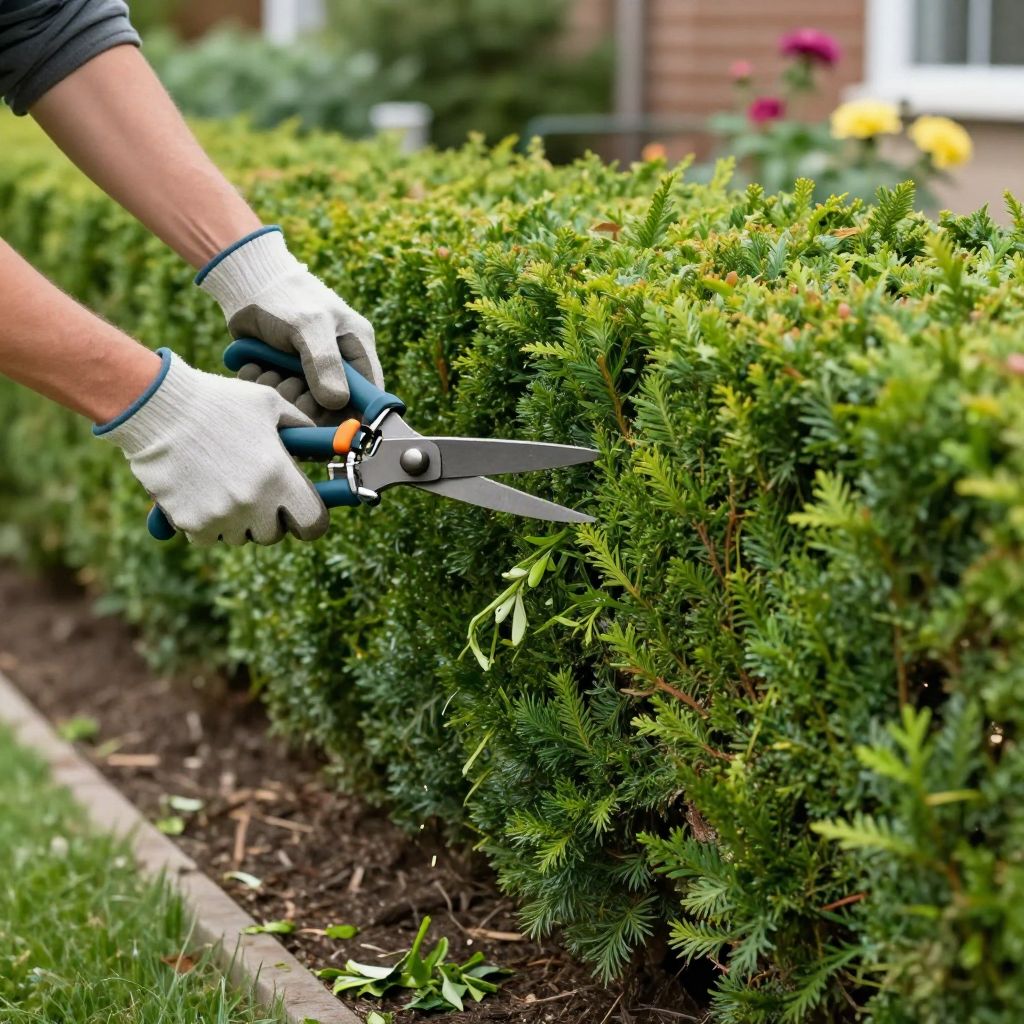
Wondering when to trim hedges without ruining their shape or stressing the plants? The best timing depends on the hedge type, your climate, and how fast it grows. In general, most hedges are trimmed during active growth, with major pruning timed to avoid frost, extreme heat, and nesting birds.
Done well, hedge trimming keeps plants dense, healthy, and attractive. Done at the wrong time, it can leave you with sparse growth, damaged stems, or a hedge that struggles to recover.
When to trim hedges?
The best time to trim hedges is usually during the growing season, after a flush of new growth has hardened off but before the plant is pushed into stress by heat, drought, or cold. Light trimming can often be done several times a year, while heavier pruning is best timed for late winter, early spring, or just after flowering, depending on the hedge species.
Best timing by hedge type
Evergreen hedges
Evergreens such as boxwood, yew, privet, and many conifers are often trimmed in late spring to midsummer, then lightly touched up again if needed. The goal is to shape new growth while leaving enough foliage to keep the plant vigorous.
Avoid cutting back into bare old wood on most evergreens unless you know the plant responds well to renovation pruning. Many evergreens do not regrow reliably from leafless stems.
Deciduous hedges
Deciduous hedges, including beech, hornbeam, and many flowering shrubs used as hedging, are often trimmed in late winter or early spring before active growth starts. If the hedge flowers on old wood, prune after flowering instead so you do not remove the next season’s buds.
Flowering hedges
If your hedge is grown for blossoms, timing matters even more. Spring-flowering shrubs are usually trimmed right after flowering, while summer-flowering hedges can often be cut back in late winter or early spring.
When in doubt, check whether the plant flowers on old wood or new wood. That single detail often decides whether you prune before growth starts or after flowering finishes.
How often should you trim hedges?
Fast-growing hedges may need trimming two to four times per year, while slower growers may only need one or two light cuts. The exact schedule depends on growth rate, soil fertility, rainfall, sunlight, and how formal you want the hedge to look.
- Fast growers such as privet may need regular trimming to stay dense and tidy.
- Slow growers such as yew usually need less frequent shaping.
- Formal hedges need more frequent light trims than informal hedges.
- New hedges often benefit from light formative pruning to encourage branching.
Signs your hedge is ready for trimming
Instead of following a rigid calendar, watch the plant. A hedge is usually ready when the new shoots have extended beyond the desired outline and the growth has started to firm up.
- Fresh growth is sticking out beyond the hedge line.
- The hedge is starting to look soft, shaggy, or uneven.
- Side shoots are shading lower growth.
- You can see the shape beginning to widen at the top.
Trim before the hedge gets too far out of shape. Light, frequent cuts are easier on the plant than severe pruning after months of unchecked growth.
How to trim hedges properly
1. Choose the right tools
Use clean, sharp hedge shears, hand pruners, or loppers depending on stem thickness. For long hedges, powered hedge trimmers can save time, but finish with hand pruners where needed for a cleaner result.
2. Start with dead, damaged, or crossing stems
Before shaping, remove broken, diseased, or dead growth. This improves airflow and helps you see the hedge’s natural structure.
3. Trim the sides first
Work from the bottom upward, taking off only the outer layer of growth. Keep your cuts shallow and even so the hedge stays dense.
4. Keep the top slightly narrower than the base
This is one of the most important hedge-trimming rules. A hedge that is wider at the top shades its lower branches, which can cause thinning and bare patches.
- Make the base a little wider than the top.
- Use a taut string line or visual guide for long hedges.
- Step back often to check symmetry.
5. Finish with a light cleanup
Remove clippings from the hedge base so they do not trap moisture or smother new shoots. Water the hedge only if the soil is dry and the plant is under stress, especially after a heavier trim.
Seasonal pruning tips
Late winter to early spring
This is a common time for structural pruning on many deciduous hedges before buds break. It is also useful for correcting shape, removing winter damage, and reducing congestion before the growing season begins.
Late spring to midsummer
This is often the best window for light shaping on many evergreen hedges after the first flush of growth. Trimming at this stage helps the hedge look neat through summer without forcing tender new growth too late in the season.
Late summer to early autumn
Use caution here. A very light trim may be fine in mild climates, but avoid hard pruning late in the season if frost is approaching. New growth may not harden before cold weather arrives.
What not to do when trimming hedges
Some common mistakes can set a hedge back for months. Avoid these if you want a healthy, even result.
- Do not shear too hard all at once. Remove growth gradually whenever possible.
- Do not prune during extreme heat or drought. The plant may struggle to recover.
- Do not cut flowering hedges at the wrong time. You may remove next season’s buds.
- Do not leave the top wider than the base. This leads to bare lower stems.
- Do not trim with dull tools. Ragged cuts heal more slowly.
How to tell if you are pruning too late
If the hedge is already pushing soft new growth and the weather is turning hot, dry, or cold, a heavy trim may be risky. Late pruning can trigger tender shoots that are more vulnerable to scorching, frost, or wind damage.
In that situation, reduce the cut to a light tidy-up and wait for a better window for major shaping. If the hedge is badly overgrown, spread renovation pruning over two or more seasons rather than removing too much at once.
Special care for newly planted hedges
Young hedges need formative pruning to branch well, but they should not be overcut. During the first year or two, focus on encouraging density rather than creating a perfect finished shape.
- Trim lightly once the plant is established and actively growing.
- Remove only the tips of long shoots.
- Keep the soil evenly moist while roots are settling in.
- Mulch around the base, but keep mulch off the stems.
For a new hedge, the right timing is often less important than the right intensity: small, regular trims are usually better than one severe cut.
Tools, cleanup, and aftercare
Clean tools before and after trimming to help reduce the spread of disease. Wipe blades with a suitable disinfectant if you have cut diseased growth, and sharpen tools regularly for cleaner cuts.
After trimming, check the hedge for hidden issues such as pest damage, dieback, or poor drainage. If the soil stays wet for long periods, roots may suffer and the hedge may thin from the inside out.
If the hedge looks stressed after trimming, give it time. Avoid heavy fertilizing immediately after a hard cut unless your soil test or plant condition clearly calls for it. A balanced, well-drained root zone matters more than pushing soft new growth.
Common hedge problems that affect trimming time
Bird nesting
Always check for active nests before trimming, especially during spring and early summer. In many areas, hedge work should be delayed if birds are nesting in the plant.
Frost damage
If a cold snap is forecast, postpone pruning. Freshly cut stems can be more vulnerable to damage, and tender new growth may be lost.
Overgrown, woody hedges
Very old hedges may need gradual renovation instead of a single hard cut. Some species tolerate this well; others do not. If the hedge is mostly bare inside, research the specific plant before making drastic cuts.
Quick checklist for timing hedge trimming
- Identify whether the hedge is evergreen, deciduous, or flowering.
- Check whether it blooms on old wood or new wood.
- Trim after a growth flush, not during stress.
- Avoid extreme heat, drought, and frost periods.
- Keep the base wider than the top.
- Use sharp, clean tools for neat cuts.
Conclusion
If you have been asking when to trim hedges, the safest answer is: trim when the plant is actively growing, but not under stress, and match the timing to the hedge type. Start with a light cut, step back often, and avoid removing more than the hedge can comfortably replace.
For more practical garden care, you may also want to read about how to prune shrubs correctly and choosing the right hedge plants for your garden.