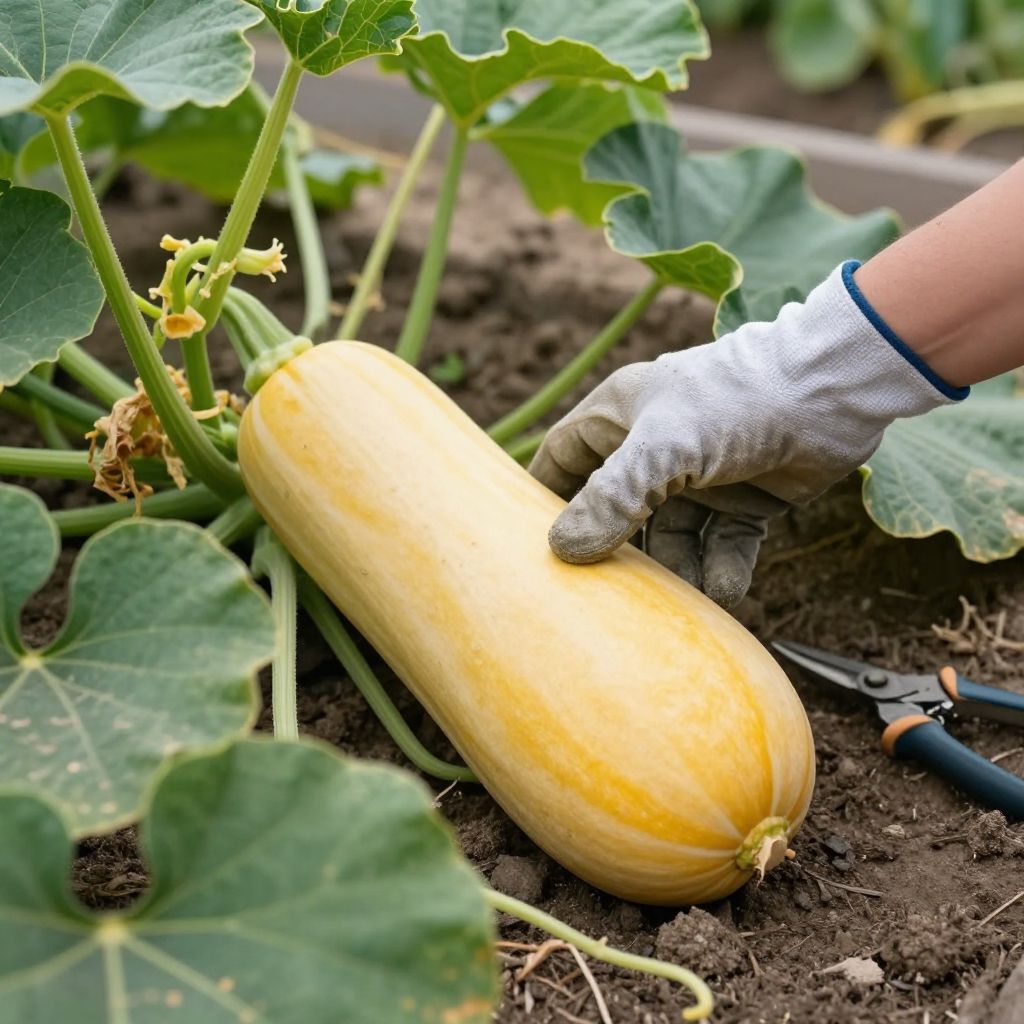
Wondering when to harvest spaghetti squash so it tastes best and stores well? The right harvest window matters a lot: pick too early and the flesh stays watery and stringy in the wrong way; wait too long and the rind can get damaged by frost, pests, or rot.
The good news is that spaghetti squash gives clear signs when it is ready. With a little checking of color, rind firmness, and vine health, you can harvest at the ideal stage and improve both flavor and storage life.
When to harvest spaghetti squash?
Harvest spaghetti squash when the skin is fully colored, the rind is hard enough that you cannot easily dent it with a fingernail, and the stem has started to dry and cork over. Most fruits are ready about 80 to 110 days after planting, but maturity depends on variety, weather, and growing conditions.
How to tell spaghetti squash is ready
Check the rind
The rind should feel firm and tough. Press a fingernail into the skin; if it resists and does not puncture easily, the squash is usually mature enough to pick.
If the skin still feels soft or can be scratched easily, leave the fruit on the vine a little longer if frost is not a concern.
Look at the color
Most spaghetti squash turn a rich yellow, golden yellow, or pale tan when mature, depending on the variety. The color should look even across the fruit, not patchy or green-streaked.
Some green tint can remain near the stem on certain varieties, so color alone is not enough. Use it alongside the rind test and stem condition.
Inspect the stem
A mature spaghetti squash usually has a stem that is dry, brown, and corky rather than fresh and green. The stem may also look slightly shriveled where it joins the fruit.
Do not twist or pull the squash off the vine. Use pruners or a knife and leave a short stem attached, about 1 to 2 inches, to help reduce rot in storage.
Watch the vine
When the plant begins to decline in late season, that often signals the fruit is nearing maturity. Yellowing leaves alone do not guarantee readiness, though, because disease, drought, or nutrient stress can also cause decline.
If the vine is still actively growing but frost is approaching, you may need to harvest slightly early and cure the squash indoors.
Typical harvest timing and seasonal clues
Spaghetti squash is a warm-season crop, so harvest timing usually falls in late summer through fall. In many gardens, fruits are ready around 2 to 3 months after transplanting or direct sowing, but cool weather can slow development.
Use the season as a guide, but trust the fruit itself more than the calendar. A hot summer may speed maturity, while a cool or cloudy season may delay it.
What if frost is coming?
Harvest before a hard frost if the squash is mostly mature. Light frost can damage the vine and fruit surface, and a hard freeze can ruin storage quality.
If the fruit is close to ready but not fully hardened, cut it with a few inches of stem and cure it indoors in a warm, dry place. It may not store as long as fully mature squash, but it is better than losing it to frost.
How to harvest spaghetti squash correctly
- Choose a dry day if possible. Wet fruit is more prone to surface damage and storage issues.
- Use clean, sharp pruners, loppers, or a knife.
- Cut the stem, leaving 1 to 2 inches attached to the fruit.
- Handle the squash gently to avoid bruising the rind.
- Set the fruit in a shaded, dry spot right away.
Do not carry the squash by the stem alone, because it can snap off and leave an open wound. A broken stem shortens storage life.
How many fruits should you leave on the vine?
If the plant has several fruits, you can leave the smaller ones to mature if the season is still warm. In cooler regions or late in the season, focus on harvesting the largest fruits first, because they are most likely to finish ripening.
What to do after harvest
Cure the squash for better storage
Curing helps toughen the rind and heal small surface scratches. Place harvested spaghetti squash in a warm, dry, well-ventilated area for about 10 to 14 days.
Ideal curing conditions are usually around room temperature or slightly warmer, with good airflow and no direct sun. Turn the fruits occasionally so they dry evenly.
Store it properly
After curing, move the squash to a cool, dry place with good ventilation. Avoid damp basements, sealed plastic bags, and spots where fruit can touch each other for long periods.
Check stored squash regularly. Remove any fruit that develops soft spots, mold, or leaking areas before the problem spreads.
Common mistakes when deciding when to harvest spaghetti squash
- Picking too early: The flesh may be pale, watery, and less flavorful, and the squash will not store as well.
- Waiting too long: Overripe fruit can become more vulnerable to frost, rot, and insect damage.
- Removing the stem completely: This creates an entry point for decay.
- Relying on size alone: Large fruit is not always mature; some varieties stay smaller when ripe.
- Ignoring vine health: Disease or stress can make the plant die back before the squash is truly ready.
How growing conditions affect harvest time
Sun, warmth, soil fertility, and water all influence how quickly spaghetti squash matures. Plants grown in full sun with steady moisture and rich, well-drained soil usually ripen more evenly than stressed plants.
When conditions are poor, fruits may stay small, color unevenly, or take longer to harden. If your soil is heavy or stays wet, the plant may struggle and fruit may not fully mature before the season ends.
Signs of stress that can confuse harvest timing
- Leaves yellowing from drought or nutrient stress
- Vines declining early because of powdery mildew
- Fruit stopping growth after a cold snap
- Soft skin on fruit that is still expanding
If the plant looks unhealthy, evaluate the fruit itself rather than assuming it is ready. A mature squash should still have a hard rind even if the vine is fading.
Pests and diseases that can affect harvest quality
Late-season problems such as powdery mildew, squash bugs, and vine borers can shorten the harvest window. These issues may weaken the vine before fruits fully mature, so regular inspection helps you harvest in time.
If disease pressure is high, remove damaged leaves to improve airflow and pick fruits as soon as they are mature enough. Healthy fruit on a declining vine is usually worth harvesting promptly.
Practical prevention tips
- Give plants enough space for airflow.
- Water at the base instead of wetting the leaves.
- Mulch to reduce soil splash onto foliage.
- Inspect stems and leaf undersides weekly for pests.
- Remove severely diseased plant material from the garden.
Can you harvest spaghetti squash early?
Yes, if frost or disease is threatening the crop, you can harvest slightly early and cure the fruit indoors. However, very immature squash will not develop the same texture or storage quality as fully mature fruit.
If you must pick early, choose the largest, most colored fruits with the hardest rind. Smaller, soft-skinned squash are less likely to improve after harvest.
Quick harvest checklist
- Skin is fully colored for the variety
- Rind is hard and resists a fingernail
- Stem is dry or corky
- Fruit feels heavy and firm
- Weather is dry, or frost is near and harvest is needed
Conclusion
To know when to harvest spaghetti squash, look for a hard rind, mature color, and a drying stem, then cut the fruit cleanly with a short stem attached. If you are unsure, wait a few more days and test again unless frost is close.
For more practical vegetable-growing advice, you may also want to read about how to cure winter squash for storage and common squash growing problems and fixes.