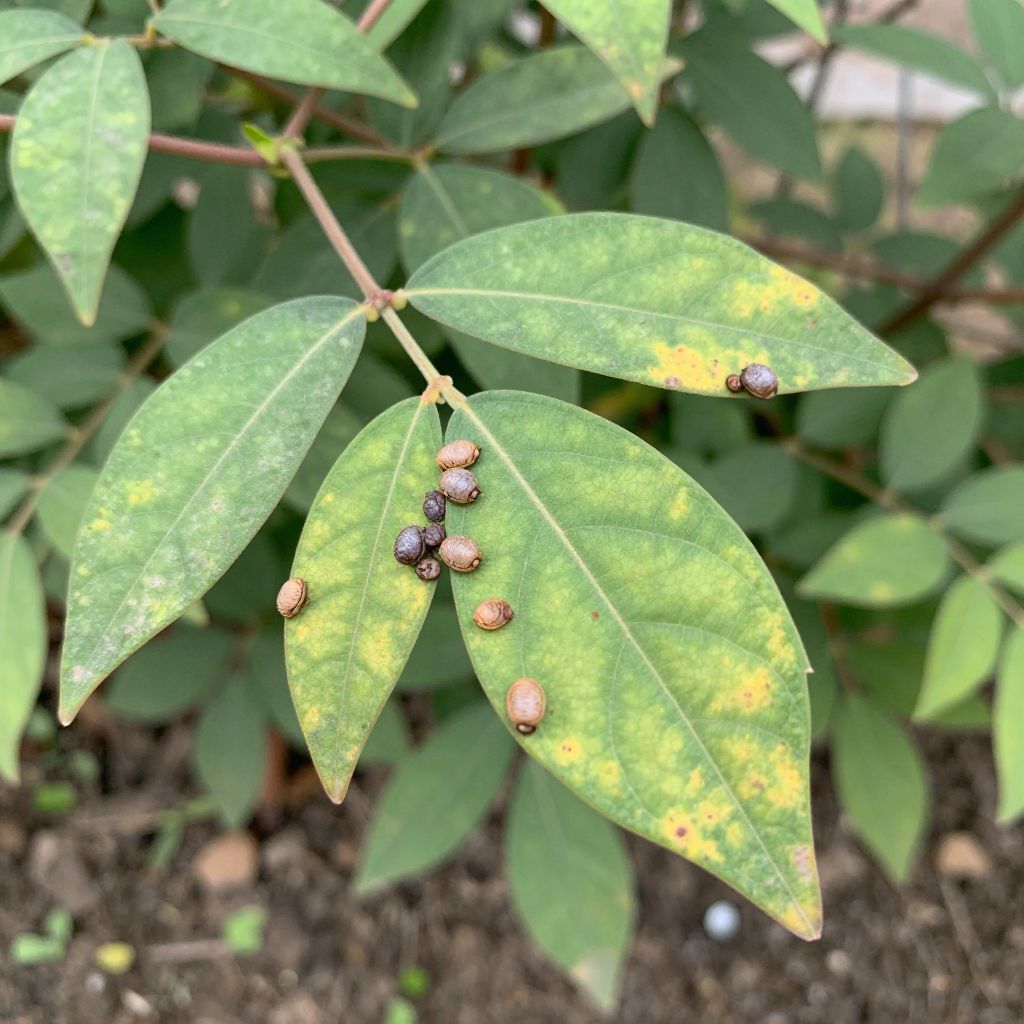
What does scale look like on plants? If you’ve noticed tiny bumps, shells, or sticky leaves on a houseplant or shrub, scale insects may be the cause. They often blend in so well that gardeners mistake them for part of the stem, leaf, or bark.
The good news is that scale is identifiable once you know what to look for. With a close inspection and the right cleanup steps, you can protect your plants before the infestation weakens them.
What does scale look like on plants?
Scale usually looks like small, immobile bumps attached to stems, leaves, twigs, or fruit. They may be round, oval, or shell-like, and colors range from tan and brown to white, gray, or black. Some types feel hard and waxy; others are soft and may leave sticky honeydew behind.
How to identify scale insects correctly
Scale insects are easy to miss because they often stay still and disguise themselves as plant tissue. Look closely at leaf undersides, stems, branch joints, and around leaf veins, where they commonly cluster.
Common visual signs
- Raised bumps that do not move when touched.
- Shell-like coverings that look like tiny fish scales or barnacles.
- Sticky residue on leaves, pots, or surfaces below the plant.
- Shiny, sooty coating caused by sooty mold growing on honeydew.
- Yellowing leaves, leaf drop, or weak new growth on heavily infested plants.
Hard scale vs. soft scale
Hard scale has a firm protective cover and often looks like a tiny bump glued to the plant. Soft scale is more rounded, slightly squishy, and more likely to produce honeydew, which can attract ants and lead to sooty mold.
If you are unsure, try lifting one with a fingernail or a soft brush. If it comes off easily and reveals a pale body beneath, it is likely scale rather than a natural plant feature.
Where scale shows up on different plants
Scale can attack many indoor and outdoor plants, but it often appears in predictable places. The exact look may vary by species, plant type, and how long the infestation has been present.
Houseplants
On indoor plants, scale often appears on stems, leaf midribs, and the undersides of leaves. Common victims include ficus, citrus, schefflera, palms, and some succulents.
Shrubs and trees
On woody plants, scale may look like tiny bark blemishes or a crust on twigs and branches. In severe cases, branches may die back, and the plant may look thin or stressed.
Fruit and ornamental plants
Scale can form on fruiting stems, undersides of leaves, and young shoots. Some species also cause spotting or discoloration around feeding sites, especially on tender growth.
How to tell scale from other plant problems
Not every bump is scale. Before you treat, compare the symptom with other common issues so you do not remove healthy tissue or miss the real pest.
- Natural lenticels: normal corky dots on stems that are usually evenly spaced and part of the plant.
- Mealybugs: cottony, white, fuzzy insects rather than smooth bumps.
- Spider mites: tiny moving specks with fine webbing, not fixed bumps.
- Fungal spots: usually flat or discolored, not raised and shell-like.
- Bark texture: older woody plants can naturally develop rough patches that are not pests.
Why scale is a problem for plants
Scale insects feed by piercing plant tissue and sucking sap. A light infestation may only cause cosmetic damage, but a heavy one can weaken growth, reduce flowering, stunt new shoots, and eventually kill small or stressed plants.
Soft scale can also leave behind honeydew, which encourages ants and sooty mold. That black coating does not usually feed on the plant directly, but it blocks light and makes leaves look dirty and unhealthy.
What to do when you find scale
Act quickly, especially on houseplants and young shrubs. The earlier you remove scale, the easier it is to stop the infestation from spreading to nearby plants.
- Isolate the plant if it is indoors or close to other plants.
- Inspect carefully with a hand lens or your phone camera zoom.
- Prune heavily infested stems if the damage is localized and pruning will not ruin the plant’s shape.
- Wipe or scrape off visible scale with a soft cloth, cotton swab, or your fingernail.
- Wash the plant with a gentle stream of water to remove loose pests and honeydew.
- Repeat inspections every 7 to 14 days, because crawlers and hidden scale may remain.
Pruning tips
When pruning woody plants, cut out the worst-infested twigs and branches first. Disinfect pruners between cuts if you are moving from one plant to another, especially if the plant also shows dieback or other disease symptoms.
Best control methods for scale
Scale is easier to manage when you combine physical removal with ongoing monitoring. The best method depends on whether the plant is indoors, outdoors, small, or established.
Physical removal
For light infestations, hand removal is often the fastest option. Use a cotton swab dipped in rubbing alcohol on small houseplants, but test a leaf first to make sure it does not scorch the foliage.
Horticultural oil and insecticidal soap
These can help, especially against young crawlers, which are the mobile stage of scale. Coverage matters more than strength, so apply evenly to stems and leaf undersides according to the product label and the plant’s tolerance.
Do not spray in hot sun or on drought-stressed plants. Oils and soaps can damage foliage if used at the wrong time or concentration.
Outdoor plants and beneficial insects
On landscape plants, natural predators such as lady beetles, lacewings, and parasitic wasps may help reduce scale populations. Avoid broad-spectrum insecticides unless the infestation is severe and you have no better option, because these products can also kill beneficial insects.
When scale is most active
Scale activity depends on the species and your climate, but many types are easiest to target when crawlers emerge. These tiny young insects are much more vulnerable than the adult bumps you see attached to the plant.
For many gardeners, that means repeated checks during the growing season are essential. In warm weather, scale can reproduce faster, while indoor plants may support year-round activity if conditions stay stable.
Seasonal considerations
- Spring and early summer: watch for new crawlers on fresh growth.
- Hot, dry periods: stressed plants are more vulnerable to damage.
- Fall: inspect before bringing outdoor plants indoors.
- Winter indoors: houseplants can still host active scale, especially near warm windows.
How to prevent scale from coming back
Prevention is mostly about plant health and inspection. Strong, properly sited plants tolerate pests better than stressed ones, but even healthy plants can get scale if you do not catch it early.
- Quarantine new plants for a couple of weeks before placing them near others.
- Check stems and leaf undersides regularly, especially on slow-growing or woody plants.
- Avoid overfertilizing, which can create soft, pest-prone growth.
- Keep plants evenly watered for their needs, but do not let pots sit in water.
- Improve air circulation around crowded shrubs and indoor plants.
- Remove ants if they are protecting scale in exchange for honeydew.
Common mistakes gardeners make
Scale can be frustrating because it hides well, and some common responses do not work as expected. Avoid these errors to save time and protect the plant.
- Assuming bumps are harmless and waiting too long to inspect.
- Spraying only the top of leaves and missing stems and undersides.
- Using insecticides on the wrong stage without checking for crawlers.
- Overpruning a plant that needs some foliage to recover.
- Ignoring nearby plants that may already be infested.
When to call for extra help
If a large shrub or tree has heavy scale infestation, or if the plant is valuable and declining, consider getting help from a local extension service, certified arborist, or experienced nursery professional. Large woody plants can be difficult to treat thoroughly from the ground.
Seek advice sooner if you see branch dieback, repeated infestations after treatment, or honeydew and sooty mold spreading to nearby surfaces. Those signs suggest the problem is established and may need a broader management plan.
Quick answer: what to look for today
To identify scale fast, check stems and leaf undersides for fixed, bump-like insects that look tan, brown, white, gray, or black. If the plant feels sticky, shows sooty mold, or has yellowing leaves and weak growth, inspect more closely and treat early.
For more plant health troubleshooting, you may also want to read about related pest and care issues in your garden and home plant collection.