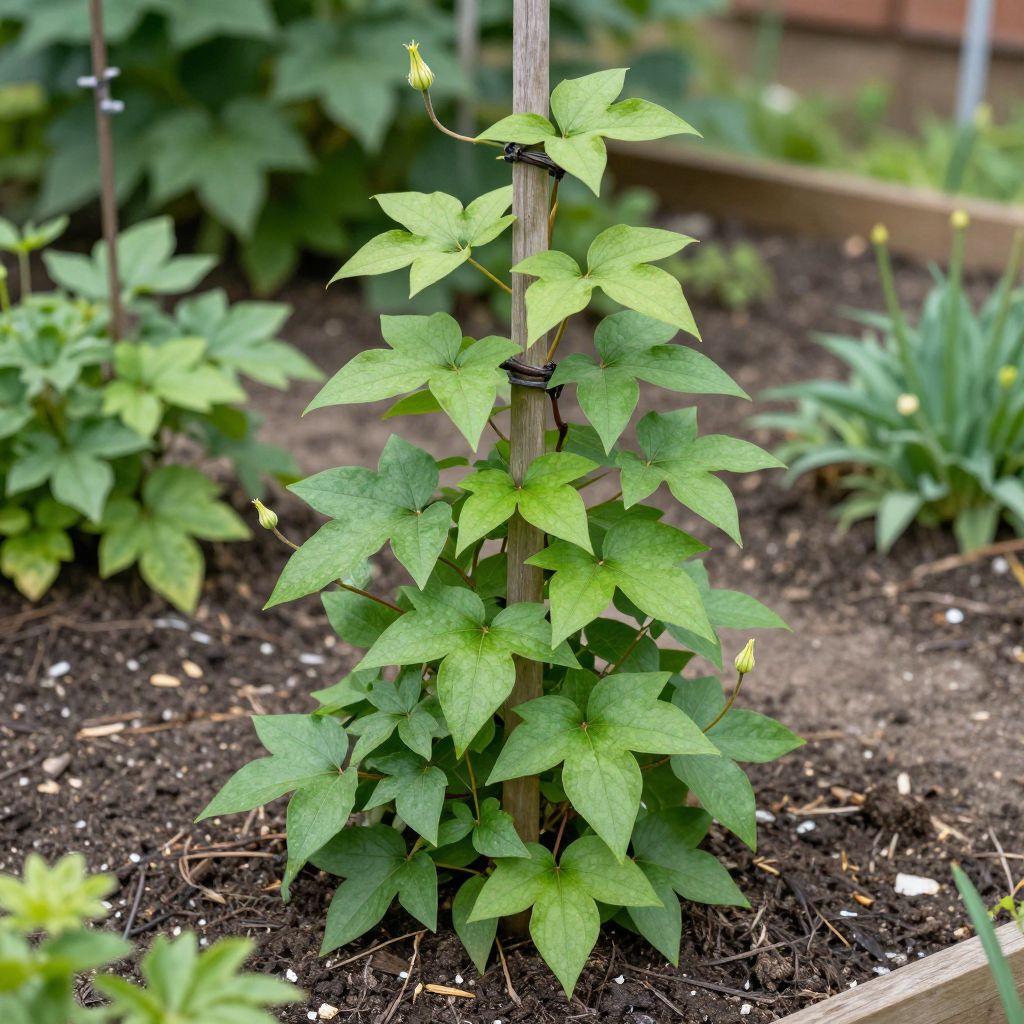
What are vines, and how do you tell whether one will climb, trail, or spread through your garden? Vines are plants with long, flexible stems that use support, twining, tendrils, aerial roots, or scrambling growth to reach light. Some are ornamental, some produce fruit, and some become aggressive if not managed well.
Knowing how to identify and grow vines helps you choose the right plant for a trellis, fence, arbor, container, or groundcover area. It also helps you avoid common mistakes like giving a heavy vine weak support or planting a fast grower where it can smother nearby plants.
What are vines?
Vines are plants with stems adapted to climb, sprawl, or trail rather than stand upright on their own. They grow by using nearby supports or by spreading across the ground, which lets them capture more sunlight in crowded spaces. In gardens, vines are valued for flowers, fruit, privacy, shade, and vertical interest.
How to identify a vine in the garden
Look first at the stem and growth habit. A true vine usually has long, flexible stems and a strong tendency to lean, climb, or spread instead of forming a self-supporting trunk.
Common climbing methods
- Twining vines wrap their stems around a support, such as morning glory or honeysuckle.
- Tendril climbers use thin curling structures to grab onto supports, as seen in peas and grapes.
- Aerial-root climbers attach with rootlets, such as ivy and climbing hydrangea.
- Scramblers grow long canes or stems that need tying in, like some roses and bougainvillea in warm climates.
- Trailing vines spill over edges or creep along the ground, such as sweet potato vine or creeping Jenny.
Signs you are looking at a vine
- Long internodes, or spaces between leaves
- Flexible stems that bend easily
- Rapid reach toward light or nearby structures
- Need for support, tying, or training
- Growth that can cover fences, arbors, walls, or ground quickly
Not every plant with a long stem is a vine, and not every vine climbs the same way. Correct identification matters because the support, pruning, and spacing needs vary a lot from one type to another.
What kinds of vines are there?
Garden vines are usually grouped by their growth style and use. Some are grown for flowers, some for shade or screening, and others for edible harvests.
Ornamental vines
These are grown mainly for flowers, foliage, or seasonal display. Examples include clematis, passionflower, trumpet vine, wisteria, and climbing roses.
Edible vines
These produce food crops such as grapes, kiwi, cucumbers, beans, peas, and melons. Many edible vines need more sun and stronger support than ornamental types.
Groundcover or trailing vines
Some vines are used to cover soil, spill from containers, or soften edges. These can be useful in hanging baskets, raised beds, and slopes, but they still need room to spread.
How do vines grow best?
Most vines grow best with the right combination of light, support, soil drainage, and regular training. The exact needs depend on the species, but many garden vines prefer fertile soil that drains well, consistent moisture while establishing, and enough space for their mature size.
Sunlight
Many flowering and fruiting vines need full sun to bloom or produce well, though some tolerate partial shade. Always check the plant’s label or species requirements before planting. A vine that flowers poorly is often not getting enough light.
Soil and drainage
Vines generally do best in soil that holds moisture without staying soggy. If your soil is heavy clay, improve drainage with compost and careful bed preparation rather than planting into a wet hole. In containers, use a quality potting mix and a pot with drainage holes.
Watering
Newly planted vines need regular moisture until roots establish. After that, many are more drought-tolerant, but they still perform better with deep watering during dry spells. Water at the soil level when possible to reduce leaf disease.
Support
Choose support based on the vine’s mature weight and climbing method. Lightweight annual vines may only need string or a small trellis, while mature woody vines may require a sturdy arbor, fence, or wall system that can handle years of growth.
- Use strong posts and secure fasteners for heavy vines.
- Leave room for airflow behind dense climbers.
- Install support before planting when possible.
- Match the support type to the climbing habit.
How to plant a vine successfully
Planting a vine is similar to planting many shrubs, but the support and spacing matter more. Give the plant room to grow outward as well as upward.
- Choose a site with the right light for the species.
- Prepare soil by loosening it and mixing in compost if needed.
- Set the support in place before planting, especially for larger vines.
- Dig a hole as deep as the root ball and about twice as wide.
- Place the vine at the same depth it was growing in the pot.
- Backfill, water thoroughly, and mulch lightly without piling mulch against the stem.
- Begin training stems early so they attach in the direction you want.
Do not bury the crown too deeply. Many vines suffer when planted lower than they were in the nursery container, especially in wet soil.
Pruning and training vines
Pruning is one of the most important parts of vine care. It keeps growth manageable, improves flowering or fruiting in many species, and prevents vines from overwhelming nearby plants or structures.
Training young vines
Guide stems gently while they are flexible. Tie them loosely with soft plant ties, garden twine, or strips of cloth. Avoid wire or tight knots that can girdle stems as they thicken.
When to prune
Pruning time depends on the vine. Some bloom on new wood and can be cut back in late winter or early spring, while others bloom on old wood and should be pruned right after flowering. If you are unsure, identify the species first, because the wrong timing can remove flower buds.
What to remove
- Dead, damaged, or diseased stems
- Crossing shoots that rub together
- Excess growth blocking airflow
- Long runners escaping the support area
Common problems with vines
Most vine problems come from poor support, too much shade, overcrowding, or neglecting pruning. Some vines also become invasive if they are planted where they can spread freely.
Vine is not climbing
Some vines need training to find the support, while others need a different support surface altogether. Twining vines will not naturally cling to a flat wall, and tendril climbers may need a mesh or wire system.
Poor flowering
Low light, excess nitrogen, or incorrect pruning can reduce bloom. If the vine is healthy but not flowering, check whether it needs more sun or a different pruning schedule.
Yellowing leaves
Yellow leaves can signal overwatering, poor drainage, nutrient imbalance, or root stress. Check the soil first. If it stays wet for long periods, reduce watering and improve drainage before adding fertilizer.
Pests and diseases
Vines can attract aphids, spider mites, whiteflies, scale, and caterpillars, depending on the species. Fungal diseases such as powdery mildew and leaf spot are more likely when plants are crowded or watered overhead.
- Inspect new growth and leaf undersides regularly.
- Prune for airflow.
- Remove heavily infected leaves when appropriate.
- Use the least disruptive control method that fits the problem.
Are vines good for small gardens?
Yes, vines can be excellent in small gardens because they grow vertically and save ground space. They can screen a view, shade a patio, or soften a fence without taking up much room at soil level.
That said, small gardens need careful plant selection. Choose slower or more compact vines, and avoid aggressive species unless you are ready to prune often and keep them contained.
Best uses for vines in small spaces
- Covering a narrow fence
- Softening a trellis or obelisk
- Creating seasonal privacy
- Spilling from hanging baskets or containers
- Adding height to a courtyard or patio
Can vines be grown in containers?
Many vines can grow well in containers if the pot is large enough and the support is sturdy. Container-grown vines dry out faster than in-ground plants, so they usually need closer monitoring.
Use a pot with excellent drainage, a rich but free-draining potting mix, and a support anchored firmly in the container. Repot or refresh the soil when roots crowd the pot or growth slows noticeably.
How to choose the right vine for your garden
Start by matching the vine to your climate, light, and space. Then think about whether you want flowers, fruit, privacy, evergreen coverage, or seasonal color.
- For sun: many flowering and fruiting vines perform best in brighter sites.
- For shade: choose shade-tolerant species suited to lower light.
- For support: match the climbing habit to the structure you have.
- For maintenance: pick a vine you can prune and manage regularly.
- For safety: avoid aggressive spreaders near gutters, roofs, or weak fences.
Maintenance tips for healthy vines
Healthy vines are easier to manage when you keep up with a few simple tasks through the season. Regular attention prevents tangles, disease, and structural damage.
- Check ties so they do not cut into stems.
- Remove dead growth before it builds up.
- Keep vines off rooflines, gutters, and vents.
- Mulch around the base to conserve moisture, but keep mulch away from the stem.
- Watch for suckers or runners spreading beyond the planting area.
Conclusion: use vines with a plan
Vines are versatile plants that can climb, trail, or spread to add beauty, shade, food, and structure to your garden. The key is to match the vine to the right support, light level, soil conditions, and pruning routine. If you are unsure, identify the climbing method first, then choose your support and care plan from there.
If you want to keep learning, you may also find it helpful to read about how to choose the right trellis for climbing plants and pruning flowering vines for better blooms.