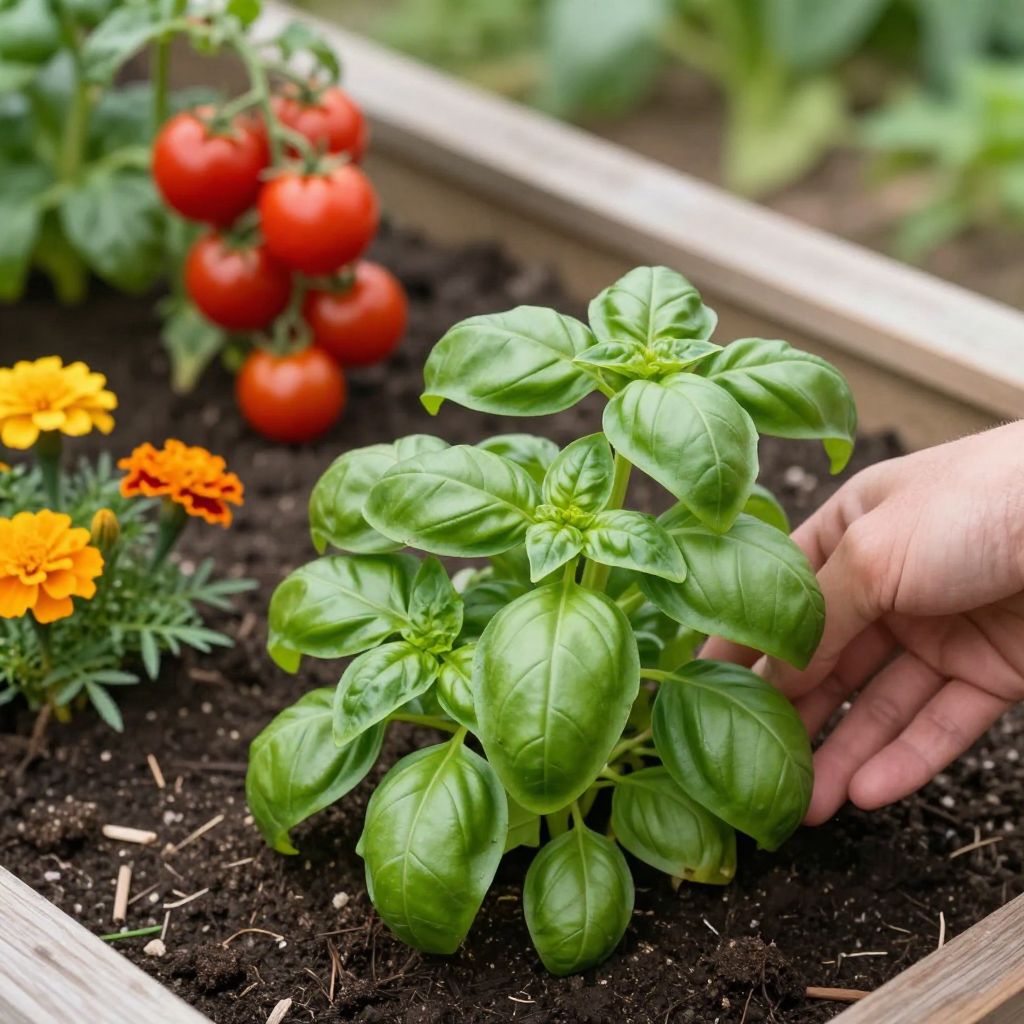
What should you plant with basil so it grows well and tastes its best? The short answer is to pair basil with vegetables and herbs that enjoy similar warmth, sun, and evenly moist soil, while avoiding plants that compete heavily for space or prefer very different conditions.
Good basil companions can help fill garden beds, attract pollinators, and make efficient use of space. The best choices depend on whether you are growing basil in containers, raised beds, or the ground, and on how much sun, water, and room your garden can provide.
What to plant with basil?
Basil grows best with warm-season plants that like full sun, rich soil, and regular watering. Excellent companions include tomatoes, peppers, eggplant, parsley, marigolds, and nasturtiums. Choose plants that won’t shade basil too much, and give each enough airflow so leaves dry quickly after rain or watering.
Best companion plants for basil
Tomatoes
Tomatoes and basil are a classic pairing because they share similar growing needs: warmth, sun, and steady moisture. Basil can fit neatly at the edge of a tomato bed or in a nearby container, where it won’t be crowded by tomato roots and foliage.
Keep in mind that tomatoes can grow large and cast shade. Place basil where it still gets at least 6 hours of sun a day, and prune tomato leaves if needed to improve airflow.
Peppers
Sweet and hot peppers make good basil companions because they also prefer warm conditions and fertile, well-drained soil. Basil can help fill the space between pepper plants without overwhelming them.
Avoid planting basil so tightly that air circulation suffers. Pepper beds that stay too damp can encourage leaf disease, so water at the soil line and avoid wetting foliage whenever possible.
Eggplant
Eggplant is another heat-loving crop that pairs well with basil in a summer garden. Both plants appreciate consistent moisture and rich soil, and basil can act as a useful understory plant around the base of eggplant.
Leave enough room for eggplant’s broad leaves. If the basil is getting shaded out, move it to a brighter edge or harvest it more often to keep it compact.
Parsley
Parsley works well near basil because it has similar moisture needs and can tolerate partial afternoon shade in hot climates. In mixed herb beds, parsley and basil can be planted together if the soil is fertile and drains well.
Because both herbs can be harvested repeatedly, this combination is practical for kitchen gardens. Just avoid overcrowding, since dense herb plantings can trap humidity and invite fungal problems.
Marigolds
Marigolds are often used around basil beds because they add color and can help support a more diverse garden. They also like sunny conditions and can fit along borders or between larger plants.
Use marigolds as a border or edging plant rather than crowding basil. The goal is to attract beneficial insects and create structure, not to compete for root space.
Nasturtiums
Nasturtiums can be a useful companion in and around basil beds because they grow quickly, spill over edges, and can act as a trap crop for some pests. They also do well in full sun and moderately fertile soil.
In small spaces, nasturtiums are especially helpful in containers or bed edges where their trailing habit won’t smother basil. Give them enough room so basil still gets light and airflow.
Plants to avoid placing too close to basil
Not every plant is a good match for basil. The main problem is usually not “bad chemistry,” but differences in size, light needs, water needs, or growth rate.
- Large, aggressive plants that quickly shade basil or crowd its roots.
- Very dry-soil plants that prefer lean, dry conditions rather than regular moisture.
- Heavy feeders planted so densely that basil gets pushed out of the bed.
- Cool-season crops that finish early and may not share basil’s summer rhythm.
If you are unsure, use this simple rule: basil should be able to receive bright light, steady moisture, and at least a little airflow on all sides. If a companion plant blocks those three things, it is probably too close.
How to plant basil with companions
Choose the right location
Basil needs warmth and sun. Outdoors, choose a site with full sun in most climates, though in very hot regions a little afternoon shade can help prevent leaf scorch.
Indoors, basil needs the brightest window you have or supplemental light. Weak light leads to leggy growth, and basil will not pair well with sun-loving companions if it is stretching and thinning out.
Prepare the soil
Basil prefers soil that is fertile, loose, and well drained. Work in compost before planting to improve texture and moisture retention, especially in sandy or depleted soil.
Avoid waterlogged ground. If your soil stays soggy after rain, grow basil in a raised bed or container so roots do not sit in excess moisture.
Space the plants properly
Good spacing matters more than many gardeners expect. Basil plants need enough room to branch and dry out after watering or rain.
- Set basil where it can spread without being swallowed by taller plants.
- Leave enough space between basil and larger companions for air movement.
- In containers, avoid overcrowding; one basil plant often performs better than several crammed together.
Use containers wisely
Containers are a simple way to pair basil with compatible plants, especially if your garden soil is poor or your season is short. Choose a pot with drainage holes and enough volume for roots to grow comfortably.
If you combine basil with another plant in the same container, make sure both have similar water needs and that the container is large enough to prevent rapid drying.
Care tips for basil in mixed plantings
Water consistently, but do not overwater
Basil likes evenly moist soil, not soggy conditions. In mixed beds, water at the base of the plants so the leaves stay dry and disease pressure stays lower.
Check the soil with your finger before watering. If the top inch feels dry, it is usually time to water; if it still feels moist, wait a bit longer.
Pinch basil regularly
Pinching basil encourages bushier growth and helps it stay compact among companion plants. Remove the top set of leaves above a node to promote branching.
This is especially helpful when basil is growing beside tomatoes or peppers, since a compact plant is easier to keep in good light and airflow.
Feed lightly if needed
Basil grows best in moderately fertile soil. If your bed is already rich in compost, you may not need much additional feeding.
Too much nitrogen can produce lots of leafy growth with weaker flavor and can make basil overly lush and floppy. If growth looks pale or slow, improve the soil gradually rather than overcorrecting with heavy feeding.
Common problems when planting basil with other crops
Too much shade
The most common issue in companion plantings is shade from larger plants. Basil can tolerate a little afternoon relief in hot weather, but it still needs strong light to stay productive.
Fix: move basil to the sunnier edge of the bed, prune nearby plants, or switch to a container location with better exposure.
Poor airflow
Dense plantings can trap humidity around basil leaves, which increases the risk of fungal problems and leaf spotting.
Fix: thin crowded growth, widen spacing, and water early in the day so foliage dries quickly.
Wet soil and root stress
Basil does not like sitting in saturated soil. In beds with heavy clay or in containers without drainage, roots can decline quickly.
Fix: improve drainage with compost, use raised beds, or repot basil into a container with drainage holes and a lighter potting mix.
Flowering too early
When basil gets stressed by crowding, heat, or inconsistent watering, it may flower early and slow leaf production.
Fix: harvest often, pinch flower buds as soon as they appear, and keep the plant from drying out completely between waterings.
How to use basil in the garden layout
Basil is versatile, so you can use it in several ways depending on your space.
- Bed edging: place basil along the front of a vegetable bed where it gets light and is easy to harvest.
- Between taller crops: tuck basil near tomatoes or peppers, but not directly under dense shade.
- Container grouping: combine basil with other sun-loving herbs or keep it in its own pot for easier care.
- Pollinator border: mix basil with flowers such as marigolds or nasturtiums for a colorful, productive edge.
If you want the cleanest results, think of basil as a “supporting” plant rather than the main structure of the bed. It does best when it can fill gaps without being crowded out.
Propagation and replanting basil
Basil is easy to start from seed or cuttings, which makes it simple to replace plants that become woody or bolt. In warm weather, seeds germinate quickly in moist, warm soil.
You can also root basil cuttings in water or moist potting mix, then transplant them once roots form. This is useful if one plant is thriving and you want more basil for a nearby bed or container.
Harvesting basil in companion beds
Harvest basil often to keep it compact and productive. Cut stems above a leaf pair so the plant branches instead of becoming tall and sparse.
Regular harvesting also helps neighboring plants by reducing crowding. In mixed beds, a smaller, bushier basil plant is much easier to manage than a tall one that leans over its companions.
Simple companion planting checklist
- Choose warm-season companions with similar light and water needs.
- Give basil full sun or bright light, depending on your climate.
- Use fertile, well-drained soil with added compost.
- Space plants so air can move between leaves.
- Water consistently at the soil line.
- Pinch basil often to keep it bushy.
- Watch for shade, crowding, and soggy soil.
Conclusion
If you are wondering what to plant with basil, start with companions that share its love of warmth, sun, and steady moisture, such as tomatoes, peppers, eggplant, parsley, marigolds, and nasturtiums. Give basil enough light and space, and it will fit neatly into a productive, attractive garden. For more herb-growing guidance, you may also want to read related gardening articles on growing herbs in containers and how to prune herbs for better harvests.