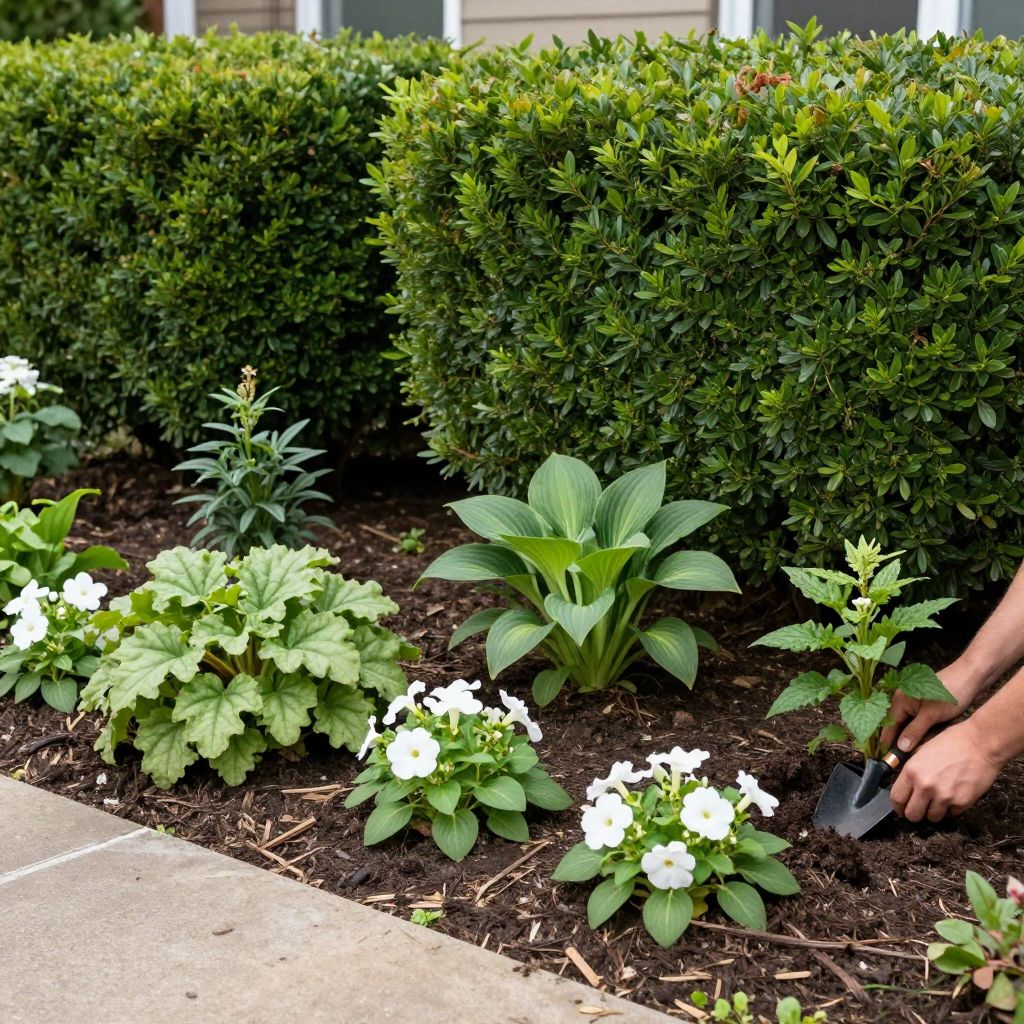
What should you plant in front of boxwoods? The best choices are low, tidy plants that won’t compete with the shrubs or hide their shape. Think in terms of color, texture, and scale: short perennials, compact annuals, bulbs, and small groundcovers that enjoy similar light and soil conditions.
Boxwoods make a strong evergreen backdrop, so the planting in front should soften edges without crowding roots or blocking airflow. With the right companions, you can create a border that looks polished through most of the year and stays manageable with simple maintenance.
What to plant in front of boxwoods?
Choose low-growing plants that stay below the boxwood’s lower canopy, tolerate partial sun to sun, and prefer well-drained soil. Good options include catmint, coral bells, dwarf daylilies, seasonal annuals, spring bulbs, and small groundcovers such as creeping thyme or ajuga, depending on your light and climate.
Best plant choices for the front of boxwoods
Low perennials
Perennials are often the easiest long-term choice because they return each year and can be trimmed to stay neat.
- Catmint (Nepeta) – airy lavender-blue flowers and gray-green foliage; useful where you want a soft, informal edge.
- Coral bells (Heuchera) – colorful foliage for part shade; good for adding contrast against dark green boxwood.
- Geranium (hardy cranesbill) – mounding growth and long bloom periods in many climates.
- Dwarf daylilies (Hemerocallis) – reliable, clumping plants for sunny borders.
- Salvia – compact varieties can work well in sunny, well-drained spots.
Groundcovers
Groundcovers help fill bare soil, reduce weeds, and create a finished look. The key is to pick plants that stay low and do not creep aggressively into the boxwood’s base.
- Creeping thyme (Thymus serpyllum or related species) – best in full sun and very well-drained soil.
- Ajuga – useful in part shade, but can spread quickly, so keep it edged.
- Sweet woodruff (Galium odoratum) – a shade-tolerant option in cooler, moist sites.
- Liriope – grass-like clumps that work in many landscapes, especially in part shade.
Seasonal color plants
If you like to refresh the bed through the year, annuals and bulbs are easy to swap in and out.
- Pansies and violas – excellent for cool seasons and mild climates.
- Impatiens – useful in shade, where boxwoods may cast afternoon cover.
- Begonias – good for bright shade or filtered light.
- Tulips, daffodils, and crocuses – spring bulbs tuck in well if planted where the soil drains freely.
How to match plants to your boxwood’s growing conditions
Sunlight matters most
Boxwoods themselves tolerate sun or part shade, but the plants in front must match the actual light at ground level. A bed that gets morning sun and afternoon shade is very different from one in full sun all day.
- Full sun: catmint, creeping thyme, dwarf daylilies, many salvias, daffodils.
- Part shade: coral bells, geraniums, liriope, ajuga, pansies, begonias.
- Shade or bright shade: impatiens, sweet woodruff, some heucheras, ferns in larger beds.
Soil and drainage
Boxwoods prefer soil that drains well but still holds some moisture. Most companion plants do best in the same conditions, especially if you improve the bed with compost before planting.
Avoid waterlogged spots. Boxwoods can suffer root problems in soggy soil, and many front-border plants will decline too if drainage is poor.
Spacing and scale
Keep the front planting low enough that it does not bury the boxwood’s lower branches. As a general rule, choose plants that mature at about one-third to one-half the height of the boxwood hedge or shrub face you want to show off.
Leave enough room for air movement. Crowding plants tightly against boxwood can create a humid pocket that encourages disease and makes pruning harder.
How to plant in front of boxwoods
Prepare the bed first
- Remove weeds and grass from the planting area.
- Check drainage by watering the soil and seeing whether it drains within a reasonable time. If water sits for hours, improve the site before planting.
- Work in a few inches of compost if the soil is poor or compacted.
- Rake the surface smooth and shape a slight slope away from the boxwood trunk or base if needed.
Plant carefully around roots
Boxwoods have shallow roots near the surface, so dig gently. Keep new plants outside the densest root zone when possible, and avoid deep digging right at the shrub’s base.
- Set the new plant at the same depth it was growing in its container.
- Backfill with native soil mixed with a little compost if needed.
- Water thoroughly after planting to settle the soil.
- Mulch lightly, keeping mulch a few inches away from the boxwood stems.
Use mulch the right way
A 2- to 3-inch layer of mulch helps conserve moisture and suppress weeds. Keep mulch from touching the boxwood trunk or piling against the base of companion plants.
Too much mulch can trap moisture and invite rot or pests. A thin, even layer is better than a thick mound.
Care tips for a neat, healthy border
Watering
New plantings need consistent moisture while they establish, but the soil should never stay soggy. Water deeply when the top inch or two of soil begins to dry, then adjust based on rainfall, heat, and soil type.
Once established, many of the best front-of-boxwood plants are fairly low maintenance. Still, container-grown annuals and shallow-rooted perennials may need more frequent watering during hot weather.
Pruning and trimming
Trim companion plants before they spill into the boxwood’s outline. This keeps the hedge or shrub visible and prevents the border from looking crowded.
- Deadhead spent flowers on annuals and many perennials to extend bloom.
- Cut back floppy growth before it covers the boxwood base.
- Remove yellow or damaged leaves promptly to keep the planting tidy.
Feeding
Most boxwood companions do not need heavy feeding. In many gardens, a spring topdressing of compost is enough. If a plant is weak or pale, test the soil before adding fertilizer so you do not overfeed the bed.
Common mistakes to avoid
- Planting too close to the boxwood: this leads to crowding, poor airflow, and difficult maintenance.
- Choosing tall plants: tall flowers or grasses can hide the boxwood’s shape and make the bed look messy.
- Ignoring light levels: a shade plant in full sun or a sun lover in shade will struggle.
- Overwatering: soggy soil is one of the fastest ways to cause problems in a boxwood border.
- Using aggressive spreaders without a plan: some groundcovers need edging or they will overrun the bed.
Problems you may see and how to fix them
Yellowing leaves
Yellow leaves on companion plants often point to poor drainage, too much shade, or nutrient imbalance. Check soil moisture first. If the area stays wet, improve drainage rather than adding more fertilizer.
Leggy growth
If plants stretch toward the light, they may be in too much shade. Move them if possible or choose a more shade-tolerant plant next time.
Boxwood decline near the base
If the boxwood itself looks thin or stressed near the bottom, the border may be too crowded, too wet, or mulched too deeply. Open up airflow, reduce mulch depth, and keep companion plants from pressing against the stems.
Pests and disease pressure
Dense plantings can hide problems. Check regularly for leaf spots, aphids, or chewing damage, especially in humid weather. Early cleanup, good spacing, and proper watering prevent many issues before they spread.
Design ideas for different garden styles
Formal look
For a classic, structured border, use low edging plants with uniform height. Boxwoods pair well with neat drifts of liriope, dwarf annuals, or clipped perennials that echo the hedge’s shape.
Soft cottage look
If you prefer a looser style, mix catmint, geraniums, and seasonal bulbs. The boxwood provides structure while the front planting adds movement and color.
Shade garden look
In part shade, combine coral bells, impatiens, and ferns in a larger bed. This works especially well when the boxwood anchors the back of a layered planting.
Conclusion
The best answer to what to plant in front of boxwoods is simple: choose low, well-behaved plants that fit your light, soil, and maintenance level. Start with one or two reliable choices, prepare the soil well, and keep the planting open enough for airflow and easy pruning. If you want more ideas for building a balanced border, look for related guidance on boxwood care and pruning and low-maintenance perennial border plants.