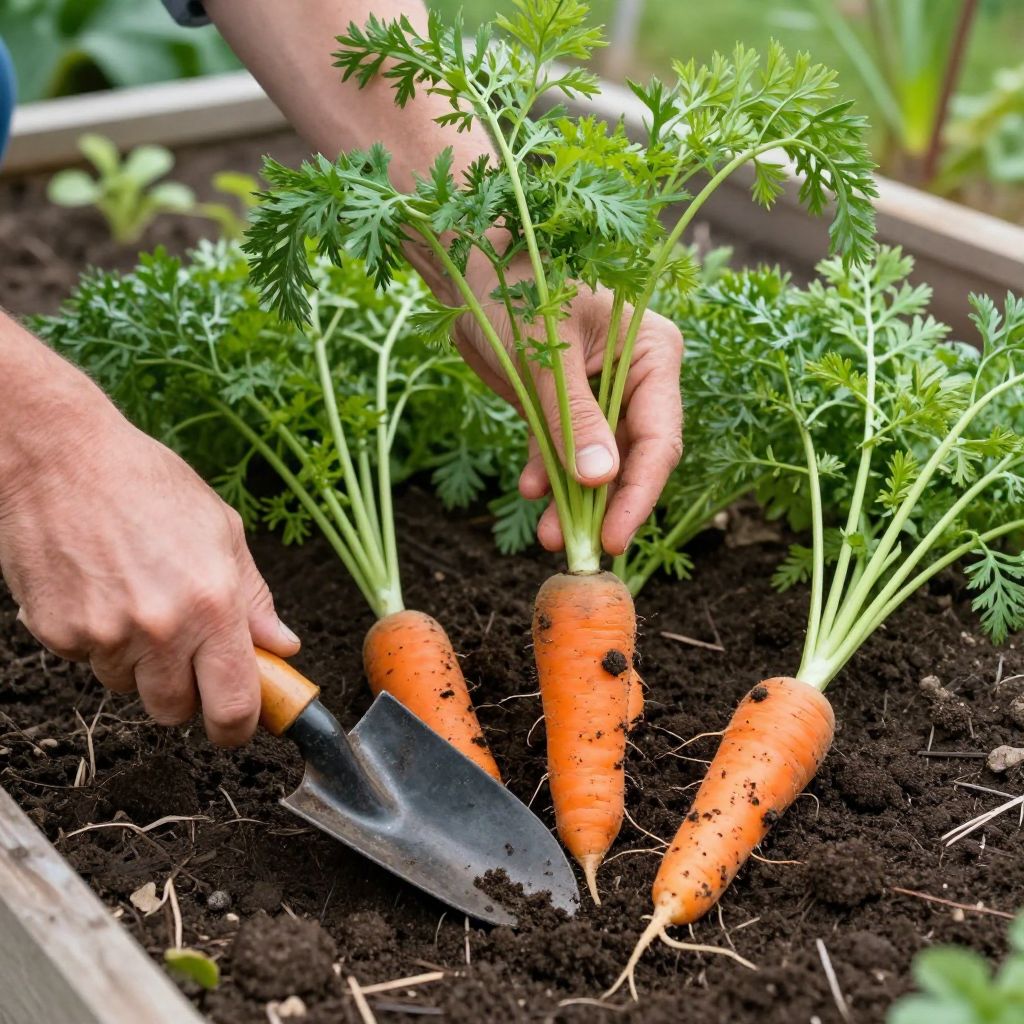
When do you harvest carrots? The short answer is: when the roots are full-sized for the variety you planted, brightly colored, and sweet enough to eat. Most carrots are ready 60 to 80 days after sowing, but timing changes with variety, soil, weather, and how large you want the roots to be.
If you pull them too early, they may be thin and underdeveloped. Wait too long, and they can become woody, split, or lose sweetness, especially in warm weather or dry soil.
When do you harvest carrots?
Harvest carrots when the tops look mature and the root shoulders at the soil line are about the size you expect for the variety. Most baby carrots can be pulled earlier, while full-size carrots are usually ready once the crown is visible and the root feels firm, smooth, and well-colored.
How to tell carrots are ready to pick
The best harvest cue is a combination of days to maturity, root size, and visible signs above the soil. Carrots do not all ripen at exactly the same time, so check a few before pulling the whole row.
Look for these signs
- Days from sowing: Check the seed packet for maturity time, usually 50 to 90 days depending on the type.
- Visible shoulders: The top of the carrot often pushes slightly above the soil when it is ready.
- Good color: The root should show strong orange, red, yellow, purple, or white color depending on the variety.
- Firm texture: A ready carrot feels solid, not spongy or thin.
- Top growth: Healthy leafy tops are helpful, but large foliage alone does not guarantee a mature root.
Try a test pull
If you are unsure, loosen the soil beside one carrot and pull it gently. A test harvest tells you more than guessing from the foliage alone. If the root is still skinny, leave the rest for another 1 to 2 weeks and check again.
Seasonal timing for harvesting carrots
Carrots can be harvested in cool or warm seasons, but the quality changes with temperature. Cool weather usually improves flavor, while heat can make roots tougher or more bitter.
Spring-sown carrots
Spring sowings are often ready in early to midsummer, depending on your climate and the variety. In cooler regions, roots may size up slowly and stay sweet for longer. In warmer areas, spring carrots may need to be harvested promptly before hot weather affects quality.
Summer-sown carrots
Summer sowings often mature in late summer or fall. These can be excellent for storage because cooler autumn nights help develop sweetness. Keep the soil evenly moist while the roots are sizing up, or they may become fibrous.
Fall and winter carrots
In mild climates, carrots can often be left in the ground and harvested as needed through winter. A light mulch can help protect the soil and make digging easier. In colder regions, harvest before the ground freezes solid unless you have a reliable way to keep the bed accessible.
How variety affects harvest time
Not all carrots mature at the same pace or size. The variety you planted matters as much as the calendar.
- Short or round types: These often mature faster and are useful in shallow or rocky soil.
- Standard maincrop carrots: These usually need more time and deeper, looser soil.
- Baby carrots: These are harvested young, either as a specific small variety or by thinning and eating immature roots.
- Storage types: These are often left in the ground longer to size up fully before harvest.
Because variety matters, always use the seed packet as your starting point, then adjust for your local weather and soil conditions.
What carrots need while growing
Good harvest timing starts long before pulling the roots. Carrots grow best when the soil lets the roots expand straight and evenly.
Soil and bed preparation
Carrots prefer loose, stone-free soil that drains well. Heavy clay, compacted ground, or fresh manure can cause forked, twisted, or hairy roots.
- Work the soil deeply before sowing.
- Break up clods and remove rocks and debris.
- Use finished compost sparingly if your soil is poor, but avoid overly rich, fresh organic matter.
- Raised beds can help if your native soil is heavy or shallow.
Sunlight and watering
Carrots do best in full sun, though they can tolerate light shade in hotter climates. Even moisture is important during germination and root development. Irregular watering can lead to splitting, poor shape, or tough texture.
Keep the soil consistently moist while seeds germinate, then water deeply when the top layer begins to dry. Avoid soaking the bed one week and letting it dry out the next.
How to harvest carrots the right way
Harvesting carrots is simple, but doing it carefully helps you avoid snapping the roots or disturbing nearby plants. The goal is to loosen the soil first, then lift the carrot cleanly.
- Water the bed lightly a few hours before harvesting if the soil is very dry.
- Loosen the soil with a hand fork or trowel beside the row.
- Grip the foliage close to the crown and pull steadily upward.
- If the carrot resists, loosen more soil rather than forcing it.
- Shake off loose soil and trim the tops if you are storing them.
If the foliage breaks off, use a small tool to lift the root from below. Pulling from dry, hard soil is one of the most common reasons carrots snap.
Best tools for harvest
- Hand fork or narrow trowel
- Garden gloves, if you prefer a better grip
- Bucket or crate for collecting roots
- Watering can or hose for pre-moistening dry soil
Can you leave carrots in the ground?
Yes, in many climates you can leave mature carrots in the soil for a while and harvest them as needed. This works especially well in cool weather, when roots stay crisp and sweet.
There are a few cautions. Very wet soil can encourage rot, and prolonged freezing can make digging difficult or damage roots. If rodents are a problem, leaving carrots in the ground may invite feeding damage.
When to harvest all at once
Harvest the full crop if a hard freeze is coming, the soil is waterlogged, or pests are damaging the roots. It is also smart to pull them all if you need the bed for another crop or if the carrots have reached peak size and are starting to lose quality.
Common harvest problems and how to fix them
Carrot harvest issues usually trace back to soil, moisture, or timing. The good news is that many problems can be prevented in the next planting.
Small, skinny roots
This usually means the carrots were harvested too early, crowded too closely, or grown in compacted soil. Thin seedlings early so roots have room to size up.
Forked or twisted carrots
Rocks, clumps, and fresh manure can force roots to split or bend. Choose a fine, loose bed and avoid disturbing the root zone once seedlings are established.
Split roots
Splitting is often caused by uneven watering after a dry spell. Keep moisture steady once roots begin to swell.
Woody or bitter carrots
Hot weather, drought, or leaving mature carrots too long in the ground can reduce quality. Harvest at the right size and avoid letting the bed dry out completely.
Harvesting for baby carrots versus storage carrots
Your harvest goal changes the timing. Baby carrots are picked young for tenderness, while storage carrots are left to size up fully and are often harvested later in the season.
- Baby carrots: Pull when roots are slender but usable, often much earlier than full maturity.
- Fresh eating: Harvest when carrots are sweet, crisp, and sized to your preference.
- Storage: Leave roots in the ground until fully mature, then harvest in cool weather for best keeping quality.
If you plan to store carrots, handle them gently and avoid washing them until you are ready to use them. Excess moisture during storage can shorten shelf life.
After harvest: simple care and storage
After pulling carrots, brush off excess soil and remove the tops if you are storing the roots. Leaving the greens attached can draw moisture from the carrot and shorten storage life.
For short-term storage, keep carrots cool and humid. A refrigerator crisper drawer or a box of slightly damp sand in a cool cellar can work well, depending on your setup and climate.
Quick checklist for timing your carrot harvest
- Check the seed packet for days to maturity.
- Look for the root shoulders at the soil line.
- Test one carrot before harvesting the whole row.
- Harvest before extreme heat, hard frost, or prolonged wet weather if possible.
- Use a fork or trowel to loosen the soil first.
Conclusion
When do you harvest carrots? When the roots are the right size, the color is strong, and the texture is firm and sweet. Start checking a few plants as you approach the listed maturity date, then pull the crop gradually or all at once based on your weather and storage plans. If you want the best flavor, harvest in cool conditions and keep moisture steady while the roots develop.
For more help growing a productive root crop, you may also want to read about carrot growing basics and timing vegetable harvests in the garden.