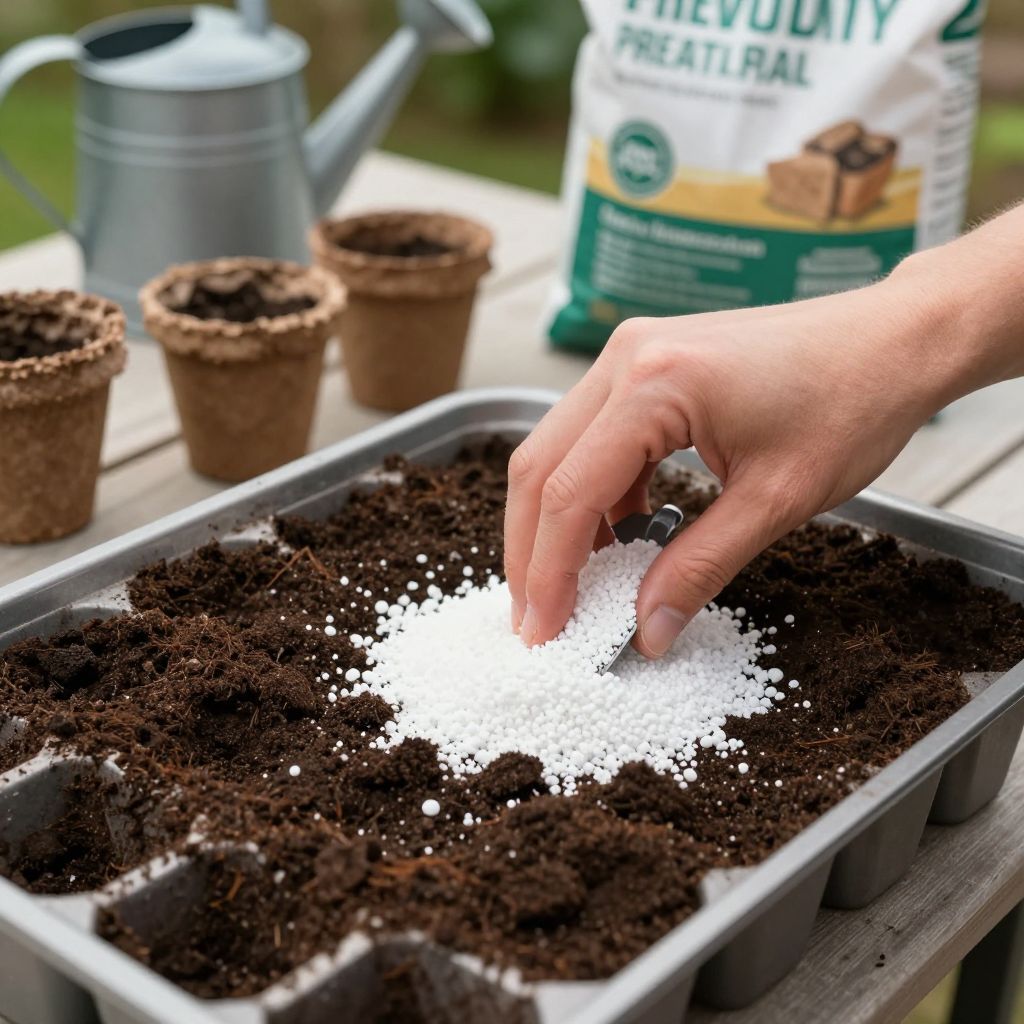
If you’ve ever wondered what does perlite do for soil, the short answer is that it improves air flow and drainage. Perlite is a lightweight volcanic mineral that helps prevent soil from staying soggy, which is especially useful for houseplants, seedlings, and container gardens.
Used correctly, it can reduce compaction, support healthier roots, and make potting mixes easier to manage. Used incorrectly, it can float, dry mixes too fast, or do very little in heavy garden soil, so it helps to know when and how to use it.
What does perlite do for soil?
Perlite loosens soil by creating air pockets, improving drainage, and helping roots get oxygen. In containers and seed-starting mixes, it reduces waterlogging and compaction. It does not add nutrients or act like fertilizer, and it works best when blended into potting mix rather than sprinkled on top.
What perlite is and why gardeners use it
Perlite is expanded volcanic glass that has been heated until it pops into white, porous granules. Those tiny air spaces are what make it useful in gardening.
Gardeners use it because many plants dislike dense, wet soil. Roots need both moisture and oxygen, and perlite helps balance those needs.
What perlite is not
- Not fertilizer: it does not feed plants.
- Not compost: it does not break down into organic matter.
- Not a moisture reservoir like vermiculite: it mainly improves drainage and aeration.
- Not a fix for every soil problem: it helps structure, but it cannot correct poor watering habits or severe soil issues on its own.
How perlite changes soil structure
Perlite improves the physical structure of soil by making it lighter and less compact. That matters because compacted soil can slow root growth and hold too much water around the roots.
Main benefits in the garden
- Better drainage: excess water moves through the mix more easily.
- Improved aeration: roots get more oxygen.
- Less compaction: the mix stays looser over time.
- Easier propagation: cuttings and seedlings root well in airy mixes.
- Lower risk of root rot: especially in pots that stay wet too long.
Where perlite helps most
Perlite is especially useful for:
- houseplants in containers
- seed-starting mixes
- cuttings and propagation trays
- succulents and cacti
- orchid or aroid-style potting blends
- heavy potting mixes that stay wet too long
When perlite is useful and when it is not
Perlite is most effective in container gardening because you control the soil mix. In the ground, it can help in small planting holes or raised beds, but it is not usually the best solution for widespread clay soil problems.
Good times to use perlite
- your potting mix stays soggy after watering
- seedlings damp off or sit in wet media
- you grow plants that prefer fast drainage
- you want a lighter mix for hanging baskets or indoor pots
Times to skip or limit it
- you need the soil to hold more moisture for thirsty plants
- you are trying to improve an entire landscape bed with heavy clay
- wind is strong and the surface is exposed, since dry perlite can blow around
- you want to add organic matter, which perlite cannot replace
How much perlite to mix into soil
The right amount depends on the plant and how quickly the mix dries in your conditions. There is no single perfect ratio, but these common ranges are a practical starting point.
Common mixing ratios
- General houseplants: about 1 part perlite to 2 or 3 parts potting mix
- Seed starting: a fine, airy mix with some perlite blended in to keep it open and evenly moist
- Succulents and cacti: a higher-drainage mix with more perlite, depending on the rest of the ingredients
- Propagation cuttings: perlite mixed with peat, coco coir, or another rooting medium
If your home is cool, humid, or low-light, mixes dry more slowly and may need less perlite than the same plant would need in a hot, bright room. If you garden in a dry climate or use terracotta pots, you may need less perlite than you think because the pot already dries faster.
How to use perlite correctly
Perlite works best when it is evenly blended through the root zone. A thin top layer does very little, and a pocket of pure perlite can make watering uneven.
- Choose the right potting mix for your plant.
- Measure the perlite and mix it thoroughly with the soil before planting.
- Moisten the mix lightly if the perlite is very dusty, which helps keep it from floating.
- Fill the container and plant as usual.
- Water slowly so the mix settles without washing the perlite to the top.
For seed starting
Use a fine, clean seed-starting mix with some perlite blended in. The goal is a light, even texture that stays moist but never waterlogged.
For cuttings
Perlite is often used alone or mixed with another sterile medium for rooting cuttings. It gives young roots oxygen, which is important while they are forming.
Perlite versus vermiculite, compost, and sand
Gardeners often confuse perlite with other soil amendments, but each one does a different job. Knowing the difference helps you choose the right material instead of adding the wrong one.
- Perlite: improves drainage and aeration
- Vermiculite: holds more water and can help retain moisture
- Compost: adds organic matter, nutrients, and soil life
- Sand: can improve drainage in some mixes, but the wrong type or amount may make soil denser
For many container plants, a mix of potting soil, compost, and perlite works better than any single ingredient on its own. Compost feeds the soil, while perlite keeps it open and breathable.
Common mistakes when using perlite
Perlite is simple to use, but a few mistakes can make it less effective.
Mistake 1: Using too much
Too much perlite can make a mix dry out too quickly, especially in hot weather or small pots. That can stress plants that prefer even moisture.
Mistake 2: Using it on top only
A surface layer does not improve root-zone drainage. Mix it into the potting medium where roots actually grow.
Mistake 3: Expecting it to fix clay soil
In garden beds, the better long-term fix for heavy soil is usually organic matter, mulch, and improved bed structure. Perlite is better for containers and small-scale mix adjustments.
Mistake 4: Ignoring watering habits
Perlite helps soil drain, but if you water too often, roots can still suffer. Check the soil before watering instead of following a rigid schedule.
Mistake 5: Letting dusty perlite become a nuisance
Perlite dust can be irritating to breathe. Open bags carefully and dampen the material lightly before mixing if needed.
Troubleshooting soil problems with perlite
If your plant is struggling, perlite may help, but only if the real problem is excess moisture or poor aeration.
Soil stays wet for days
Add more perlite to the next repotting mix, use a pot with drainage holes, and reduce watering frequency. Also check whether the pot is too large for the root ball.
Leaves yellow and stems feel soft
That can be a sign of overwatering or root stress. Remove the plant from the pot if needed, inspect the roots, and repot into a freer-draining mix if roots are brown, mushy, or smell sour.
Seedlings collapse
Use a cleaner, airier starting mix and avoid keeping the tray constantly soaked. Good airflow and a lightly moist medium are more important than frequent watering.
Plant dries out too fast
If the mix is too open, reduce the amount of perlite next time or combine it with ingredients that hold more moisture, such as compost or coco coir, depending on the plant.
Does perlite break down over time?
Perlite is fairly stable and does not decompose like compost. Over time, though, it can shift, crush, or migrate within the potting mix, especially with repeated watering and repotting.
That means old container mixes may gradually lose structure. When a plant becomes rootbound or the mix turns dense, repotting with fresh material is often the best solution.
Best practices for indoor and outdoor gardeners
Indoor gardeners usually get the biggest benefit from perlite because pots dry slowly and roots are confined. Outdoor gardeners can still use it in raised beds, planters, and propagation mixes, but it is less useful as a broad soil amendment.
Indoor gardening tips
- Use pots with drainage holes.
- Match the perlite level to the plant’s moisture needs.
- Check soil with your finger before watering.
- Repot when roots fill the container or the mix collapses.
Outdoor gardening tips
- Use perlite in raised beds or containers rather than trying to fix an entire yard.
- Combine it with compost for better long-term soil health.
- Protect dry perlite from blowing away in windy conditions.
- Water deeply enough to settle the mix after planting.
Conclusion
So, what does perlite do for soil? It makes soil lighter, airier, and better drained, which helps roots grow in healthier conditions. If your pots stay wet too long or your seedlings need a looser mix, try blending perlite into the root zone and adjust the amount based on your plant and climate.
For more practical help with soil and container gardening, you may also want to read about how to improve potting soil for houseplants and choosing the right growing medium for seedlings.