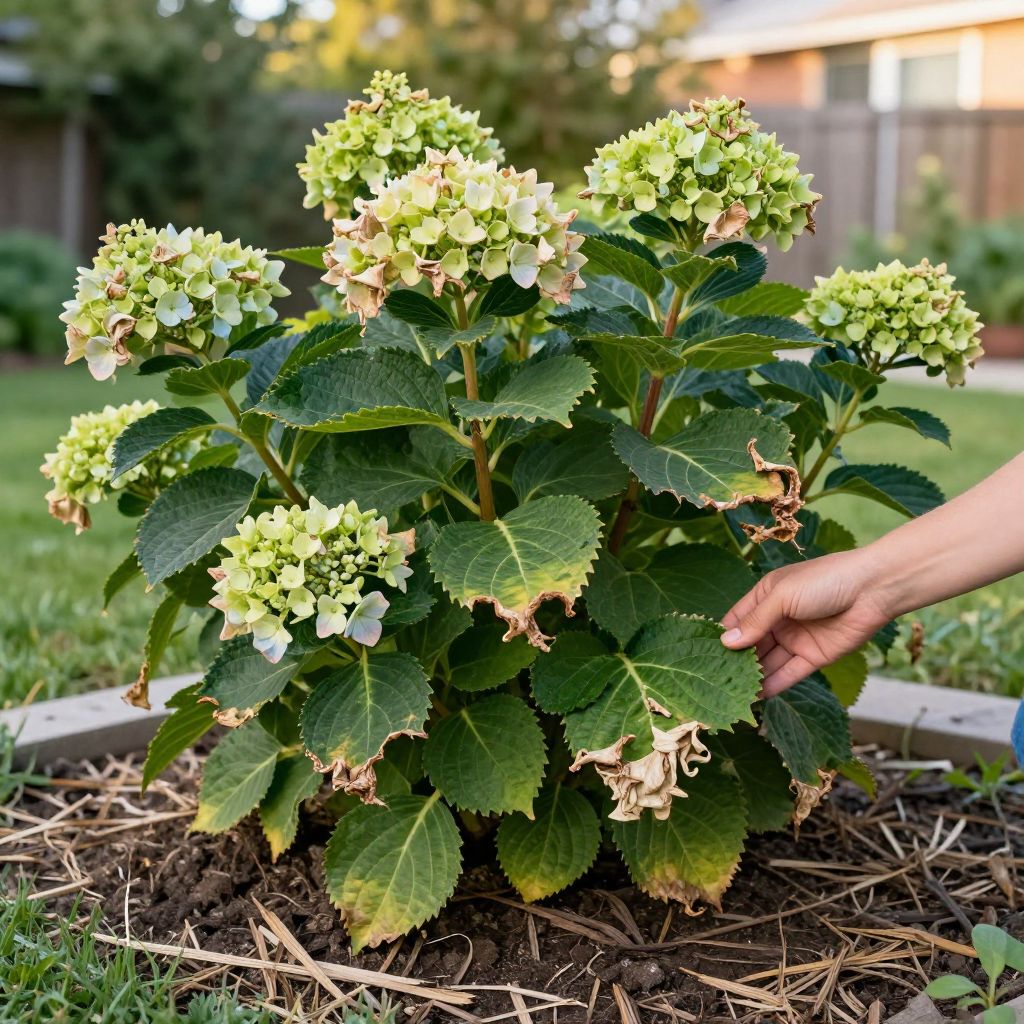
Why are my hydrangeas wilting? It’s a common and frustrating sight, but wilting does not always mean the plant is dying. Hydrangeas can droop from heat, dry soil, transplant shock, root problems, or even temporary midday stress.
The good news is that most causes are fixable once you identify what kind of wilt you’re seeing. A few quick checks of soil moisture, sun exposure, and stem condition can usually point you toward the right solution.
Why are my hydrangeas wilting?
Hydrangeas wilt when they cannot move enough water from the roots to the leaves, or when roots are damaged and unable to absorb moisture. The most common causes are dry soil, intense sun and heat, poor drainage, transplant shock, root rot, pests, or disease. The fix depends on whether the plant is thirsty, stressed, or suffering from root damage.
Start with the simplest check: soil moisture
Before you assume disease, check the soil 2 to 4 inches below the surface. If it feels dry, the plant may simply need a deep watering. If it feels wet or soggy, the problem may be poor drainage or root stress rather than lack of water.
How to tell if the wilt is from thirst
- Leaves and stems droop during hot afternoons but recover at night.
- Soil is dry below the surface.
- Leaves may look limp rather than yellow or spotted.
- Flowers may hang down quickly in heat.
What to do
- Water slowly at the base of the plant so moisture reaches the root zone.
- Soak deeply rather than giving a light sprinkle.
- Mulch with 2 to 3 inches of organic material, keeping it a few inches away from the stems.
- Check again the next day to see whether the plant perks up.
Tip: A hydrangea that wilts in afternoon sun but recovers by morning is often reacting to heat stress, not permanent damage.
Heat and too much sun can cause temporary wilting
Hydrangeas prefer morning sun and afternoon shade in many climates. In hotter regions, full sun can cause leaves to droop even when the soil is not completely dry. Large-leaf hydrangeas, especially, can struggle in strong afternoon heat.
Signs sun stress is the issue
- Wilting happens on hot, bright days and improves in cooler weather.
- Leaves may look scorched, curled, or faded at the edges.
- Plants in exposed beds wilt more than those near trees or buildings.
How to fix it
- Give the plant afternoon shade if possible.
- Use shade cloth temporarily during heat waves.
- Keep soil evenly moist, especially for newly planted hydrangeas.
- Avoid planting in reflected heat near walls, driveways, or stone patios if your climate is hot.
Overwatering and poor drainage can also make hydrangeas wilt
It sounds backward, but waterlogged soil can cause wilting because roots need oxygen as well as moisture. When soil stays saturated, roots can suffocate or rot, and the plant can no longer take up water properly.
Signs of too much water
- Soil stays wet for days after watering or rain.
- Leaves may yellow before wilting.
- Stems can feel soft or weak.
- The plant may decline even though the soil is moist.
What to do
- Pause watering until the top few inches of soil begin to dry.
- Check whether water pools around the plant after rain.
- Improve drainage by working in compost if the soil is heavy but not severely compacted.
- If the site stays soggy, consider moving the hydrangea to a better-drained location.
Important: Do not keep watering a wilted hydrangea just because it looks dry on top. Always check below the surface first.
Transplant shock is common in newly planted hydrangeas
Newly planted hydrangeas often wilt while their roots establish in the surrounding soil. Even if you planted them correctly, the root system may not yet be able to supply enough water during warm or windy weather.
What transplant shock looks like
- Wilting begins soon after planting or transplanting.
- Leaves droop during the day and improve at night.
- The plant may look stable one week and stressed the next.
How to help a newly planted hydrangea recover
- Water deeply and consistently, especially during the first growing season.
- Mulch to reduce moisture loss from the soil.
- Protect the plant from strong afternoon sun and drying wind.
- Avoid heavy pruning right after planting unless you are removing broken stems.
For container-grown hydrangeas moved into the ground, expect some adjustment time. The goal is even moisture, not soggy soil.
Root problems can cause persistent wilting
If a hydrangea stays wilted even when the soil is moist, the roots may be damaged. Root rot, compacted soil, or circling roots from a pot-bound plant can all interfere with water uptake.
Common root-related causes
- Root rot: Often linked to poorly drained soil and overwatering.
- Compaction: Dense soil limits air and water movement.
- Pot-bound roots: Container-grown plants may have roots circling tightly before planting.
What you can do
- Gently inspect the root zone if the plant is declining and the soil remains wet.
- Improve drainage around the planting area.
- Loosen circling roots carefully at planting time for future transplants.
- Replace severely damaged plants if the root system is rotted and the stems continue to collapse.
Pests and disease can contribute to wilting
While less common than watering or heat issues, pests and diseases can weaken hydrangeas enough to cause drooping. The plant may also show spots, distorted leaves, or stem damage along with wilting.
Look for these warning signs
- Chewed leaves or stems
- Leaf spots, mildew, or blackened tissue
- Sudden collapse of one stem or one side of the plant
- Sticky residue, insects, or visible larvae
What to do
- Remove badly damaged leaves or stems with clean pruners.
- Dispose of diseased debris rather than composting it if you suspect infection.
- Improve air circulation by spacing plants properly and avoiding overhead watering late in the day.
- Monitor closely for recurring symptoms.
If only one stem wilts suddenly while the rest of the plant looks fine, inspect that stem for damage or infection. A localized problem is different from general drought stress.
How to diagnose the cause quickly
A simple step-by-step check can save time and prevent the wrong fix. Use this approach when you notice drooping leaves or flowers.
- Check the soil. Feel 2 to 4 inches down.
- Look at the timing. Does the plant wilt only in afternoon heat, or all day?
- Inspect the leaves. Yellowing, spotting, or scorch can point to a different issue than plain thirst.
- Examine the site. Is the plant in full sun, reflected heat, or heavy shade?
- Consider recent changes. New planting, transplanting, pruning, heavy rain, or a heat spell can all trigger wilt.
How to prevent hydrangeas from wilting again
Once your hydrangea recovers, prevention is mostly about steady moisture and the right site. Hydrangeas do best in soil that holds moisture but still drains well, with protection from harsh afternoon sun in warm climates.
Good long-term care habits
- Water deeply during dry spells instead of giving frequent shallow watering.
- Mulch annually to help the soil stay evenly moist.
- Choose a planting spot with morning sun and afternoon shade when possible.
- Use compost to improve soil structure, especially in sandy or heavy soil.
- Avoid planting where runoff or standing water collects.
Pruning and maintenance notes
Pruning mistakes usually do not directly cause wilting, but overpruning can reduce the plant’s ability to cope with stress. If you are unsure what type of hydrangea you have, prune lightly and remove only dead or damaged wood until you know its blooming habit.
When wilting is normal and when it is serious
Some afternoon drooping during hot weather can be normal, especially for hydrangeas in strong sun. The concern is when the plant does not recover overnight, continues to decline, or shows yellowing, blackening, or stem collapse.
Call it a serious problem if you notice:
- Wilting that persists despite moist soil
- Rapid yellowing or browning of foliage
- Soft, mushy stems
- One-sided decline or sudden stem death
- Repeated wilting after rain or watering
If the plant is still struggling after you correct watering and exposure, the root system or site conditions may need a closer look.
Conclusion
When you ask, why are my hydrangeas wilting, the answer usually comes down to water balance, heat, or root stress. Start by checking the soil, then match your fix to the symptom: water deeply if dry, improve drainage if soggy, and add shade if the plant is overheating. For more help with hydrangea care, you may also want to read about how to prune hydrangeas and choosing the best hydrangea planting location.