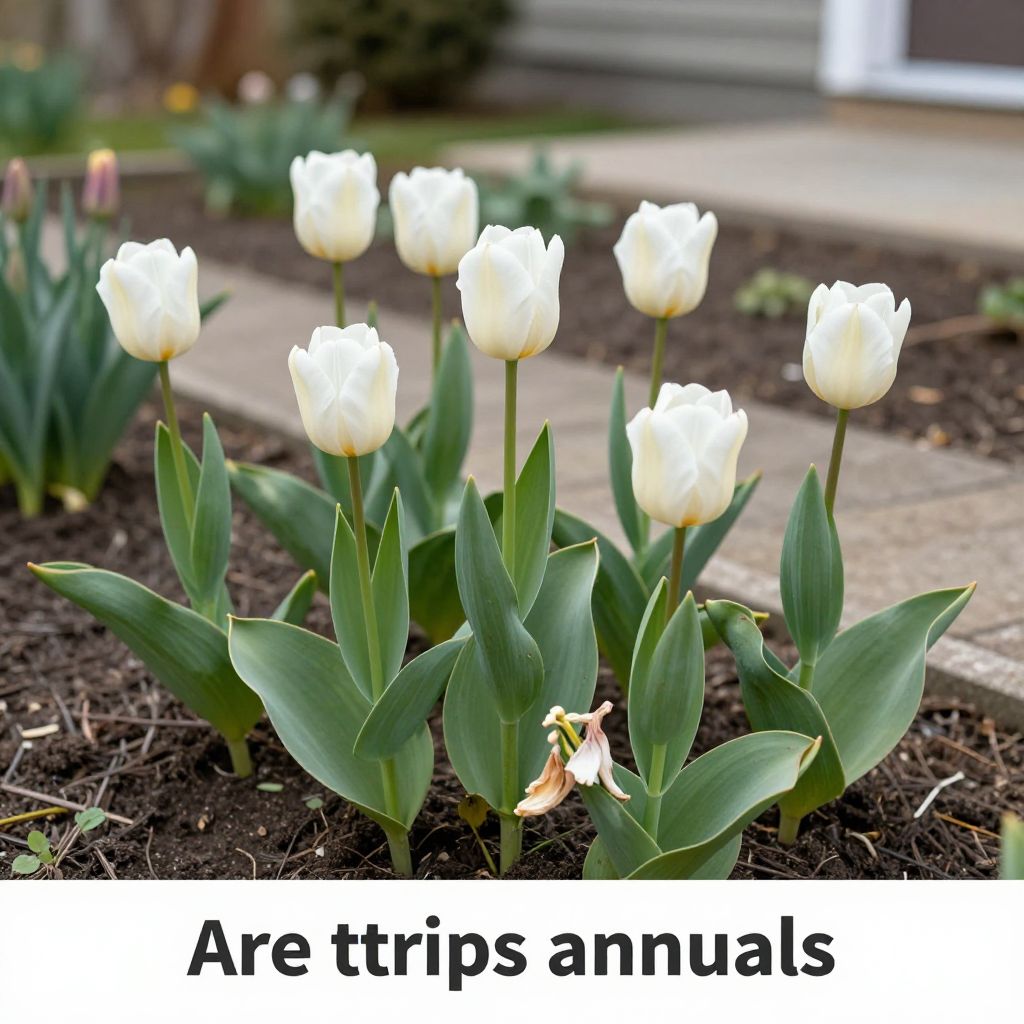
Are tulips annuals, or can you expect them to come back year after year? That depends on your climate, soil, and the type of tulip you grow. Many gardeners treat tulips as short-lived perennials that often perform best for one season, especially in warm or wet conditions.
The good news is that you can still get excellent bloom from tulips with the right planting depth, drainage, and post-bloom care. If you understand why some tulips fade out and how to help them recharge, you can decide whether to replant each fall or try to keep them returning.
Are tulips annuals?
Tulips are not true annuals. They are bulbous perennials, but in many gardens they behave like short-lived bulbs and bloom well for only one season or a few seasons. In colder, well-drained climates they may return, while in warm or heavy soils they often decline and are best replanted each fall.
Why tulips often act like annuals
Tulips store energy in their bulbs. After blooming, the foliage must stay in place long enough to rebuild that energy for next year’s flower.
When conditions are poor, the bulb weakens and may produce smaller flowers, fewer leaves, or no bloom at all. The most common reasons tulips fail to come back strongly are:
- Poor drainage and bulb rot
- Hot summers that stress the bulbs
- Cutting foliage too early
- Too much shade during the growing season
- Bulbs planted too shallow or in exhausted soil
- Rodents, deer, or disease damage
In other words, tulips are capable of returning, but they do not always perform like reliable long-term perennials in every garden.
Which tulips are most likely to return?
Perennializing tulips vs. bedding tulips
Some tulips are bred more for strong first-year display than for repeat blooming. Others are better suited to naturalizing or returning for several years.
As a general rule, species tulips and some Darwin hybrid types tend to be more persistent than large, showy bedding tulips. Even so, local climate matters more than a label alone.
What helps tulips come back
- Cool winters and a proper cold period
- Loose, fertile soil with excellent drainage
- Full sun or very light shade
- Allowing foliage to die back naturally
- Leaving bulbs undisturbed for a few years
How to plant tulips for better return bloom
If you want tulips to act more like perennials, start with planting conditions that support bulb health. Good planting is the difference between a one-time show and a bulb that has a chance to recharge.
- Choose a sunny site. Tulips bloom best with full sun in spring, though light afternoon shade can work in hotter climates.
- Use well-drained soil. Bulbs rot easily in soggy ground, so avoid low spots where water collects.
- Improve the soil if needed. Mix in compost to add organic matter, but do not make the planting hole overly rich or muddy.
- Plant at the right depth. A common guideline is about 2 to 3 times the bulb’s height, often roughly 6 to 8 inches deep depending on bulb size and soil type.
- Space bulbs so air can move. Crowded bulbs are more prone to disease and poor flowering.
- Water once after planting. Then rely on natural moisture unless the soil is very dry.
Drainage is the single most important factor for long-term tulip success. In heavy clay, raised beds or amended beds are often better than planting directly into compacted ground.
How to care for tulips after they bloom
Post-bloom care is what determines whether a tulip bulb has enough energy to flower again. The flowers fade quickly, but the plant is still working underground.
Deadheading
Remove spent flowers once petals drop, but leave the stem and leaves in place. This prevents the plant from wasting energy on seed production.
Leave the foliage alone
Do not braid, tie, or cut back the leaves too soon. Let them yellow and dry naturally. This usually takes several weeks, depending on weather and variety.
Watering after bloom
Keep the soil lightly moist while the leaves are green, especially if spring is dry. Once the foliage yellows and dies back, reduce watering so the bulb can rest.
Fertilizing
If your soil is poor, a light spring feeding with a balanced bulb fertilizer or compost top-dressing can help. Avoid overfertilizing, which can encourage soft growth rather than strong bulbs.
Should you dig up tulip bulbs every year?
Not always. In many gardens, tulips can be left in the ground for a few years if they are healthy and the site drains well. But in warm climates, wet soils, or highly planted borders, lifting and replanting may give better results.
You may want to dig and store tulip bulbs if:
- The bed stays wet in summer
- Bloom gets weaker each year
- You need to replant the area with summer annuals
- Rodents or disease are a recurring problem
If you dig them, wait until the foliage has mostly died back. Cure the bulbs in a dry, airy place, then store them cool and dry until fall planting time in your area.
Common tulip problems and how to fix them
Tulips bloom once, then disappear
This is common in warm regions or in beds with poor drainage. Replant with fresh bulbs in fall, improve drainage, and choose a sunnier site with less summer heat stress.
Leaves come up, but no flowers
This often means the bulb was weakened by early leaf removal, shade, crowding, or lack of cold. Let foliage mature fully and avoid disturbing the bulbs while they are rebuilding energy.
Bulbs rot in the ground
Rot usually points to wet soil. Plant in raised beds, add grit only if it improves the soil structure, and avoid overwatering after bloom.
Animals dig up the bulbs
Squirrels, voles, and deer can damage tulips. Use bulb cages, wire mesh, or planting methods that reduce access. Deer may also browse emerging leaves and buds.
Can you force tulips indoors?
Yes. Indoor forcing is a separate growing method and does not change whether tulips are annuals outdoors, but it can give you reliable spring color inside. Forced tulips are often treated as one-time display plants.
For indoor forcing, bulbs usually need a cold period first. After chilling, they are potted in a well-drained mix and kept cool until shoots develop, then moved into brighter light. Once they bloom indoors, many gardeners compost them rather than trying to reuse them, because indoor forcing can exhaust the bulb.
Best practices if you want tulips to return
If your goal is repeat bloom, focus on the bulb’s long-term health rather than just the flowers.
- Plant in full sun or very light shade
- Use loose, well-drained soil
- Plant deeply enough to protect bulbs from temperature swings
- Water only as needed, especially after bloom
- Deadhead flowers but keep the leaves
- Let foliage die back naturally
- Leave bulbs undisturbed unless conditions are poor
In some gardens, even with perfect care, tulips still fade after a year or two. That is normal. Many gardeners simply replant fresh bulbs each fall for the best display.
Conclusion: what to do next
Tulips are not annuals, but they often behave like them in less-than-ideal conditions. If you want repeat blooms, give them sun, drainage, and proper after-bloom care. If your climate or soil works against them, replanting each fall may be the most reliable approach.
For more bulb-growing help, you may also want to read about how to plant spring-flowering bulbs and how to care for bulbs after blooming.