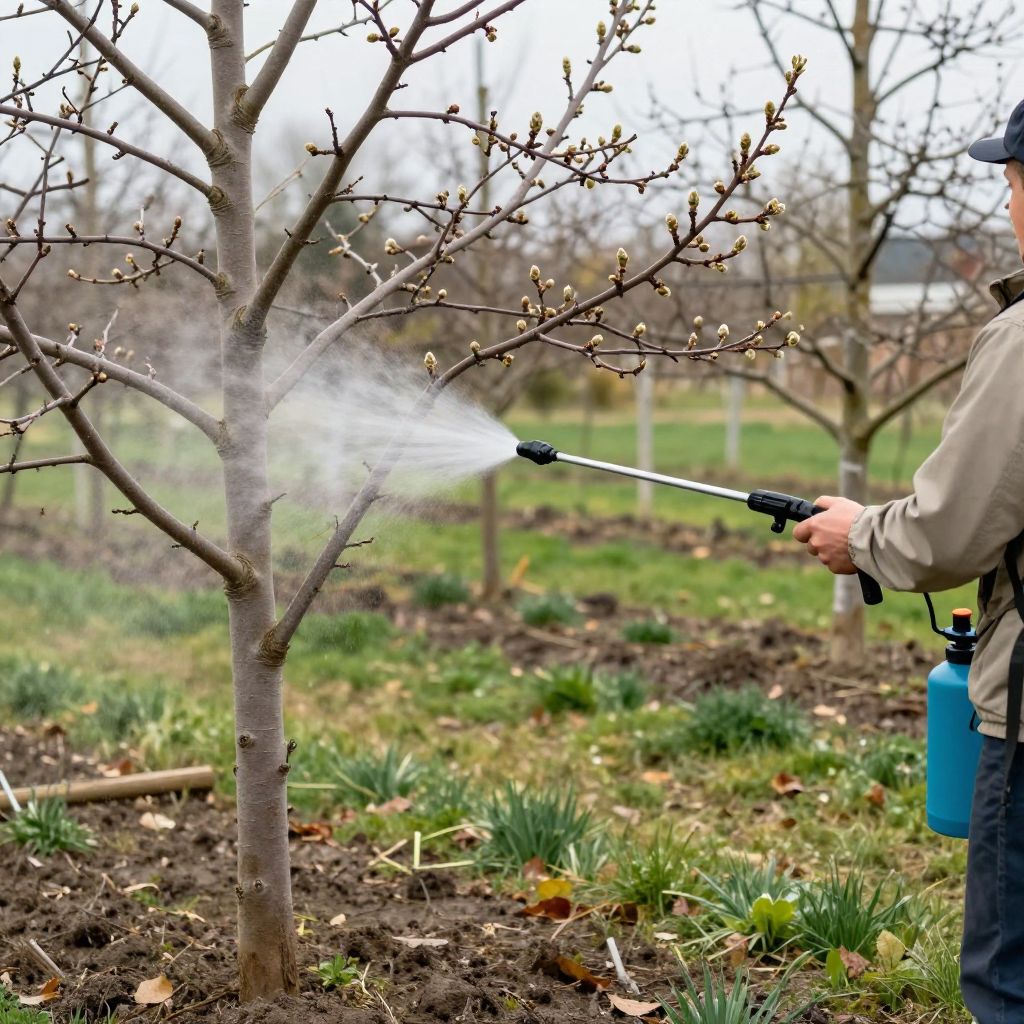
Wondering when to spray fruit trees so you protect the crop without wasting time or harming blossoms? The right timing depends on the tree, the pest or disease you’re targeting, and the season. In most home orchards, sprays work best when they’re matched to tree stage, weather, and local pressure—not on a fixed calendar alone.
Used well, spraying is just one part of fruit tree care. Pruning, sanitation, good airflow, and choosing the right product at the right time often matter just as much as the spray itself.
When to spray fruit trees?
Spray fruit trees when the tree’s growth stage matches the problem you’re preventing or treating: dormant season for overwintering pests and diseases, pre-bloom for some fungal issues, and after petal fall for many insect pests. Avoid spraying during bloom unless the label specifically allows it, because pollinators are active and many products can damage flowers.
Start with the problem, not the calendar
The best spray schedule depends on what you’re trying to control. Apples, pears, peaches, plums, cherries, and citrus all have different pest and disease pressures, and timing changes with climate, rainfall, and local insect cycles.
Before you spray, identify the issue as accurately as you can. A spray for fungal leaf curl will not help with codling moth, and an insect spray won’t fix a bacterial disease.
Common reasons people spray fruit trees
- Overwintering insects such as scale, mites, and some aphids
- Fungal diseases such as peach leaf curl, apple scab, or brown rot
- Fruit pests such as codling moth, plum curculio, or oriental fruit moth
- Sanitation and wound protection after pruning or storm damage, when appropriate
Seasonal spray timing for fruit trees
Most home gardeners think in four spray windows: dormant, delayed dormant, pre-bloom, and post-bloom. Not every tree needs every spray window, and some trees need none at all in low-pressure gardens.
1. Dormant season sprays
Dormant sprays are applied when the tree is leafless and inactive, usually in late winter or very early spring before buds swell. This is the main time to target overwintering scale insects, mite eggs, and some fungal spores.
Use dormant sprays only when recommended for your tree and pest. Horticultural oil is commonly used for scale and mite suppression, while copper-based products are sometimes used for certain diseases on susceptible trees.
Important: Apply dormant sprays on a mild, dry day when temperatures are within the product label’s safe range. Spraying during freezing weather, or just before a hard freeze, can stress the tree.
2. Delayed dormant or bud-swell sprays
This stage is just before buds open, when green tissue is starting to show. It’s a key timing for some disease sprays and for pests that become active as temperatures rise.
For many fruit trees, this is one of the few windows when a spray can be effective without contacting open flowers. It is especially useful in climates with wet springs or known disease pressure.
3. Pre-bloom sprays
Pre-bloom timing is used for certain diseases and early insect control, but it must be handled carefully. Once flowers begin opening, spraying becomes more limited because of pollinator safety and flower sensitivity.
If you need a pre-bloom spray, do it before the first flowers open and follow the label exactly. Never assume a product safe for leaves is safe for blossoms.
4. Bloom time
In general, avoid spraying fruit trees during bloom. Bees, native pollinators, and other beneficial insects are working on the flowers, and many sprays can harm them or reduce fruit set.
If a product label specifically allows bloom-time use, apply it only in the evening or when pollinators are not active, and only if the problem truly requires treatment.
5. Petal fall and after bloom
After petals drop, many fruit trees enter the main window for insect control. This is a common time to target pests such as codling moth, plum curculio, and some leaf-feeding insects.
Post-bloom sprays are often repeated at intervals if the pest’s life cycle calls for it. The exact timing depends on local trap counts, degree days, rainfall, and the product label.
6. Summer sprays
Summer spraying is usually more selective. It may be needed for active insect infestations, fungal diseases that spread in warm weather, or fruit rot problems as harvest approaches.
Spray only when conditions favor the pest or disease. Hot weather can increase the risk of leaf burn, and spraying in midday heat is rarely a good idea.
How to decide whether your tree actually needs spraying
Not every fruit tree needs a spray program. In a healthy, well-pruned tree with good airflow and low pest pressure, you may manage with sanitation, thinning, and targeted spot treatments.
Use spraying when one or more of these are true:
- You had the same pest or disease last season and it reliably returns.
- Your area has a known regional issue, such as peach leaf curl or codling moth.
- Fruit quality is being reduced by visible damage or rot.
- Non-chemical steps alone are not enough to keep the tree productive.
If you’re unsure, inspect the tree closely. Check buds, bark crevices, leaf undersides, and fallen fruit. Many problems can be confirmed by the pattern of damage before you choose a spray.
Practical spray timing by common fruit tree problems
Peach leaf curl
Peach leaf curl is usually managed with a dormant or very early spring spray before buds open. Once symptoms appear on leaves, spraying will not cure the damage already done.
For peaches and nectarines, timing is critical. In many climates, the best prevention is a late dormant spray during dry weather before bud swell.
Apple scab
Apple scab is often prevented with early-season sprays beginning around green tip or just before bloom, then repeated during wet periods if needed. The disease is driven by spring moisture, so rainy weather matters.
Good pruning to open the canopy helps reduce scab pressure by drying leaves faster after rain.
Codling moth
Codling moth sprays are usually timed after petal fall, when eggs hatch and young larvae begin moving toward fruit. This is not a dormant-season problem; spraying too early wastes effort.
Monitoring with traps or local extension alerts can improve timing, especially if you want to avoid unnecessary repeat sprays.
Scale insects and mites
Scale and mite eggs are often targeted during the dormant season with horticultural oil. Coverage matters because these pests hide on bark, twigs, and branch crotches.
Thorough coverage of trunks and branches is more effective than a light, uneven application.
Weather and tree conditions that affect spray success
Even the right product can fail if the conditions are wrong. Spraying during wind, rain, extreme heat, or just before frost can reduce effectiveness or injure the tree.
Best conditions for spraying
- Calm or very light wind
- Dry weather with no rain forecast during the label’s rainfast period
- Moderate temperatures, not heat stress or freezing conditions
- Tree foliage or bark that is dry enough for good coverage
Avoid spraying in windy weather. Drift can hit nearby vegetables, ornamentals, pollinator plants, or your own skin and eyes.
How to spray fruit trees correctly
Good timing matters, but so does technique. A poorly applied spray often gives disappointing results even when the product is appropriate.
- Read the label for the exact tree type, pest, and growth stage allowed.
- Prune out dead wood and remove mummified fruit before spraying if relevant.
- Mix only the amount you need and use clean equipment.
- Spray to thorough coverage, including branch crotches and leaf undersides when appropriate.
- Apply on a calm, dry day within the temperature range listed on the label.
- Wash equipment after use and store products safely.
For tall trees, a sprayer that can reach the upper canopy is helpful. For small backyard trees, a hand sprayer or pump sprayer may be enough if coverage is even.
Common mistakes to avoid
- Spraying by date alone instead of by tree stage and pest pressure
- Spraying during bloom without checking pollinator safety
- Using the wrong product for the problem
- Applying too late, after damage has already started
- Spraying in hot, windy, or rainy conditions
- Skipping sanitation, pruning, and fallen fruit cleanup
Another common mistake is over-spraying. More product does not mean better control, and excess can burn leaves, waste money, and increase resistance problems.
Do you need to spray every year?
Not always. Some fruit trees in low-pressure gardens need only occasional dormant oil or no spray at all. Others, especially in humid climates or where a pest is established, may need a regular seasonal program.
The best approach is to review last season’s problems, then adjust this year’s plan. If you had clean fruit and healthy foliage, you may be able to reduce spraying. If you had repeated damage, a more precise timing plan may be needed.
Non-spray steps that improve results
Spraying works better when the tree is otherwise well managed. Cultural care can reduce the need for repeated treatments and make any spray program more effective.
- Prune to open the canopy for light and airflow.
- Remove fallen fruit, diseased leaves, and mummified fruit.
- Thin crowded fruit if your tree sets heavily.
- Water deeply during dry spells rather than giving frequent shallow watering.
- Keep grass and weeds from crowding the trunk area.
Healthy, vigorous trees are still susceptible to pests and diseases, but they usually recover faster and produce better-quality fruit.
When to call for local guidance
If you’re dealing with a serious outbreak, unusual symptoms, or a tree species you’re unfamiliar with, local extension services, certified arborists, or experienced nursery staff can help you narrow down the timing. Regional climate makes a big difference in fruit tree spray schedules.
This is especially helpful for apples, peaches, and stone fruits, where the right spray window may be only a few days wide in some seasons.
Final takeaway
The short answer to when to spray fruit trees is: spray at the stage when the pest or disease is vulnerable, not simply when the calendar says so. For many trees, that means dormant season for overwintering problems, pre-bloom for some diseases, and after petal fall for many insects.
Start by identifying the problem, check your tree’s growth stage, and choose a calm, dry day. If you want to refine your timing further, keep notes this season on bloom dates, pest sightings, and disease symptoms so next year’s spray decisions are easier and more accurate.
If you’d like to keep improving your orchard care, read more about fruit tree pruning and organic pest control in the garden.