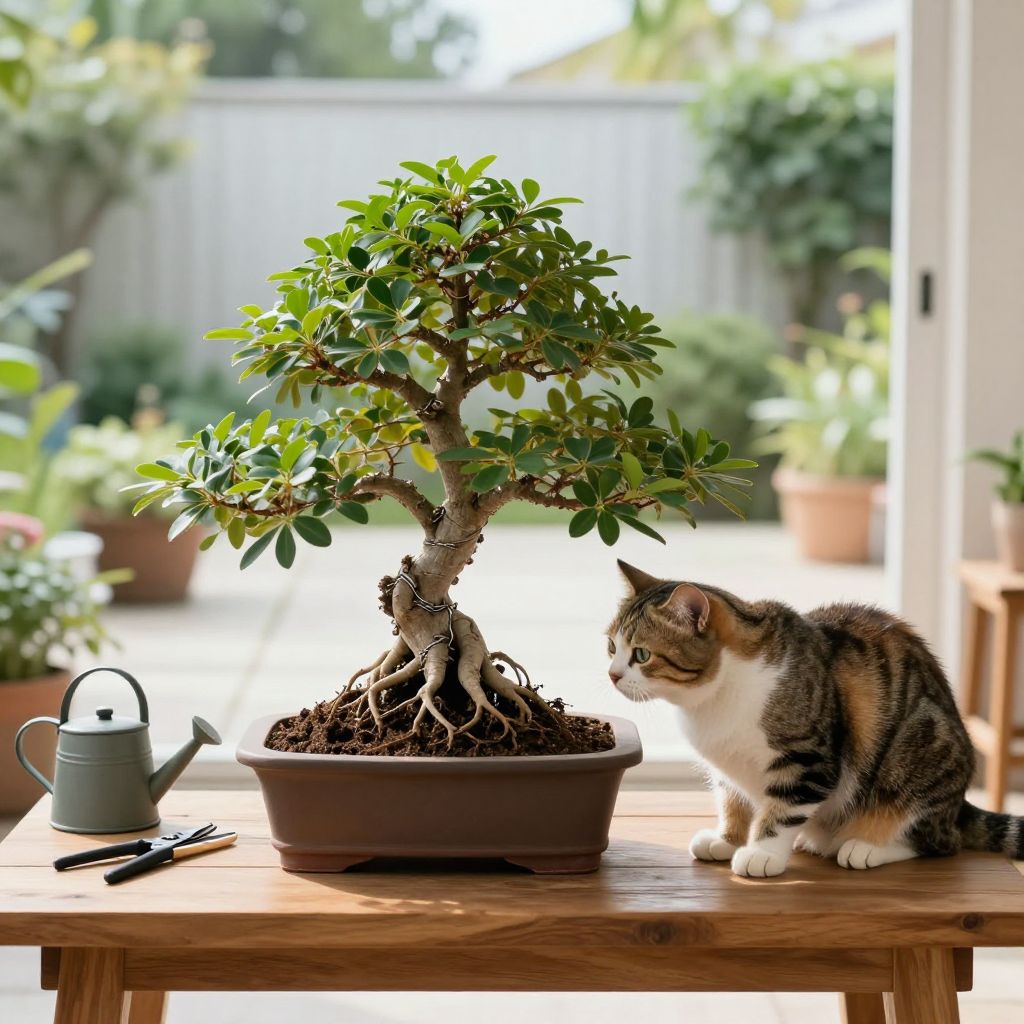
Are bonsai trees safe for cats? The short answer is: sometimes, but not always. “Bonsai” is a growing style, not a single plant, so cat safety depends on the species being trained, the soil and fertilizers used, and whether your cat chews leaves, bark, or roots.
If you share your home with a curious cat, the safest approach is to identify the exact bonsai species before bringing it indoors. Some common bonsai trees are mildly irritating, while others can be seriously toxic if nibbled.
Are Bonsai Trees Safe For Cats?
Bonsai trees are only safe for cats if the specific plant species is non-toxic and the tree is grown with pet-safe materials. Many bonsai are made from juniper, ficus, jade, azalea, sago palm, or other species that can cause illness in cats. Always confirm the botanical name before buying or displaying one indoors.
Why “Bonsai” Does Not Tell You If a Plant Is Cat-Safe
Bonsai is a training method, not a plant family. A bonsai may be a miniature maple, pine, ficus, juniper, elm, or flowering shrub, and each species has its own toxicity profile.
That means the question is not “Is bonsai safe?” but “Is this exact bonsai species safe for cats?”
Common bonsai species and cat safety
- Juniper bonsai — can irritate cats and may cause stomach upset if chewed.
- Ficus bonsai — often causes mouth irritation, drooling, or vomiting.
- Azalea bonsai — toxic; even small amounts can be dangerous.
- Sago palm bonsai — highly toxic and should be kept away from cats entirely.
- Jade bonsai — toxic to cats and not a good choice for pet homes.
- Chinese elm bonsai — often considered lower risk, but still keep any plant out of reach if your cat chews greenery.
If you are unsure of the species, treat the plant as unsafe until you verify it with the seller or nursery label.
What Makes Bonsai Risky for Cats?
Even a non-toxic bonsai can become a problem if your cat likes to chew leaves, dig in the pot, or knock the tree over. Small indoor trees are especially tempting because they sit at cat-eye level and often have loose soil, moss, or decorative stones.
Possible hazards beyond the plant itself
- Soil and fertilizers may upset a cat’s stomach if eaten.
- Insecticidal sprays and systemic treatments can be dangerous if used on indoor bonsai.
- Wire training can injure a cat that bats at branches or climbs the pot.
- Top dressing such as gravel, moss, or akadama may be swallowed by playful cats.
- Broken branches can create splinters or mouth injuries.
How to Choose a Cat-Safer Bonsai
If you want a bonsai and live with cats, choose the plant carefully before purchase. The safest option is a species known to be non-toxic to cats and suited to indoor growing in your climate and light conditions.
What to ask before you buy
- What is the exact botanical name?
- Is the species known to be toxic to cats or dogs?
- Has the plant been treated with pesticides, systemic insecticides, or leaf shine?
- What soil mix is used, and is it safe if a pet digs in it?
- Will the tree need strong sun, humidity, or winter dormancy?
Ask for the full species name, not just “bonsai tree.” A label that says only “bonsai” is not enough to judge pet safety.
Best Practices for Keeping Bonsai and Cats in the Same Home
Even with a safer species, placement matters. Cats are agile, curious, and excellent at reaching shelves you assumed were out of bounds. The goal is to reduce access, reduce temptation, and reduce the chance of accidental ingestion.
Practical placement tips
- Place bonsai on a stable stand that is hard for your cat to jump onto.
- Use a room your cat does not enter when you are not home.
- Keep the pot away from windowsills, cat trees, and furniture launch points.
- Use a heavy tray or cachepot to reduce tipping, but make sure drainage still works.
- Avoid hanging moss or loose decorative material that invites batting and chewing.
Training your cat away from the plant
Deterrents can help, but they are not foolproof. Try double-sided tape on nearby surfaces, a physical barrier, or a closed cabinet-style display case if the tree is especially valuable.
Never rely only on sprays or “bitter” products unless the label clearly says they are safe for both plants and pets. Some repellents can burn foliage or create new risks for your cat.
Indoor Bonsai Care When Pets Are in the House
Indoor bonsai need bright light, careful watering, and regular pruning. When pets are present, the care routine should also protect the plant from being disturbed and protect the cat from contact with chemicals or debris.
Light and location
Most indoor bonsai need very bright light, often near a south- or west-facing window, though exact needs depend on the species. If your cat sits in the window, use a secure shelf, plant stand, or room divider to keep the tree elevated and stable.
Watering
Water when the top layer of soil begins to dry, but adjust for the species, pot size, indoor temperature, and season. Bonsai pots dry faster than ordinary containers, yet overwatering can lead to root rot and fungus gnats.
For cat households, wipe up spills promptly. Standing water in saucers can attract pets and may encourage algae or mosquitoes in warm weather.
Soil and drainage
Bonsai usually grow in a fast-draining mix rather than ordinary houseplant soil. Good drainage helps prevent root problems, but loose particles can also be tempting to dig in.
If your cat scratches the soil, consider:
- a layer of larger decorative stones that cannot be swallowed easily,
- a mesh cover over the soil surface, or
- a physical barrier around the pot when you are away.
Pruning, Wiring, and Maintenance Around Cats
Routine bonsai maintenance creates small hazards that are easy to overlook. Trimmings, wire ends, and fallen leaves can all end up on the floor where a cat may investigate them.
Safe maintenance habits
- Prune over a tray or newspaper so clippings are easy to collect.
- Remove all cut leaves, twigs, and wire scraps immediately.
- Check wired branches regularly so the wire does not cut into bark.
- Store tools such as concave cutters, scissors, and wire out of reach.
If you wire branches, make sure the tree is placed where your cat cannot climb into it. Loose wire ends can scratch paws or mouths.
Common Problems If a Cat Nibbles a Bonsai
If your cat chews a bonsai, symptoms can range from mild irritation to a veterinary emergency, depending on the species and how much was eaten. Do not assume “just a little bite” is harmless.
Signs to watch for
- drooling or pawing at the mouth
- vomiting or diarrhea
- lethargy or loss of appetite
- tremors, weakness, or wobbliness
- swelling of the mouth or face
If you suspect your cat ate a toxic bonsai plant, contact a veterinarian or pet poison hotline right away. Bring the plant name or a photo if you can, because identification helps determine the risk.
How to Troubleshoot a Cat-Proof Bonsai Setup
If your cat keeps targeting the tree, the setup is probably too accessible or too interesting. Cats usually go after bonsai for one of three reasons: movement, texture, or opportunity.
Fixes that usually help
- Move the bonsai to a brighter, less reachable location.
- Replace loose top dressing with a more secure surface.
- Use a heavier pot or a wider base to prevent tipping.
- Give your cat a legal alternative, such as cat grass or a scratching post nearby.
- Reduce dangling branches that invite batting.
If the tree is still under attack, the honest answer may be to move it to a room your cat cannot access. A stressed bonsai and a curious cat are a bad combination.
Propagation and New Bonsai in Pet Homes
If you are starting a new bonsai from cuttings or nursery stock, quarantine the plant first. Newly purchased plants may carry pests, sticky residues, or treatments that are not ideal around pets.
Keep new bonsai separate until you know the species, have repotted it if needed, and have confirmed that the soil and care products are safe for your household.
The Bottom Line for Cat Owners
Are bonsai trees safe for cats? Some are, but many are not, and the risk depends on the exact species and how your cat behaves around plants. The safest path is to identify the bonsai by botanical name, choose a lower-risk species, and place it where your cat cannot chew, dig, or knock it over.
If you are planning a new display, start by checking the plant label, then set up a stable, well-lit spot that your cat cannot reach. For more plant care reading, you may also want to explore bonsai care basics and common toxic plants for cats.