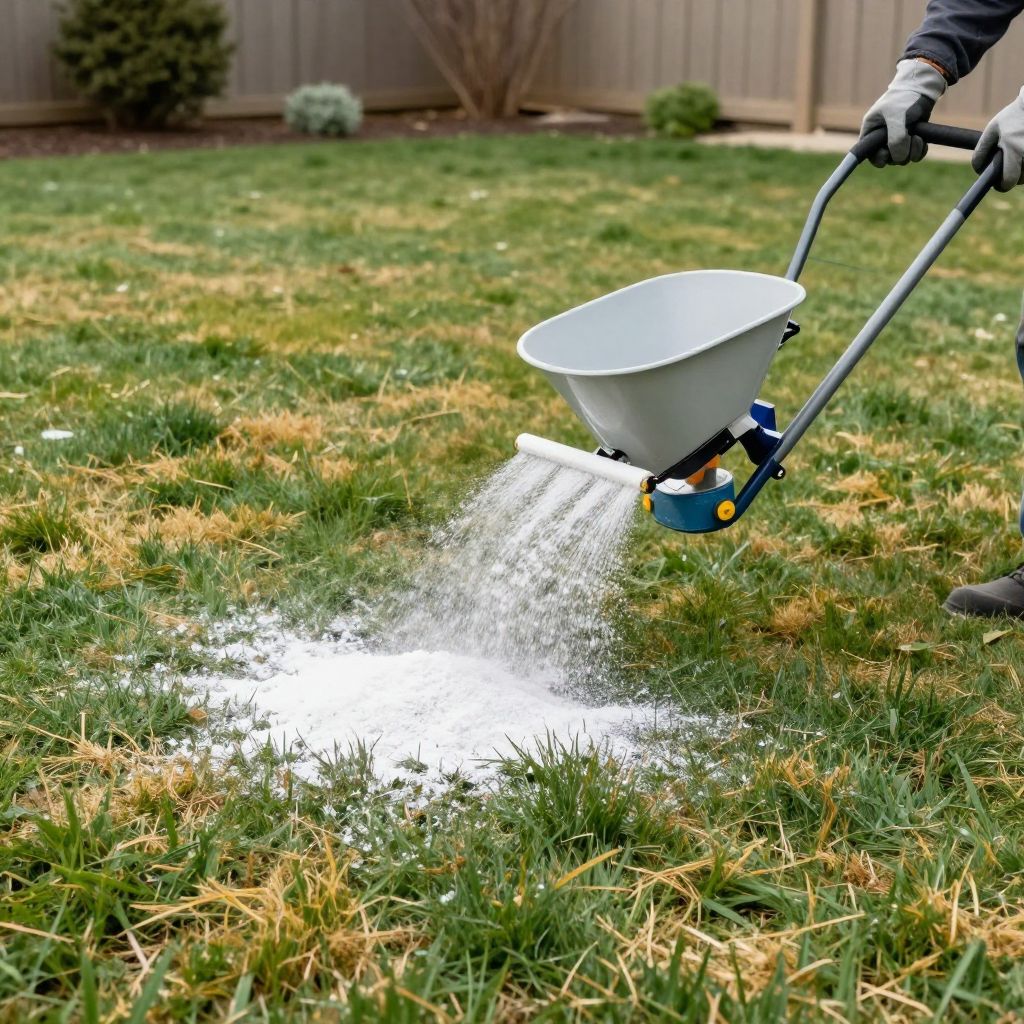
Does lime kill grass? If you’ve spread lime on a lawn and worried about yellow patches or thinning turf, you’re not alone. Lime is usually used to correct acidic soil, not to kill grass, but the wrong product, the wrong amount, or poor application can stress a lawn.
The good news is that most established grasses tolerate lime well when it’s applied for the right reason. The key is knowing your soil pH, choosing the correct type of lime, and applying it carefully so you improve soil conditions without damaging your turf.
Does lime kill grass?
Usually, no. Lime does not kill healthy grass when it’s used to raise acidic soil pH gradually. In fact, many lawns benefit from lime if the soil is too acidic. Problems happen when you apply too much, use hydrated lime instead of garden lime, or spread it on already stressed turf.
What lime does to lawn soil
Lime changes soil chemistry by reducing acidity. Most lawn grasses grow best in a slightly acidic to near-neutral pH range, and lime can help move soil toward that range if it’s too low.
Why pH matters
When soil is too acidic, grass may struggle to take up nutrients even if fertilizer is present. That can lead to pale color, weak growth, and thin turf that looks unhealthy.
Lime does not act like a weed killer or herbicide. It works slowly in the soil, so any change in grass health usually comes from improved growing conditions, not a direct “burning” effect.
Types of lime used on lawns
- Garden lime or agricultural lime: commonly used for lawns and gardens.
- Dolomitic lime: also supplies magnesium, which can help in magnesium-poor soils.
- Calcitic lime: mainly supplies calcium.
- Hydrated lime: fast-acting and much harsher; this is the type most likely to damage grass if misused.
When lime can harm grass
Lime can damage turf when it is overapplied, applied unevenly, or used on soil that doesn’t need it. Grass may show stress if the pH rises too far or if the product is caustic and sits on the blades too long.
Common mistake: applying lime without a soil test
This is the biggest avoidable error. If your soil is already near the correct pH, adding lime may not help and can gradually create nutrient problems.
Signs lime may be causing trouble
- Patchy yellowing after application
- Leaf scorch or bleaching on grass blades
- Uneven growth where lime was spread too heavily
- Persistent poor color even after watering and time
These symptoms can also come from drought, compacted soil, disease, or fertilizer issues, so don’t assume lime is the only cause.
How to tell if your lawn actually needs lime
The best way to know is with a soil test. A test tells you the current pH and often gives a recommendation for how much lime, if any, your lawn needs.
Simple soil testing steps
- Collect small samples from several spots in the lawn.
- Mix them together for a representative sample.
- Use a home test kit or send the sample to a local extension lab.
- Check the pH result and follow the lab’s recommendation.
If you don’t test, you’re guessing. That can waste time and money and may make lawn problems worse instead of better.
How to apply lime safely to grass
Apply lime only when the soil test shows it’s needed. Spread it evenly, water it in if the product directions call for it, and avoid piling it in one area.
Best practices for application
- Use the product label as your guide.
- Spread with a calibrated broadcast or drop spreader for even coverage.
- Apply on a calm day to reduce drift.
- Keep lime off sidewalks, driveways, and hard surfaces.
- Water lightly afterward if recommended by the label.
Even coverage matters more than speed. A thin, uniform application is safer than a heavy pass that leaves white streaks or clumps.
Should you lime wet or dry grass?
Dry grass is usually easier to treat evenly. Wet blades can cause lime to stick in clumps, which increases the chance of localized burn or uneven pH changes.
How much lime should you use?
There is no universal amount that fits every lawn. The right rate depends on soil pH, soil texture, and the lime product you choose.
Lightly acidic soil may need only a small correction, while very acidic clay soils may need more than sandy soils. A soil test is the safest way to avoid overliming, especially if you are treating a large area.
Why soil type changes the recommendation
- Sandy soils usually change pH faster and may need smaller, more cautious applications.
- Clay soils often buffer pH changes and may need more time to respond.
- Organic soils can behave differently again, so testing is especially useful.
What to expect after liming a lawn
Lime works slowly. You usually won’t see an overnight change, and that’s normal. Soil chemistry shifts gradually as moisture and microbial activity move the material into the root zone.
Typical response timeline
- Short term: little visible change
- Weeks to months: soil pH may begin to shift
- Longer term: grass may look greener and grow more evenly if acidity was the problem
If the lawn was already healthy, you may not notice much difference at all. That does not mean the lime “failed”; it may simply mean the soil did not need much correction.
How to avoid damaging grass with lime
Most lime-related lawn problems come from preventable mistakes. A careful approach keeps your turf safe and helps you get the benefit of improved soil conditions.
Practical mistakes to avoid
- Using hydrated lime on a lawn unless a professional specifically recommends it.
- Applying lime because the lawn looks yellow without checking pH.
- Spreading too much in one place.
- Applying lime and fertilizer together without checking compatibility and timing.
- Ignoring drainage, compaction, or shade problems that lime cannot fix.
What to do if you overapplied lime
If you think you used too much, water the lawn thoroughly if conditions allow and avoid adding more amendments. Then retest the soil later to see how far the pH has shifted.
For severe overapplication, especially with caustic products, you may need local professional advice. The sooner you act, the better your chances of limiting turf stress.
Other lawn problems that look like lime damage
Yellowing grass after liming is not always caused by the lime itself. Other issues can happen at the same time and make the lawn look worse than it is.
Common look-alikes
- Drought stress: grass loses color and may feel dry or crunchy.
- Compaction: roots struggle to grow, leaving thin patches.
- Insect damage: turf lifts easily or shows irregular feeding damage.
- Fungal disease: spots, rings, or spreading patches may appear.
- Nutrient deficiency: especially nitrogen, iron, or magnesium issues.
If the problem started after liming, check the application pattern first. If the lawn was already declining, lime may be only part of the story.
When lime is helpful for grass
Lime is useful when soil tests show acidity is limiting lawn performance. In that case, it can improve nutrient availability and help grass use fertilizer more effectively.
It is especially helpful for lawns growing in naturally acidic regions or on soils that have been repeatedly fertilized and watered over time. In those situations, liming can be part of long-term lawn care, not a quick fix.
Conclusion: use lime as a soil correction, not a guess
Does lime kill grass? Usually not. Used correctly, lime helps grass by correcting acidic soil; used carelessly, it can stress or damage turf. The safest next step is to test your soil, identify the pH, and apply only the amount your lawn actually needs.
If you want to keep learning about healthier turf care, look for related lawn guides on soil testing, mowing, and improving compacted ground so your grass has the best chance to grow thick and even.