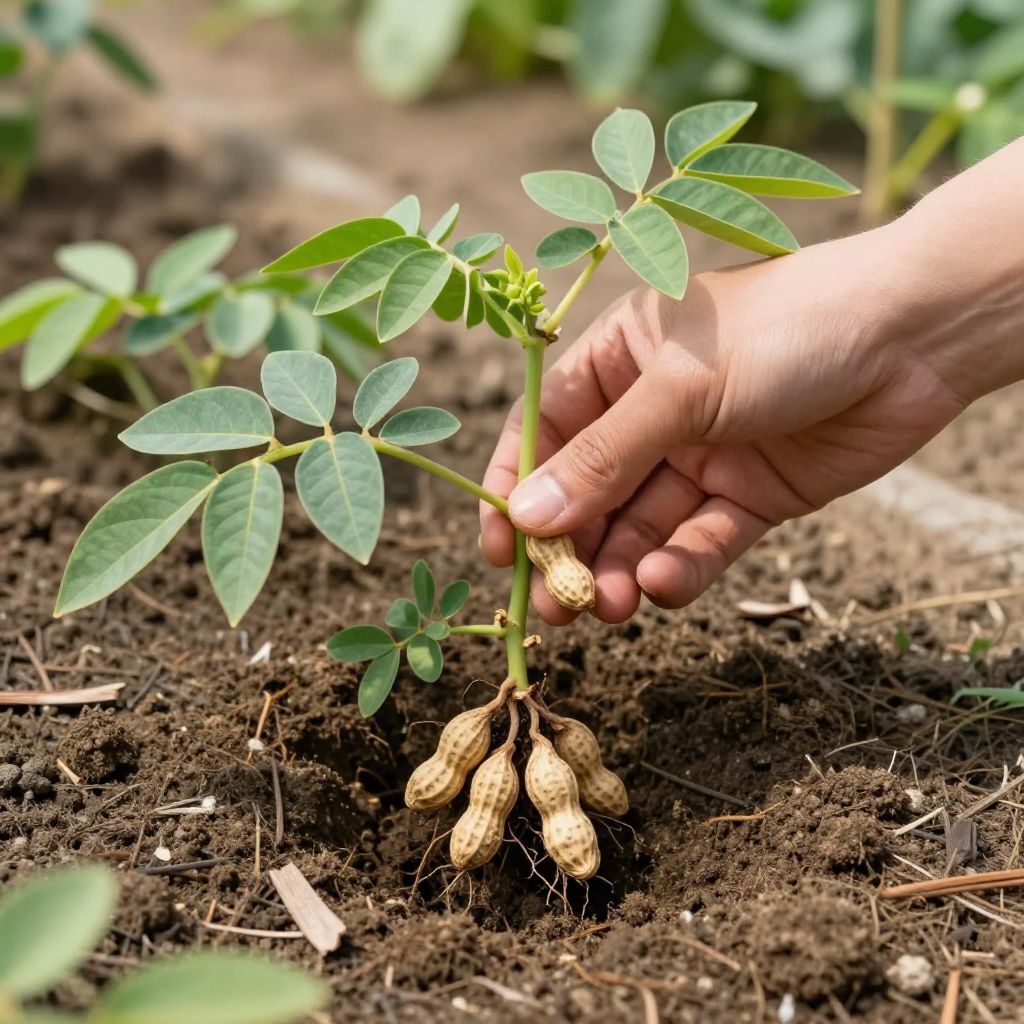
Do peanuts grow underground? Yes, but not in the way many gardeners expect. The peanut plant flowers above ground, then sends a peg down into the soil where the pods develop underground. That unusual growth habit is why peanuts need loose soil, steady warmth, and careful harvesting.
If you want to grow peanuts successfully, the key is understanding their life cycle. With the right conditions and enough time, you can grow a healthy crop in a home garden, raised bed, or large container.
Do peanuts grow underground?
Yes. Peanut pods form underground after pollinated flowers produce a slender stem called a peg, which bends downward and pushes into the soil. The pod develops at the tip of that peg below the surface, so loose, friable soil is essential for a good harvest.
How peanut plants grow
Peanuts are Arachis hypogaea, a warm-season legume. The plant grows like a low, spreading bush, but its fruiting process is unusual and easy to miss if you have never grown it before.
From flower to pod
- The plant produces small yellow flowers above ground.
- After pollination, the flower stalk elongates into a peg.
- The peg grows downward and enters the soil.
- The pod forms underground at the end of the peg.
This means you may see plenty of flowers without finding pods right away. The underground stage happens later and depends on warm soil, good moisture, and enough time before cool weather arrives.
Why the soil matters so much
Because the pods enlarge beneath the surface, peanuts need soil that is loose enough for pegs to penetrate and pods to expand. Heavy clay, compacted beds, or rocky soil can reduce yield and make harvesting difficult.
Best growing conditions for peanuts
Peanuts are a warm-season crop and perform best in full sun with a long, frost-free growing period. If your climate has a short summer, choose an early-maturing type and start as soon as the soil has warmed.
Sunlight
Give peanuts at least 6 to 8 hours of direct sun each day. More sun usually means better flowering and stronger pod development.
Soil
Use light, well-drained soil with a loose texture. Sandy loam is ideal, but many gardeners can improve average soil by mixing in compost and avoiding heavy amendments that make the bed dense.
- Avoid fresh manure, which can encourage excessive leafy growth and poor pod set.
- Do not use very compacted soil or a bed with poor drainage.
- Keep the soil pH in a slightly acidic to neutral range if possible.
Water
Peanuts need consistent moisture during germination, flowering, and peg formation, but the soil should never stay soggy. Overwatering can cause rot and reduce pod quality.
Instead of watering on a fixed schedule, check the soil with your finger. Water when the top inch begins to dry, then soak deeply so moisture reaches the root zone.
Temperature
Peanuts grow best in warm conditions. Cold soil slows germination, and frost can kill young plants. Wait until the soil is reliably warm before planting outdoors in spring.
How to plant peanuts in the garden
You can grow peanuts from raw, untreated seeds sold for planting. Avoid roasted peanuts, and do not use nuts treated for food storage, since they will not sprout.
Step-by-step planting
- Choose a sunny site with loose, well-drained soil.
- Work in compost if the soil is poor, but keep it light and fluffy.
- Plant shelled seeds about 1 to 2 inches deep.
- Space plants so they have room to spread, usually several inches apart in rows.
- Water gently after planting and keep the soil evenly moist until seedlings emerge.
If you are planting in a raised bed, make sure the bed is deep enough for root growth and easy digging at harvest. In containers, use a pot that is wide and deep enough for the plant to spread and for pods to develop below the surface.
Container growing tips
- Use a large container with drainage holes.
- Fill it with a loose potting mix, not heavy garden soil.
- Keep the container in full sun.
- Water more often than in-ground plantings, but never let the pot stay waterlogged.
Caring for peanut plants during the season
Good peanut care is mostly about steady growth, clean soil, and enough time to mature. Once the plants are established, they are fairly low-maintenance compared with many vegetables.
Watering
Water regularly during flowering and early pod formation. If the soil dries out too much at that stage, pod development can suffer. If it stays too wet, roots and pods may rot.
A practical approach is to keep the bed evenly moist, then reduce watering slightly as harvest time approaches so the soil is not muddy when you dig.
Weeding and mulching
Keep weeds down early, before the peanut plants spread and cover the bed. A light mulch can help conserve moisture and suppress weeds, but do not pile mulch against the stems.
Fertilizer
Peanuts are legumes, so they can work with beneficial soil bacteria to fix nitrogen. That means they usually do not need heavy nitrogen feeding. Too much nitrogen can produce lush foliage and fewer pods.
If your soil is poor, a balanced soil improvement plan before planting is usually better than heavy feeding after the plants are growing.
Common problems when growing peanuts
Most peanut problems come from soil conditions, watering mistakes, or timing. Catching issues early can make the difference between a weak crop and a productive one.
Poor pod formation
If the plant flowers but produces few pods, the most common causes are compacted soil, insufficient warmth, too much shade, or nitrogen-heavy feeding. Loose soil and full sun usually help most.
Rot and disease
Excess moisture can lead to root or pod rot. Improve drainage, avoid overhead watering late in the day, and keep the bed from staying saturated.
Pests
Depending on your area, peanuts may attract common garden pests such as aphids, caterpillars, or soil pests. Inspect plants regularly and remove damaged foliage early. Healthy, unstressed plants usually recover better than poorly grown ones.
Birds and animals
Young plants and ripening pods can attract wildlife. If animals are a problem in your garden, use physical protection such as fencing or row covers where appropriate.
When and how to harvest peanuts
Harvest timing matters because peanuts mature underground, out of sight. If you dig too early, the pods may be underdeveloped. If you wait too long, pods can become harder to harvest cleanly or may be damaged by weather.
Signs peanuts are ready
- The foliage begins to yellow naturally.
- Plants look mature rather than lush and actively growing.
- Pods inside the soil have filled out and the shells feel firm.
To check, gently dig near the plant and inspect a few pods. If they are still small or empty, give the crop more time. If they are well filled, you can begin harvesting.
Harvest method
- Loosen the soil around the plant with a garden fork or spade.
- Lift the entire plant carefully.
- Shake off loose soil and remove the pods.
- Let the pods dry in a warm, airy place before storage.
Handle the plants gently during harvest so you do not tear pods off in the soil. A fork is often safer than forcing the plant upward by hand.
Drying and storing peanuts
Freshly dug peanuts need drying before storage. Spread them in a warm, ventilated location out of direct rain and allow them to cure until the shells are dry and the kernels are no longer soft.
Store only fully dried peanuts. Moist peanuts can mold or spoil in storage, especially in humid climates.
Practical mistakes to avoid
- Planting in cold soil too early.
- Using heavy, compacted, or poorly drained soil.
- Overwatering after seedlings are established.
- Adding too much nitrogen fertilizer.
- Harvesting before pods have fully developed underground.
- Using roasted or treated peanuts as seed.
Can you grow peanuts in a small garden?
Yes, as long as you can provide sun, warmth, and loose soil. Peanuts are a good choice for a small edible garden because the plants stay relatively low and the crop develops below ground without needing trellises or tall supports.
They also fit well into a rotation with other warm-season crops. Just avoid planting them in the same spot year after year if soil-borne diseases have been a problem.
Conclusion
So, do peanuts grow underground? Yes, and that unusual habit is exactly why they need warm weather, loose soil, and careful harvest timing. If you want to try them, prepare a sunny bed, keep the soil evenly moist, and check a plant near maturity before digging the whole crop.
For more practical garden guidance, you may also want to read related articles on container vegetable gardening and how to improve garden soil drainage.