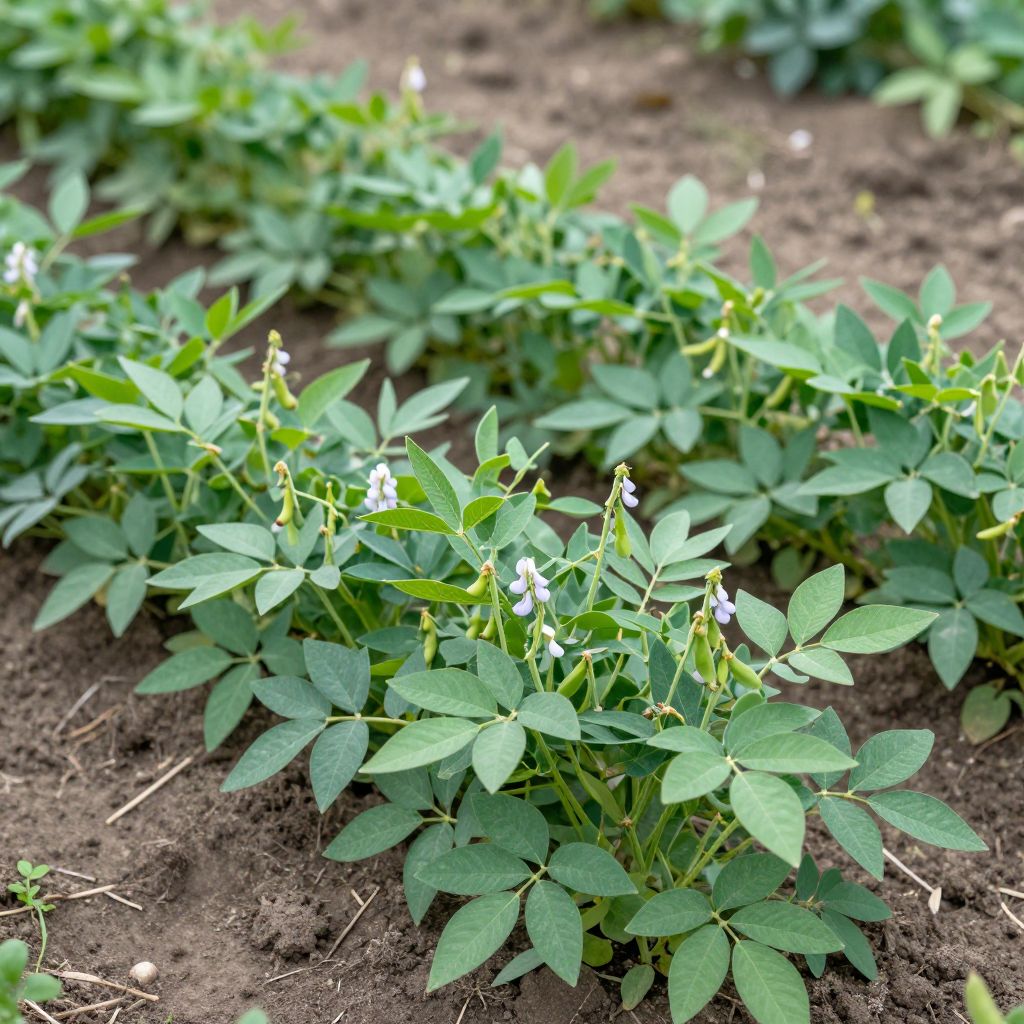
Wondering what do soybean plants look like in the garden? Soybeans are upright, leafy annual legumes that start as small seedlings with paired oval leaflets, then grow into bushy plants with trifoliate leaves and short clusters of tiny white or purple flowers.
As they mature, they form fuzzy green pods along the stems, each pod usually holding two to four seeds. Knowing the plant’s growth stages makes it easier to spot healthy growth, identify problems early, and harvest at the right time.
What do soybean plants look like?
Soybean plants (Glycine max) are warm-season annuals with sturdy, branching stems, oval first leaves, and later three-part leaves called trifoliate leaves. Mature plants are usually 1 to 4 feet tall, depending on variety and growing conditions, and they produce small flowers followed by fuzzy pods.
How to identify soybean plants at each stage
Seedling stage
Young soybean seedlings emerge with two thick seed leaves, called cotyledons, that sit just above the soil. Soon after, the first true leaves appear as a pair of simple oval leaves, which is one of the easiest ways to tell soybeans from many other garden plants.
Vegetative growth
After the first true leaves, soybeans develop alternating leaves made up of three leaflets. These trifoliate leaves are broad, medium green, and slightly fuzzy, giving the plant a full, leafy look as it branches upward.
Flowering and pod formation
Flowers are small and usually white to pale purple, and they often appear where the leaves join the stem. After pollination, slender fuzzy pods form in clusters, and each pod gradually fills with seeds as the plant matures.
Mature plants
Mature soybean plants often look bushy and compact rather than tall and vine-like. Leaves may yellow and drop as pods ripen, and the stems can become more visible near harvest time.
What soybean plants need to grow well
Soybeans grow best in full sun, warm soil, and well-drained ground. They are not fussy about rich soil, but they do perform better when the bed is loose, fertile enough for steady growth, and not waterlogged.
- Sun: At least 6 to 8 hours of direct sunlight daily.
- Soil: Loose, well-drained soil with moderate fertility.
- Moisture: Even moisture during germination and flowering.
- Airflow: Good spacing helps reduce leaf disease.
If your soil stays wet after rain, plant on raised beds or improve drainage before sowing. Soybeans dislike soggy roots more than they dislike average garden soil.
How to plant soybeans
Direct sowing is best
Soybeans are usually direct sown outdoors because they do not like root disturbance. Plant seeds after the soil has warmed and frost risk has passed in your area, since cold soil can slow germination and encourage rot.
- Choose a sunny bed with good drainage.
- Loosen the top 6 to 8 inches of soil.
- Plant seeds about 1 to 1.5 inches deep.
- Space seeds according to the variety and your goal, whether for garden pods or a larger planting.
- Water gently after planting to settle the soil.
For a small garden patch, keep rows or blocks wide enough to allow airflow and easy weeding. If you are growing soybeans for edible pods, closer spacing can help the plants shade the soil and reduce weeds.
Should you use compost or fertilizer?
A thin layer of compost worked into the bed before planting is often enough for home gardens. Soybeans are legumes and can fix nitrogen with the help of soil bacteria, so too much nitrogen fertilizer may produce lots of leaves but fewer pods.
If your soil is poor, a balanced soil amendment may help, but avoid overfeeding. When in doubt, a soil test is the most reliable way to know what your bed needs.
Watering and care during the season
Keep the soil evenly moist while seeds germinate and while plants are flowering and filling pods. Deep, less frequent watering is better than shallow sprinkling because it encourages stronger roots and helps the soil dry slightly between waterings.
- Water at the base of the plants, not overhead if possible.
- Mulch lightly to hold moisture and suppress weeds.
- Check soil moisture before watering; the top inch can dry slightly, but the root zone should not stay dry for long.
During hot weather, soybean leaves may droop in the afternoon and recover by evening. If they stay wilted, the plants may need more water or better root-zone moisture retention.
Common problems that change how soybean plants look
Yellowing leaves
Yellow leaves can mean natural aging near harvest, but early yellowing may point to poor drainage, nutrient imbalance, or root stress. If the lower leaves yellow while the plant is still small, check for compacted soil or overwatering.
Stunted growth
Plants that stay short and pale may be struggling with cold soil, poor fertility, crowding, or root damage. Soybeans should look steadily fuller as they grow, not thin and weak for long periods.
Leaf holes and chewing damage
Insects such as beetles, caterpillars, and grasshoppers can leave ragged holes. Light damage is often cosmetic, but repeated defoliation can reduce plant vigor and pod set.
Fungal and bacterial issues
Leaf spots, blights, and moldy growth are more likely in damp, crowded plantings. Good spacing, clean garden tools, and watering at soil level help reduce these problems.
Pests and diseases to watch for
Healthy soybean plants usually look dense and leafy, but pests can quickly change their appearance. Check the undersides of leaves and the growing tips every few days, especially in warm, humid weather.
- Aphids: Clusters of tiny insects that curl or distort leaves.
- Bean beetles and leaf-chewing insects: Irregular holes in foliage.
- Spider mites: Fine stippling and a dusty look on leaves in hot, dry conditions.
- Leaf spot diseases: Brown or tan spots that spread in wet weather.
If you catch a problem early, remove heavily damaged leaves, improve airflow, and avoid overhead watering. For serious infestations, use a control method that matches the pest and always follow the product label.
How to tell soybeans from similar plants
It is easy to confuse soybeans with other beans or young weeds when the plants are small. The best clues are the paired seed leaves, the fuzzy stems, and the later trifoliate leaves with broad leaflets.
- Compared with pole beans: Soybeans are usually bushier and less vine-like.
- Compared with many weeds: Soybeans grow in a more regular pattern with consistent leaf shape.
- Compared with other legumes: The small flowers and fuzzy pods are helpful identifiers.
If you are unsure, wait for the trifoliate leaves and pod formation. At that point, soybean plants are much easier to recognize.
Pruning, support, and maintenance
Most soybean varieties do not need pruning or staking. They are naturally self-supporting, and excessive pruning can reduce flowering and pod production.
Instead, focus on simple maintenance:
- Keep weeds down while plants are young.
- Thin crowded seedlings if needed.
- Inspect for pests weekly.
- Remove damaged or diseased leaves only when necessary.
If your plants are tall and floppy, they may be growing in too much shade or too rich a soil. In that case, improve light and spacing next time rather than trying to force the plants upright.
Harvesting soybean pods
Harvest timing depends on how you plan to use the crop. For fresh eating, pick pods when they are plump, green, and tender. For dry soybeans, wait until the pods turn brown and the seeds rattle inside.
Pick pods regularly if you want a longer fresh harvest window. If you are harvesting for dry seed, do not wait too long in wet weather, or pods may split and seeds may be lost.
Quick visual checklist for healthy soybean plants
- Seedlings emerge with two thick cotyledons.
- True leaves appear as paired ovals, then trifoliate leaves.
- Plants look bushy, green, and evenly upright.
- Flowers are small and white to pale purple.
- Pods are fuzzy and develop along the stems.
Conclusion
If you are asking what do soybean plants look like, think of a compact, leafy summer annual that starts with simple oval leaves, grows into a bushy plant with three-part leaves, and finishes with fuzzy pods. Watch the plant’s shape, leaf type, and pod development to track its progress and catch problems early.
For more help with growing legumes, you may also want to read about how to grow green beans and building healthy garden soil with compost.