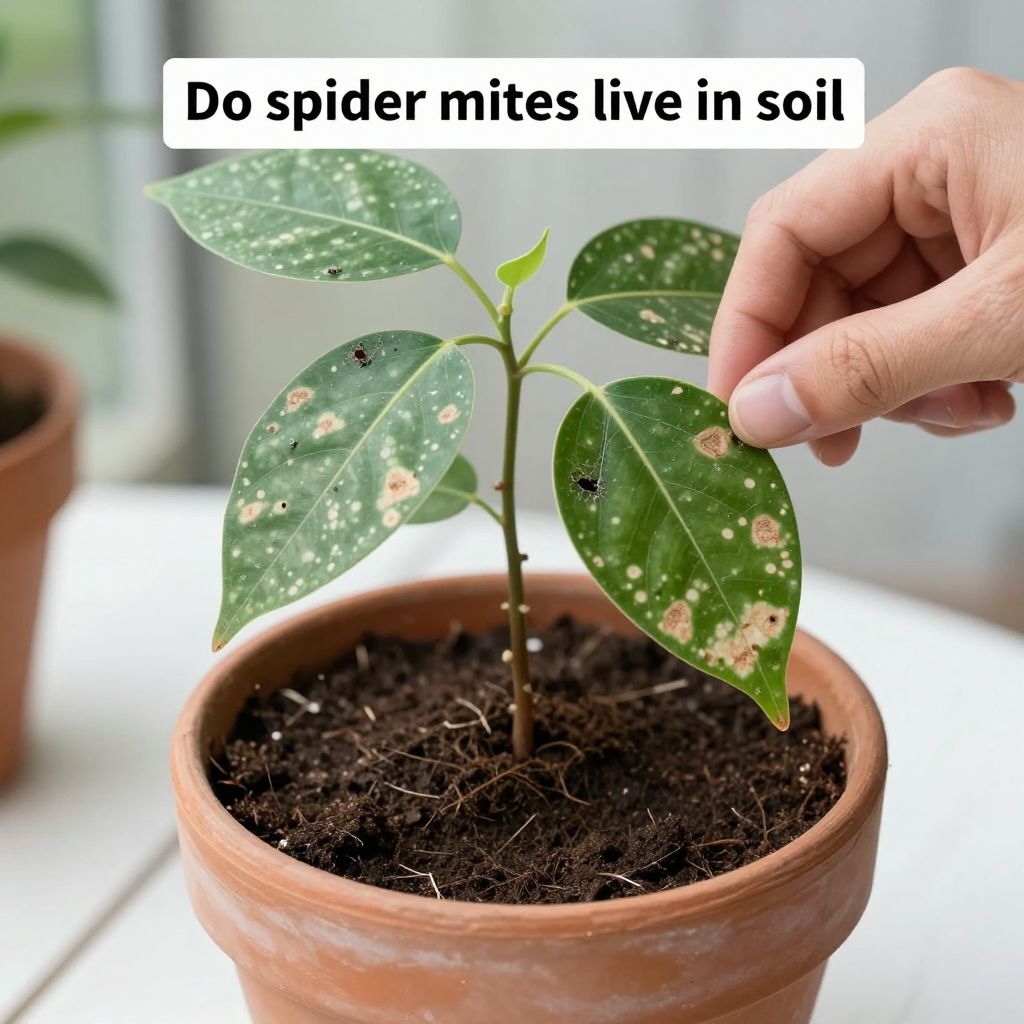
Do spider mites live in soil? If you’ve found speckled leaves, fine webbing, or plants that suddenly look dusty and stressed, it’s natural to wonder whether the problem is hiding in the potting mix. The short answer is that spider mites usually do not live in soil the way root pests do.
They mostly feed on the undersides of leaves and on tender stems, then move from plant to plant. That said, they can shelter in debris, pot rims, cracks, and nearby plant material, so good cleanup and plant care still matter.
Do spider mites live in soil?
Spider mites do not typically live and breed in soil like fungus gnats or root aphids. They are leaf-feeding pests that prefer warm, dry, dusty conditions and hide on foliage, stems, and nearby surfaces. Eggs, mites, and webbing can be present around pots, but the soil itself is usually not their main home.
Where spider mites actually hide
Spider mites are tiny arachnids, often too small to see clearly without close inspection. They cluster on the undersides of leaves, where they pierce plant cells and suck out juices.
When populations build, you may also find them:
- Along leaf veins and petioles
- In fine webbing between leaves and stems
- On pot rims, saucers, stakes, and nearby surfaces
- In dusty corners of greenhouses, patios, or indoor growing areas
Important: the soil is usually not the source of a spider mite infestation, but it can collect fallen mites, eggs, and plant debris that help the problem persist.
Why spider mites are often confused with soil pests
Many gardeners first notice spider mites after a plant starts looking unhealthy from the top down. Because the damage appears all over the plant, it can seem like the roots or soil are the cause.
Common signs of spider mites
- Fine yellow or pale stippling on leaves
- Bronzing or dull, faded foliage
- Very fine webbing, especially on stressed plants
- Leaves drying, curling, or dropping early
- Tiny moving specks on the underside of leaves
If you tap a leaf over white paper and see tiny moving dots, that is a strong clue. Soil problems usually cause different symptoms, such as wilting from root rot, fungus gnat activity, or poor drainage.
What conditions encourage spider mites
Spider mites thrive when plants are stressed, especially in hot, dry, and dusty conditions. Indoor plants, greenhouse crops, container plants on sunny patios, and drought-stressed landscape plants are often most vulnerable.
Risk factors to watch
- Low humidity and poor air moisture
- Plants kept too dry for long periods
- Dusty leaves that reduce normal plant function
- Overuse of broad-spectrum insecticides that remove beneficial insects
- Overcrowded plants with limited airflow
- Heat stress from reflected sun, windows, or dry indoor air
Healthy, well-watered plants are less likely to be severely damaged, though they can still be attacked.
How to inspect plants and soil correctly
If you suspect spider mites, inspect the plant carefully before treating anything. A quick look at the soil alone will not tell you much.
- Check the undersides of leaves, especially older leaves and tender new growth.
- Look for webbing where leaves meet stems and around leaf clusters.
- Tap a leaf over white paper and watch for tiny moving specks.
- Examine the pot rim, saucer, nearby stakes, and plant supports.
- Look for dust buildup and dry, stressed foliage around the plant.
If the plant is in a container, also check drainage. A plant that is both dry-stressed and root-stressed is more likely to suffer noticeable mite damage.
How to manage spider mites without relying on soil treatment
Because spider mites live mainly on foliage, treatment should focus on the plant surface and surrounding area. Soil drenches are usually not the most effective first step unless you are also dealing with another pest.
Step-by-step control plan
- Isolate the plant from healthy plants to slow spread.
- Rinse the foliage with a strong stream of water, especially the undersides of leaves.
- Prune heavily infested leaves if the plant can tolerate it.
- Wipe leaves on smaller houseplants with a damp cloth.
- Use insecticidal soap or horticultural oil according to label directions, covering the undersides of leaves thoroughly.
- Repeat applications as directed, because eggs and newly hatched mites can survive the first treatment.
- Clean the area around the plant, including saucers, benches, and nearby debris.
Always test sprays on a small section first if the plant is sensitive, dusty, sun-stressed, or recently moved. Apply treatments in cooler parts of the day to reduce leaf burn risk.
Should you replace the soil?
Usually, no. Replacing potting mix will not solve a spider mite problem by itself because the mites are on the plant, not in the root zone. Soil replacement may be helpful only if the plant also has drainage issues, root rot, or another soil-borne pest.
When repotting makes sense
- The potting mix stays soggy and smells sour
- Roots are black, mushy, or overcrowded
- The container has poor drainage
- You suspect multiple pest problems, not just spider mites
If you do repot, clean the pot thoroughly and discard old debris. Use fresh, well-draining mix suited to the plant’s needs, but still inspect and treat the foliage.
Indoor plants versus outdoor plants
Spider mites behave a little differently depending on where the plant grows. The basic biology is the same, but the environment changes how fast they spread and how you manage them.
Indoor gardening
Houseplants are often hit hard because indoor air is dry and predators are limited. Keep plants away from heating vents when possible, dust leaves regularly, and inspect new plants before bringing them into your home.
Outdoor gardening
In the garden, spider mites often flare up during hot, dry spells. Plants under eaves, along walls, or in reflected heat may need extra attention. Natural predators can help outdoors, so avoid unnecessary broad-spectrum sprays.
How to prevent spider mites from coming back
Prevention is mostly about reducing stress and catching early infestations before they spread. You do not need perfect conditions, but you do need consistent plant care and regular inspection.
- Water plants deeply and consistently according to their needs
- Keep foliage as dust-free as practical
- Thin crowded growth to improve airflow
- Inspect new plants before placing them near others
- Remove fallen leaves and plant debris around containers
- Watch plants closely during hot, dry weather
Tip: Early detection is the easiest way to keep spider mites from becoming a major problem. A small infestation on one plant is much simpler to manage than a widespread outbreak.
Common mistakes to avoid
Some well-meant fixes make spider mite problems worse or waste time.
- Assuming the soil is the main problem and ignoring the leaves
- Spraying only the top of the plant and missing the undersides
- Stopping treatment after one application
- Overfertilizing stressed plants, which can push weak, tender growth
- Letting plants stay dusty, dry, and overcrowded
- Using harsh pesticides without checking the label for plant safety
If the plant is already weakened, focus first on reducing stress. A healthier plant is much better able to recover from mite damage.
When to suspect a different pest or disease
If you do not see stippling, webbing, or mites on the undersides of leaves, the issue may be something else. Yellowing from overwatering, root rot, thrips, aphids, nutrient imbalance, or leaf spot disease can all look similar at first glance.
Check the whole plant carefully before treating. If symptoms continue after you have ruled out spider mites, look at watering, drainage, light levels, and root health.
Conclusion
Spider mites usually do not live in soil, but they can still linger around pots and spread quickly from nearby foliage. The best response is to inspect the undersides of leaves, clean up the growing area, and treat the plant itself rather than focusing on the potting mix alone. If you want to go deeper, read more about common garden pests and disease troubleshooting and practical houseplant care tips.