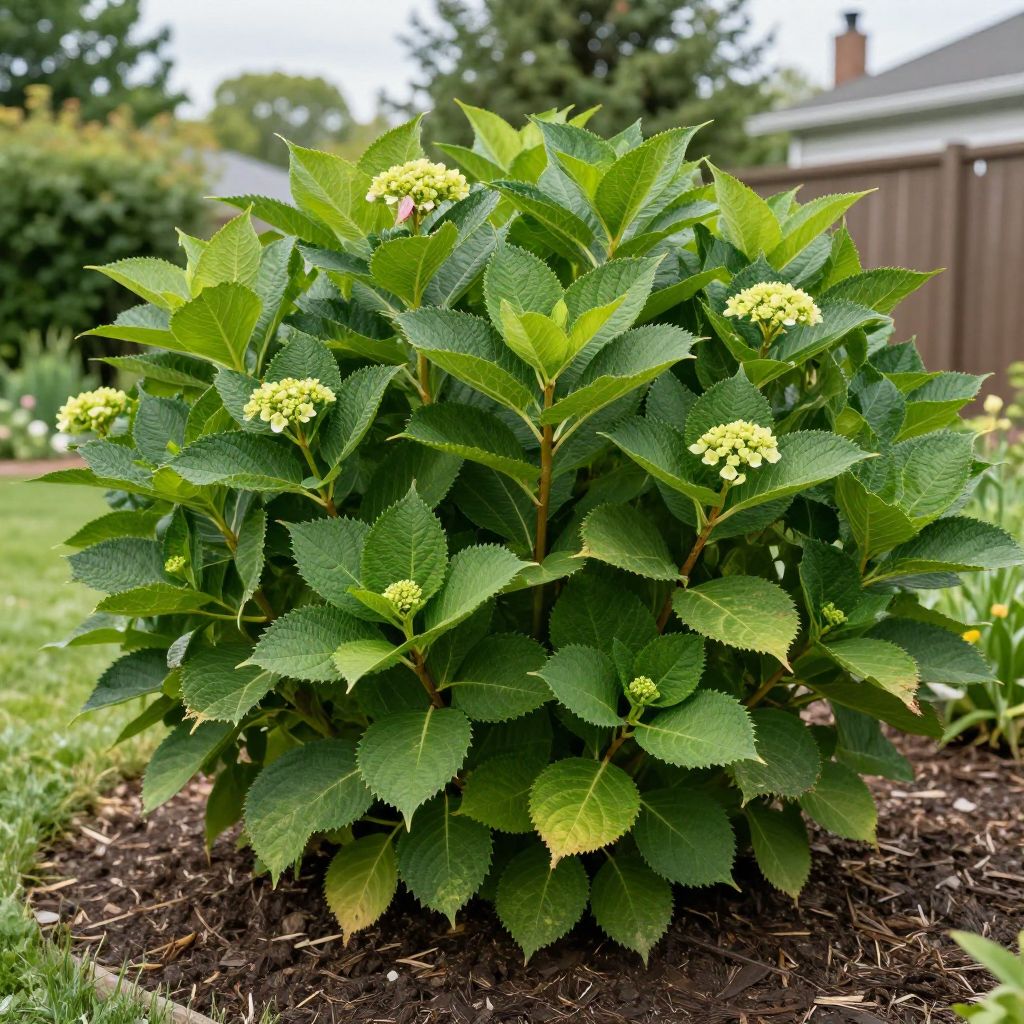
Why aren’t my hydrangeas blooming? It’s one of the most common hydrangea questions, and the answer is usually a growing-condition issue rather than a serious disease. In many cases, the plant is healthy but stressed by pruning, too much shade, winter damage, or the wrong fertilizer.
The good news is that most non-blooming hydrangeas can be coaxed back into flower once you identify the cause. A few careful adjustments to pruning, sunlight, watering, and feeding often make the difference between leafy growth and those big, showy blooms you want.
Why aren’t my hydrangeas blooming?
Hydrangeas usually fail to bloom because flower buds were removed, damaged, or never formed in the first place. The most common causes are pruning at the wrong time, too much shade, late frost, overfertilizing with nitrogen, drought stress, or a plant that is still too young or recovering from transplant shock.
Common causes of hydrangeas not blooming
1. You pruned at the wrong time
This is one of the biggest reasons hydrangeas don’t flower. Many popular types, especially bigleaf hydrangeas (Hydrangea macrophylla) and oakleaf hydrangeas (Hydrangea quercifolia), set their flower buds on old wood, which means the buds form on stems from the previous season.
If you cut those stems back in late fall, winter, or early spring, you may be removing the buds before they can open. That can leave you with a healthy-looking shrub and no blooms.
2. The plant is getting too much shade
Hydrangeas need enough light to produce flowers. In deep shade, they may grow leaves but produce few or no blooms.
Most hydrangeas do best with morning sun and afternoon shade, especially in hotter climates. In cooler regions, they may tolerate more sun, while in very warm areas they may need protection from intense afternoon heat.
3. Late frost or winter injury damaged the buds
Even if you pruned correctly, a cold snap can kill flower buds on old-wood hydrangeas. This is especially frustrating because the stems may survive, but the buds are gone.
Winter damage is more likely when plants are exposed to drying winds, sudden temperature swings, or an early warm spell followed by a freeze. A spring frost can also blacken tender new growth on some types.
4. Too much nitrogen fertilizer
High-nitrogen fertilizer can push lush green leaves at the expense of flowers. If your hydrangea is producing lots of foliage and very few blooms, feeding may be part of the problem.
Hydrangeas generally do better with balanced nutrition and organic matter than with heavy feeding. Overfeeding can also make stems soft and more prone to flop or winter damage.
5. The shrub is too young or recently transplanted
Young hydrangeas often need time to settle in before they bloom reliably. A newly planted shrub may spend its first season or two building roots instead of flowers.
Transplant shock can also delay blooming. If the plant was moved, divided, or heavily disturbed, it may skip a flowering cycle while it recovers.
6. Water stress is interfering with bud formation
Hydrangeas like consistent moisture, especially while setting buds and developing flowers. If the soil dries out repeatedly, the plant may abort buds or produce fewer blooms.
At the same time, soggy soil can weaken roots and reduce flowering. Hydrangeas need moisture, but they also need drainage.
7. The soil is not quite right
Poor soil can limit flowering, especially if it is compacted, low in organic matter, or chronically wet. Hydrangeas prefer soil that holds moisture but drains well.
Very alkaline or very acidic soil usually affects flower color more than blooming itself, but poor soil structure can still reduce plant vigor and bud production.
8. Pests or disease are stressing the plant
While pests and disease are less common causes of no blooms than pruning or light issues, they can weaken a plant enough to reduce flowering. Aphids, spider mites, leaf spots, powdery mildew, and root problems can all sap energy from the shrub.
If the plant is struggling overall, it may prioritize survival over flowering.
How to diagnose the problem step by step
- Check the type of hydrangea. Some bloom on old wood, some on new wood, and some on both. This matters because pruning rules are different.
- Look for buds on the stems. If you see healthy buds on old stems but no flowers, pruning or frost may be the issue.
- Assess the light. If the plant gets mostly shade, move nearby obstacles if possible or consider transplanting to a brighter site in the future.
- Review your pruning habits. If you cut back in fall or early spring, you may have removed flower buds.
- Inspect the leaves and stems. Yellowing, spots, wilting, or dieback can point to stress, disease, or root issues.
- Check the soil moisture. The soil should be evenly moist, not bone dry and not waterlogged.
- Think back to weather events. A late frost, harsh winter, or sudden cold snap can explain a bloomless season.
How to fix hydrangeas that won’t bloom
Adjust pruning based on the hydrangea type
If your hydrangea blooms on old wood, prune only right after flowering, and keep it light. Remove dead stems, weak growth, and spent flower heads if needed, but avoid major cutting in late fall or early spring.
If your hydrangea blooms on new wood, you can usually prune in late winter or early spring before growth starts. Even then, avoid severe cutting unless the plant truly needs it.
When in doubt, prune less. A conservative approach is safer than removing next year’s flower buds.
Improve sunlight without stressing the plant
If the shrub is buried in shade, try to increase light gradually. Prune back nearby branches or remove competing plants if that is practical and allowed in your landscape.
If the site is permanently too dark, the best long-term solution may be transplanting to a brighter location in fall or early spring, depending on your climate and the plant’s condition.
Feed lightly and avoid excess nitrogen
Use compost or a balanced, slow-release fertilizer only if the plant appears undernourished or the soil is poor. If the shrub is already growing vigorously, it may not need much feeding at all.
Too much fertilizer can create the wrong kind of growth. If you have been feeding heavily, pause and let the plant settle into a more natural growth pattern.
Water consistently
Hydrangeas generally do best with steady moisture, especially during warm weather and bud formation. Water deeply when the top few inches of soil begin to dry, adjusting for rainfall and soil type.
Mulch can help reduce moisture swings. A 2- to 3-inch layer of organic mulch, kept a few inches away from the stems, often helps maintain even soil moisture and cooler roots.
Protect buds from frost and winter damage
If your hydrangea is an old-wood bloomer and your area has late spring frosts, consider planting it in a sheltered spot out of harsh wind. In colder climates, a protected microclimate can make a real difference.
For vulnerable shrubs, avoid pruning in late season, and leave healthy stems standing through winter if they may carry buds for next year.
Refresh the soil gently
Top-dressing with compost can improve soil structure over time. If drainage is poor, avoid overwatering and consider whether the plant is sitting in a low spot where water collects.
Hydrangeas dislike constantly soggy roots. If the site stays wet after rain, improving drainage may matter more than adding fertilizer.
What to avoid if you want blooms next season
- Don’t shear hydrangeas like a hedge unless you know the variety blooms on new wood.
- Don’t prune in late fall if your plant blooms on old wood.
- Don’t overfeed with high-nitrogen fertilizer expecting more flowers.
- Don’t let the soil dry out repeatedly during bud formation.
- Don’t plant in deep shade and expect heavy flowering.
- Don’t assume one bad year means the plant is failing; weather often plays a role.
Special note on different hydrangea types
Bigleaf hydrangea
Hydrangea macrophylla often blooms on old wood, though some newer reblooming types can flower on both old and new growth. If yours is not blooming, pruning and frost are especially important to review.
Oakleaf hydrangea
Hydrangea quercifolia also commonly blooms on old wood. It can be especially sensitive to incorrect pruning if you want flowers the following season.
Panicle hydrangea
Hydrangea paniculata typically blooms on new wood, so pruning timing is less risky. If it still won’t bloom, look more closely at light, water, plant health, and whether it is still establishing.
Smooth hydrangea
Hydrangea arborescens also blooms on new wood. If it has plenty of leaves but no flowers, the issue is often light, moisture, or overly aggressive pruning.
When to wait and when to intervene
Sometimes the best move is patience. A young hydrangea, a newly transplanted shrub, or a plant recovering from winter stress may bloom again once it regains strength.
Intervene if the same problem repeats for more than one season, especially if you can clearly trace it to pruning, shade, or water stress. The more consistent your growing conditions, the more reliable the flowering will be.
Conclusion
If you’re wondering why aren’t my hydrangeas blooming, start by checking pruning, light, and winter damage before assuming the plant is doomed. Most hydrangeas can recover with the right care. This season, inspect the stems, adjust your pruning plan, and give the shrub steadier moisture so it has the best chance to set buds for next year.
For more help with shrub care and flower timing, you may also want to read about how to prune hydrangeas correctly and shrubs that bloom on old wood.