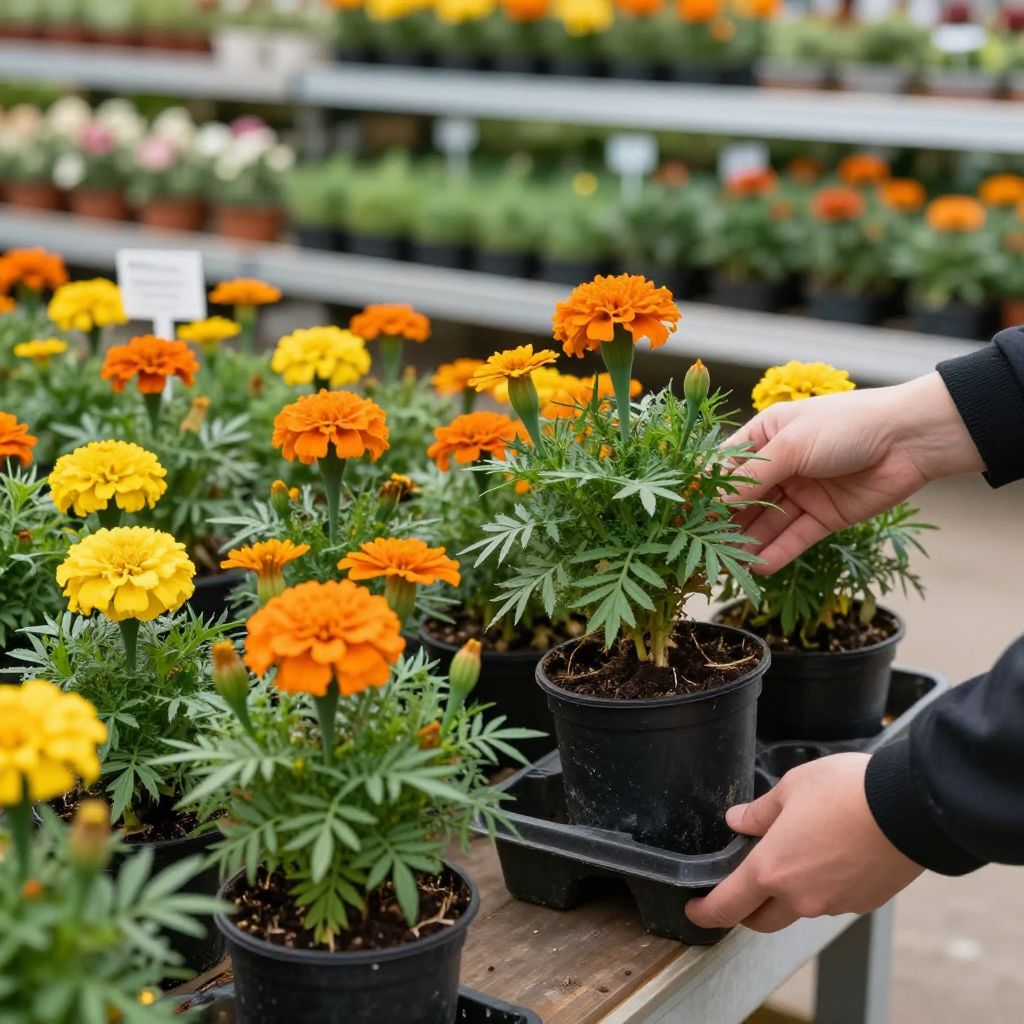
Looking for where to buy marigolds for your garden beds, containers, or vegetable patch? The best place depends on whether you want small bedding plants, seed packets, or a specific variety such as French marigolds or African marigolds.
You can usually find marigolds at garden centers, nurseries, home improvement stores, farmers’ markets, and online seed shops. If you choose healthy plants and match them to your growing conditions, marigolds are one of the easiest flowers to establish and keep blooming.
Where To Buy Marigolds?
You can buy marigolds from local garden centers, independent nurseries, big-box stores, farmers’ markets, and reputable online seed or plant retailers. For the healthiest results, choose stock with sturdy stems, rich green foliage, and no signs of pests, yellowing, or root-bound stress.
Best Places to Buy Marigolds
1. Local garden centers and nurseries
This is often the best option if you want to see the plants before buying. You can inspect leaf color, stem strength, and overall size, which helps you avoid weak or stressed marigolds.
Local nurseries may also carry better plant selection than general retailers, including compact bedding types, taller border varieties, and occasional specialty cultivars.
2. Home improvement and big-box stores
These stores are convenient and often affordable, especially in spring and early summer. They usually stock plug trays or small pots of common marigold types that are ready to plant out.
Check the plants carefully, because stock can dry out quickly or become crowded on shelves. If the soil is bone-dry, the leaves are wilted, or the plants are leggy, choose another tray.
3. Farmers’ markets and local plant sales
These can be excellent places to buy marigolds grown locally for your climate. Local growers often offer plants that are already acclimated to your weather and may have stronger roots than mass-produced stock.
You may also find unusual colors or heirloom seed lines that are not commonly sold in chain stores.
4. Online seed companies and plant retailers
Online shopping is useful if you want a wider range of marigold seeds, such as French marigolds, African marigolds, or signet marigolds. It is also helpful if local stores are sold out.
Buy from reputable sellers with clear plant descriptions, recent stock, and good shipping policies. For live plants, check whether shipping timing suits your local weather, since heat or cold can damage tender transplants in transit.
5. Seed exchanges and community gardening groups
If you enjoy starting plants yourself, seed swaps and gardening groups can be a low-cost way to get marigolds. This works especially well for gardeners who want to grow several plants for borders, edging, or pollinator-friendly beds.
Seeds are easy to store, and marigolds germinate reliably when kept in warm, well-lit conditions.
How to Choose Healthy Marigold Plants or Seeds
What to look for in transplants
- Firm stems that stand upright without flopping.
- Even, green foliage without heavy yellowing or spotting.
- Compact growth rather than tall, stretched stems.
- Moist but not soggy soil in the pot.
- No visible pests on the undersides of leaves.
What to look for in seed packets
- A recent packing date or current season stock when possible.
- Clear variety information so you know the mature height and flower type.
- Enough seeds for your space, especially if you want a full border.
- Storage in a cool, dry place before purchase.
Choosing the Right Type of Marigold
Before you buy, decide what job you want the marigolds to do in your garden. Different types suit different spaces and uses.
French marigolds
These are usually compact and bushy, making them a good choice for edging, containers, and small beds. They tend to bloom steadily and are easy for beginners.
African marigolds
These are typically larger plants with bigger blooms and a stronger presence in borders. They work well where you want height and color, but they need more space than compact types.
Signet marigolds
These are smaller and more delicate, often used for edging or mixed plantings. They can be a good fit for tight spaces and sunny containers.
If you are unsure, read the plant tag or seed packet carefully. Mature height matters more than flower color when you are planning spacing and placement.
When Is the Best Time to Buy Marigolds?
The best time to buy marigolds is usually in spring, when garden centers are well stocked and plants are young but established. In warmer climates, you may also find good selections later in the season.
If you are buying seeds, you can shop earlier and start them indoors or sow them outdoors when your local weather is warm enough. Marigolds prefer warmth and are sensitive to frost, so timing should match your climate.
Seasonal buying tips
- Spring: best selection of transplants and seed packets.
- Early summer: good for replacing gaps in beds and containers.
- Late summer: useful for quick color in warm regions, but check whether plants will have enough time to establish.
How to Plant Marigolds After You Buy Them
Once you bring marigolds home, plant them as soon as practical so they can settle in before heat or drought stress builds up. If the weather is cool or windy, harden off indoor-grown plants first by gradually exposing them to outdoor conditions over several days.
- Choose a sunny location with well-draining soil.
- Loosen the soil and mix in compost if it is poor or compacted.
- Set plants at the same depth they were growing in the pot.
- Space them according to their mature size, not their current size.
- Water thoroughly after planting to settle the roots.
Marigolds generally perform best in full sun, though they can tolerate a little light shade in very hot climates. Good drainage is important, because soggy soil can lead to weak growth and root problems.
Container planting tips
If you are planting marigolds in pots, use a container with drainage holes and a quality potting mix. Avoid heavy garden soil in containers, since it compacts and drains poorly.
Choose a pot large enough for the plant’s mature size. Small marigolds can share a container, but larger varieties need more root room and airflow.
Growing Conditions That Help Marigolds Thrive
Sunlight
Marigolds bloom best with strong light. Aim for at least 6 hours of sun per day if possible, especially for container plants and flowering borders.
Soil
They are adaptable, but they do best in moderately fertile soil that drains well. If your soil is very heavy clay, improve it with compost and avoid overwatering.
Watering
Water newly planted marigolds regularly until they establish, then water when the top layer of soil begins to dry. Established plants usually handle brief dry periods better than constant wetness.
Overwatering is one of the most common mistakes with marigolds. Wet soil encourages weak growth and can reduce flowering.
Feeding
Marigolds usually do not need heavy feeding. Too much nitrogen can produce leafy plants with fewer flowers. If your soil is poor, a light compost topdressing or a balanced slow-release fertilizer may be enough, depending on your garden conditions.
Common Problems After Buying Marigolds
Leggy plants
If the plants are tall and stretched, they may have been growing in low light. Plant them in full sun and pinch back soft tips if needed to encourage bushier growth.
Wilting after transplanting
Some wilting is normal for a day or two after planting. Keep the soil evenly moist, protect plants from intense afternoon sun for a short period if needed, and avoid fertilizing immediately after transplanting.
Yellow leaves
Yellowing can come from overwatering, poor drainage, or nutrient issues. Check the soil first. If it stays wet for too long, improve drainage before adding more water.
Pests
Marigolds are fairly tough, but aphids, spider mites, and whiteflies can still appear, especially on stressed plants. Inspect leaves regularly and rinse off small infestations with a strong spray of water.
Propagating Marigolds for More Plants
If you buy seeds instead of transplants, you can grow many marigolds for very little cost. This is often the best value if you want to fill beds, edge pathways, or repeat the same flower throughout the garden.
Start seeds in trays or small pots if your season is short, or sow them directly outdoors once the soil is warm and frost danger has passed. Keep the seed area lightly moist until germination.
Simple propagation checklist
- Use clean containers or seed trays.
- Fill with a fine, well-draining seed-starting mix.
- Sow seeds at the depth listed on the packet.
- Keep them warm and evenly moist.
- Move seedlings into stronger light as soon as they emerge.
How to Get the Most Value When Buying Marigolds
If you want the best return on your purchase, think beyond the price tag. A slightly more expensive plant that is healthy and well-rooted often performs better than a cheaper one that is root-bound or stressed.
- Buy smaller, younger plants if they look healthy and vigorous.
- Choose seeds if you need many plants.
- Match the plant size to your space so you do not overcrowd beds.
- Check return or replacement policies for online orders.
Conclusion
When deciding where to buy marigolds, start with local nurseries or garden centers if you want to inspect plants in person, then compare with reputable online seed sellers if you want more variety. Choose healthy stock, plant it in full sun with well-drained soil, and avoid overwatering for the best results.
If you want to keep planning your flower beds, consider reading more about container gardening basics and how to choose annual flowers for full sun for more practical ideas.