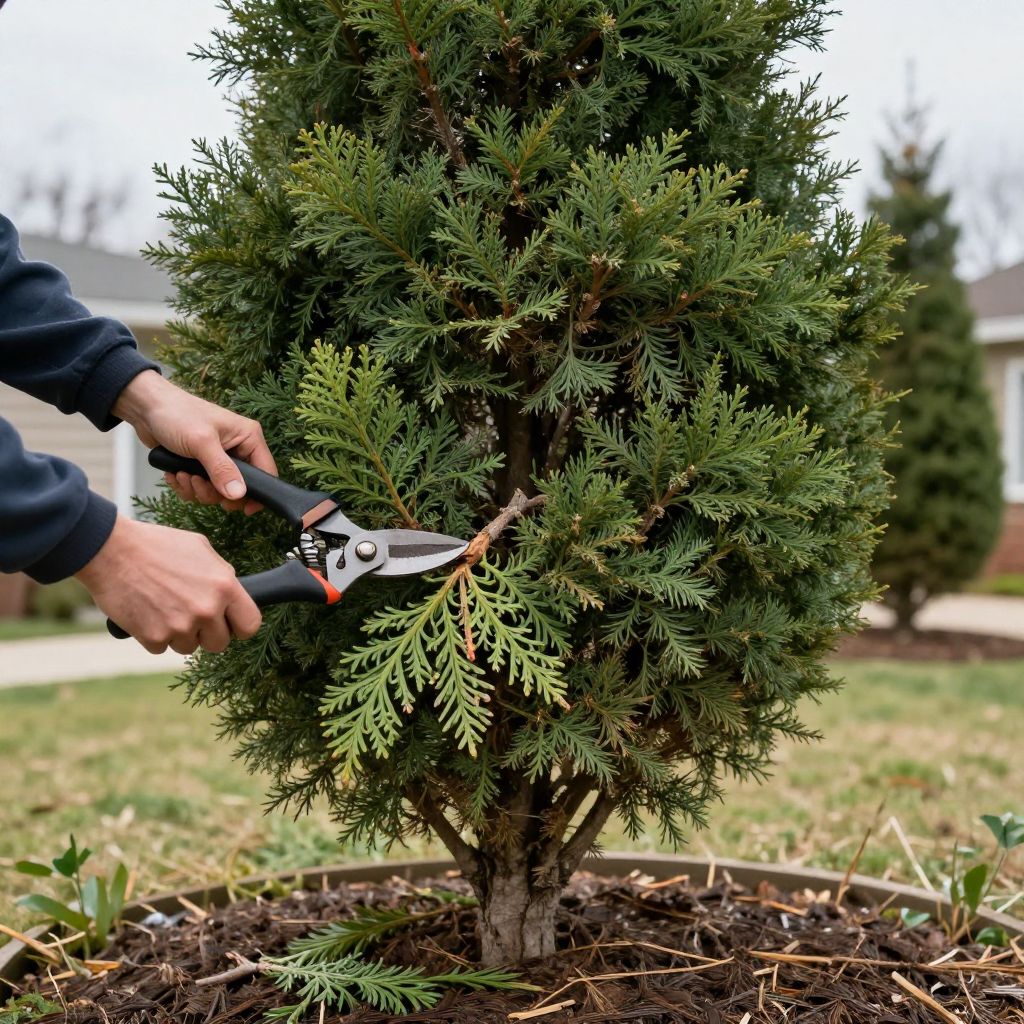
When should you prune a cedar tree? The best time depends on the type of cedar, your climate, and what you want to correct. In general, light pruning is safest in late winter or early spring before new growth starts, while minor shaping can also be done in mid-summer if needed.
What matters most is avoiding heavy pruning into old, leafless wood, because cedar trees often do not regrow well from it. With the right timing and a few careful cuts, you can keep your cedar healthy, dense, and attractive without stressing the tree.
When To Prune Cedar Tree?
The best time to prune a cedar tree is usually late winter to early spring, just before active growth begins. You can also remove dead, damaged, or diseased branches at any time of year. Avoid hard pruning in late fall or during extreme heat, and never cut back into bare old wood if you want reliable regrowth.
Why timing matters for cedar pruning
Cedars are evergreen conifers, and they respond differently to pruning than many deciduous trees. Their green foliage is concentrated on active growth, so cutting too far back can leave permanent gaps.
Pruning at the right time helps the tree recover faster, reduces stress, and lowers the chance of winter injury or sunscald on newly exposed branches. It also makes it easier to see the branch structure before spring growth hides it again.
Best seasons for pruning
- Late winter to early spring: Best for shaping and light structural pruning.
- Mid-summer: Acceptable for small corrective cuts or trimming new growth lightly.
- Any time: Remove dead, broken, rubbing, or diseased branches as soon as you notice them.
Times to avoid
- Late fall, when fresh cuts may be more vulnerable to cold damage.
- During heat waves or drought, when the tree is already stressed.
- When the tree is actively pushing tender new growth that could be easily damaged.
- After severe storms unless you are only removing broken wood.
How much can you prune a cedar tree?
With cedar trees, less is usually better. Light pruning to shape the plant, thin crowded areas, or remove dead wood is safest. If you need to reduce size drastically, it is often better to do it gradually over several seasons or consider whether the tree is the right size for the site.
A good rule is to avoid removing more than about one-third of the live foliage in a single season. Even that may be too much for a stressed or newly planted tree.
What cedar trees tolerate well
- Removing dead or damaged branches
- Lightly shortening young shoots
- Thinning crossing branches for airflow
- Cleaning up lower limbs for clearance, if done gradually
What cedar trees usually do not tolerate well
- Cutting into leafless brown interior wood
- Shearing repeatedly into the same outer shell
- Removing large sections of the canopy at once
- Severe topping or “hacking back” to control height
Step-by-step: how to prune a cedar tree safely
Before you make the first cut, inspect the tree from all sides. Look for dead branches, crowded areas, weak attachments, and any signs of disease or insect damage.
- Start with sanitation. Use clean, sharp pruners, loppers, or a pruning saw. Wipe blades if you are moving between diseased branches and healthy ones.
- Remove dead or broken wood first. Cut back to a healthy branch collar or to the point where live growth begins.
- Thin selectively. Take out crossing branches, inward-growing shoots, and crowded stems to improve airflow and light.
- Make small shaping cuts. Shorten only the tips of young growth if you want a tidier outline.
- Step back often. Check the tree’s natural form before making more cuts. Cedars look best when their shape stays natural.
Where to make the cut
For larger branches, cut just outside the branch collar without leaving a long stub. For smaller shoots, trim back to a side branch or healthy green growth. Avoid cutting flush against the trunk, since that can slow healing.
Pruning different types of cedar
“Cedar” is a common name used for several different evergreens, and pruning response can vary a little by type. Always check the plant tag or local name if you are unsure whether you have a true cedar or another tree commonly called cedar.
Young cedar trees
Young trees usually need only light training. Focus on removing damaged branches and correcting obvious structural problems while preserving the main leader and the natural shape.
Mature cedar trees
Mature cedars are best pruned conservatively. Their interior wood may be sparse, and heavy cuts can leave permanent holes. Aim for maintenance pruning rather than major reshaping.
Hedged or screen plantings
If your cedar is used as a privacy screen or hedge, trim only the outer growth and keep the base wider than the top so lower branches receive light. This helps prevent bare legs and thinning at the bottom.
Common pruning mistakes to avoid
- Shearing too hard: Repeated shearing can create a dense outer shell and a thin, weak interior.
- Cutting into old wood: Cedars often do not regenerate well from leafless sections.
- Pruning at the wrong time: Late-season cuts can be more vulnerable to winter damage.
- Using dull tools: Ragged cuts heal more slowly and can invite disease.
- Ignoring tree stress: A drought-stressed or newly planted cedar should be pruned only lightly, if at all.
How to tell if your cedar needs pruning
Not every cedar needs routine pruning. Many do best with minimal intervention unless there is a clear reason to cut.
- Branches are dead, broken, or rubbing together
- The tree is blocking a walkway, roofline, or driveway
- There is storm damage or split limbs
- Airflow is poor and the canopy is overly crowded
- You want to maintain a screen or hedge shape
If the tree is healthy and has room to grow, you may only need occasional cleanup pruning every few years.
What to do after pruning
After pruning, give the tree steady care so it can recover well. Water deeply during dry spells, especially if the cedar is young or newly planted. Mulch can help conserve moisture, but keep it a few inches away from the trunk.
Do not fertilize heavily right after pruning unless a soil test or visible nutrient deficiency suggests it is needed. Extra growth at the wrong time can make a stressed tree less resilient.
Aftercare checklist
- Check for fresh sap flow or split cuts after storms
- Watch for browning foliage near pruning wounds
- Keep the root zone evenly moist, not soggy
- Mulch lightly to reduce weed competition and moisture loss
Pests and diseases to watch for
Pruning does not usually cause pest problems by itself, but open wounds and stressed trees can be more vulnerable. Good timing, clean tools, and moderate cuts help reduce risk.
Watch for browning tips, dieback, sawdust-like frass, cankers, or unusual discoloration. If you notice widespread decline rather than isolated branch issues, pruning alone will not solve the problem. In that case, inspect watering, drainage, root health, and local pest pressure.
Tools for pruning cedar trees
- Hand pruners: For small shoots and slender branches
- Loppers: For medium branches that are too thick for pruners
- Pruning saw: For larger limbs
- Gloves and eye protection: Helpful when working under dense foliage
Keep blades sharp and clean. A clean cut is better for the tree and easier for you to manage.
Can you prune cedar in summer or winter?
Yes, but with limits. Summer pruning is fine for small corrections, especially if you are only removing a few wayward shoots. Winter pruning is also possible in mild climates, but late winter to early spring is usually the safest window for shaping.
If you live in a region with harsh winters, avoid major pruning too late in the season. If your summers are hot and dry, wait for cooler weather and make only modest cuts.
Final pruning tips for healthy cedar trees
When deciding when to prune cedar tree branches, think first about the tree’s condition and your climate, then choose late winter to early spring for most shaping work. Keep cuts light, preserve the natural form, and remove dead or damaged wood whenever needed.
If you want more practical tree-care guidance, you may also find it helpful to read about how to prune evergreen shrubs and basic pruning tools for home gardeners.