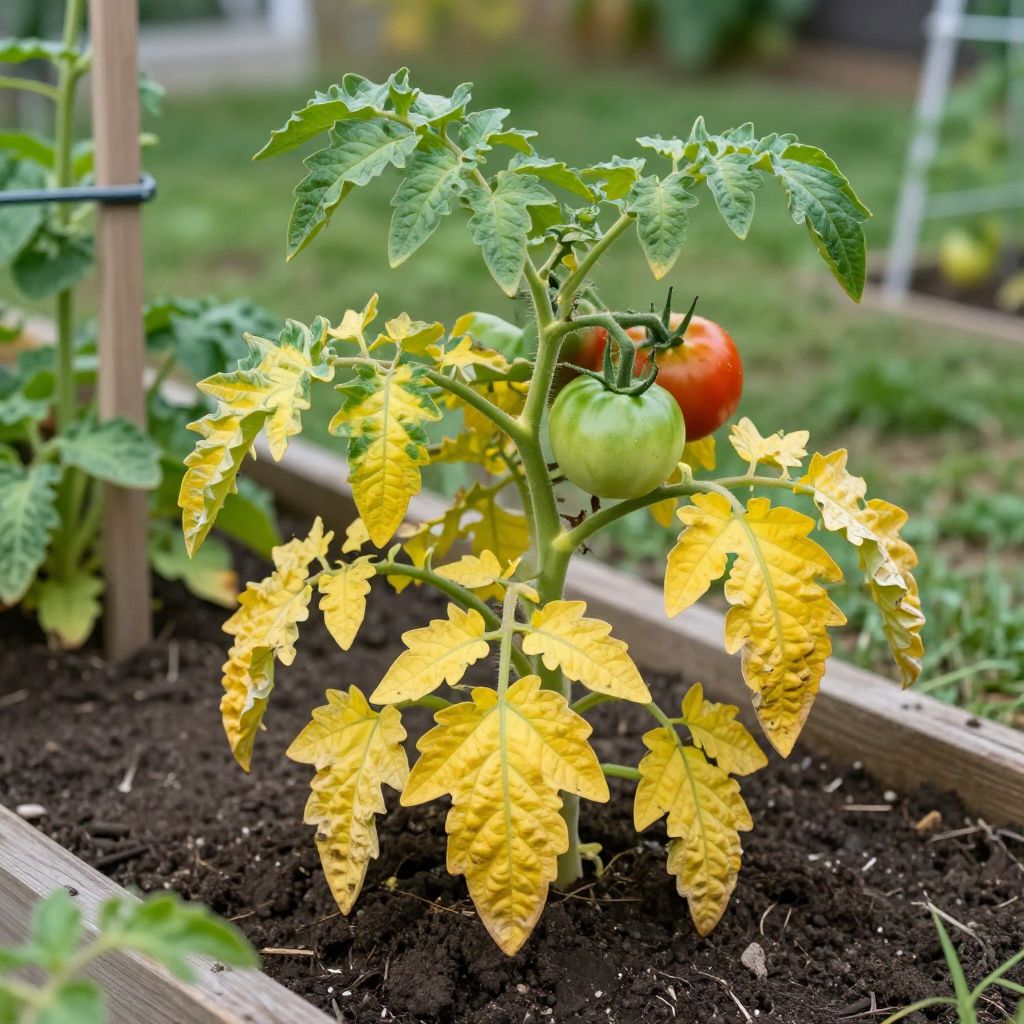
Why are my tomato plants turning yellow? Yellowing leaves are one of the most common tomato problems, and the cause can be as simple as uneven watering or as serious as disease. The good news is that the color change usually gives you clues if you look closely at where it starts and how fast it spreads.
Most yellow tomato leaves are linked to water stress, nutrient issues, root problems, pests, or fungal and viral diseases. Once you identify the pattern, you can often correct the issue, protect the rest of the plant, and improve your harvest.
Why are my tomato plants turning yellow?
Tomato leaves turn yellow when the plant is under stress. The most common causes are inconsistent watering, poor drainage, nitrogen deficiency, root damage, pests, or disease. Check whether yellowing starts on older or newer leaves, whether the soil is too wet or too dry, and whether spots, curling, or stunting are also present.
Start with where the yellowing appears
The location of the yellowing is often the fastest clue. Different problems affect different parts of the plant first.
Older lower leaves yellow first
If the bottom leaves are turning yellow while the top growth stays green, the issue is often related to nutrition, watering, or natural aging. Lower leaves are also the first to be shaded as the plant grows.
- Natural aging: A few oldest leaves yellowing late in the season is normal.
- Nitrogen deficiency: Older leaves fade from green to pale yellow, often evenly.
- Water stress: Irregular watering can cause older foliage to yellow and drop.
- Soil splash and disease: Lower leaves are more exposed to fungal problems from wet soil.
New growth yellow first
If the newest leaves are yellow or pale, the problem may be a nutrient imbalance, root trouble, or a micronutrient issue. New growth that looks yellow, twisted, or stunted deserves close attention.
- Iron or magnesium issues: Often show up as yellowing between veins.
- Root damage: Compacted, waterlogged, or damaged roots cannot feed new growth well.
- Herbicide drift: Leaves may look distorted, cupped, or narrow as well as yellow.
Common causes and how to fix them
1. Inconsistent watering
Tomatoes dislike extremes. If the soil swings from very dry to very wet, leaves can yellow, curl, or drop. This is especially common in containers and during hot, windy weather.
Check the soil 2 to 3 inches below the surface. If it is bone dry, water deeply. If it is soggy or smells sour, hold off and improve drainage.
- Water at the base, not over the leaves.
- Soak deeply so moisture reaches the root zone.
- Mulch with straw, shredded leaves, or compost to slow evaporation.
- For containers, make sure pots have drainage holes and never sit in standing water.
Important: Yellow leaves caused by water stress often improve only on new growth. The yellowed leaves may not turn green again.
2. Poor drainage and root stress
Tomatoes need moist but well-drained soil. When roots sit in waterlogged soil, they cannot take up oxygen or nutrients, and yellowing often follows.
This is common in heavy clay soil, overwatered beds, and containers without enough drainage. Plants may also look droopy even when the soil is wet.
- Raise garden beds or mound soil if drainage is poor.
- Mix in compost to improve soil structure over time.
- Do not keep adding water to already saturated soil.
- For potted tomatoes, empty saucers after watering.
3. Nitrogen deficiency
Nitrogen deficiency often causes older leaves to yellow first, while the veins may remain a bit greener. The plant may also grow slowly and look less vigorous overall.
Tomatoes are heavy feeders, especially once they start growing rapidly and setting fruit. If you have not amended the soil with compost or used a balanced fertilizer, low nitrogen may be part of the problem.
Use a tomato fertilizer or a balanced organic feed according to the label, but avoid overdoing it. Too much fertilizer can push leafy growth at the expense of flowers and fruit.
4. Magnesium or iron deficiency
When leaves turn yellow but the veins stay green, look for a pattern called interveinal chlorosis. Magnesium deficiency usually appears on older leaves first, while iron deficiency often shows up in young leaves.
These problems can happen when soil pH is off, roots are stressed, or nutrients are present but unavailable.
- Check soil pH if yellowing keeps returning. Tomatoes generally prefer slightly acidic soil.
- Use compost to support steady nutrient availability.
- Correct root stress first, because damaged roots cannot absorb nutrients well.
5. Pests
Insects and mites can weaken tomato plants and cause yellowing, especially if they feed on sap or damage leaves. Look closely under leaves and along stems.
Common culprits include aphids, whiteflies, spider mites, and flea beetles. You may also notice speckling, sticky residue, curled leaves, or fine webbing.
- Rinse small infestations off with a strong spray of water.
- Remove heavily damaged leaves if needed.
- Encourage beneficial insects by avoiding broad-spectrum sprays.
- Inspect nearby weeds and companion plants that may harbor pests.
6. Fungal diseases
Several fungal and fungal-like diseases can cause yellowing, often with spots, browning, or leaf drop. These problems are more likely in humid weather, crowded plantings, and wet foliage.
Common signs include yellow patches that develop brown centers, lower leaves dying first, or rapid spread after periods of rain.
- Remove affected leaves promptly, especially those touching the soil.
- Water at the base and avoid overhead watering.
- Improve airflow by spacing plants properly and pruning lightly.
- Clean up fallen leaves and debris around the plant.
Do not compost diseased tomato foliage unless your compost system gets hot enough to break down pathogens safely.
7. Viral diseases
Some viruses can cause yellow mottling, stunting, leaf curl, or distorted growth. Unlike nutrient problems, viral issues often create irregular patterns and do not improve after feeding.
If a plant is badly stunted, mottled, and declining, especially with distorted leaves or fruit, removal may be the best option to protect nearby tomatoes.
- Disinfect tools after handling suspect plants.
- Control insect vectors such as aphids and whiteflies.
- Remove severely affected plants from the garden.
8. Natural aging and lower-leaf senescence
Sometimes yellowing is not a problem at all. As tomato plants mature, the oldest lower leaves naturally yellow and die back, especially once the plant is putting energy into flowering and fruiting.
If the plant is otherwise healthy, with strong new growth and good fruit set, you can remove a few yellow lower leaves to improve airflow and reduce disease risk.
How to troubleshoot yellow tomato leaves step by step
- Look at the pattern. Are the oldest leaves yellowing, the newest leaves, or the whole plant?
- Check the soil. Feel 2 to 3 inches down for dryness or sogginess.
- Inspect the leaves. Look for spots, holes, webbing, sticky residue, or curling.
- Examine the stems and roots. Wilting with wet soil can point to root stress or rot.
- Review recent care. Think about watering changes, fertilizer use, heat waves, heavy rain, or transplant shock.
- Remove only what is necessary. Prune yellow or diseased lower leaves if they are clearly declining.
- Correct the main issue. Adjust watering, drainage, feeding, or pest control based on what you find.
When yellow leaves are normal
Not every yellow leaf means trouble. A few lower leaves yellowing late in the season is common, especially after the plant has been fruiting for a while.
It is usually normal if:
- Only the oldest lower leaves are affected.
- The plant is still flowering and setting fruit.
- New growth looks healthy.
- The yellowing is slow and limited.
Even then, remove leaves that touch the soil or block airflow near the base of the plant.
How to prevent yellowing in future seasons
Prevention starts before planting and continues all season. Healthy roots and steady growth make tomato plants much less likely to yellow early.
- Plant in well-drained soil enriched with compost.
- Space plants well so air can move through the canopy.
- Mulch after the soil warms to hold moisture and reduce splash.
- Water consistently instead of in extremes.
- Feed appropriately based on soil fertility and plant stage.
- Rotate crops to reduce disease buildup in the soil.
- Choose disease-resistant varieties when possible.
In containers, use a large pot, quality potting mix, and a feeding plan suited to fast-growing tomatoes. Container plants dry out faster than in-ground plants, so they need closer monitoring.
What to avoid
Some well-meaning fixes can make the problem worse.
- Do not overwater just because the leaves look stressed.
- Do not keep adding fertilizer without checking the soil and roots.
- Do not spray pesticides unless you have identified the pest.
- Do not strip too many leaves at once, since tomatoes still need foliage to feed fruit.
- Do not ignore yellowing with spots, wilting, or rapid decline, because disease may be spreading.
Conclusion
If you are asking why are my tomato plants turning yellow, start by checking the soil moisture, the location of the yellowing, and whether there are spots, pests, or stunted growth. Most problems can be corrected with better watering, improved drainage, balanced feeding, or prompt disease control. Take a close look today, then act on the pattern you find.
For more practical tomato care, you may also find it helpful to read about how to prune tomato plants and common tomato diseases and how to spot them early.