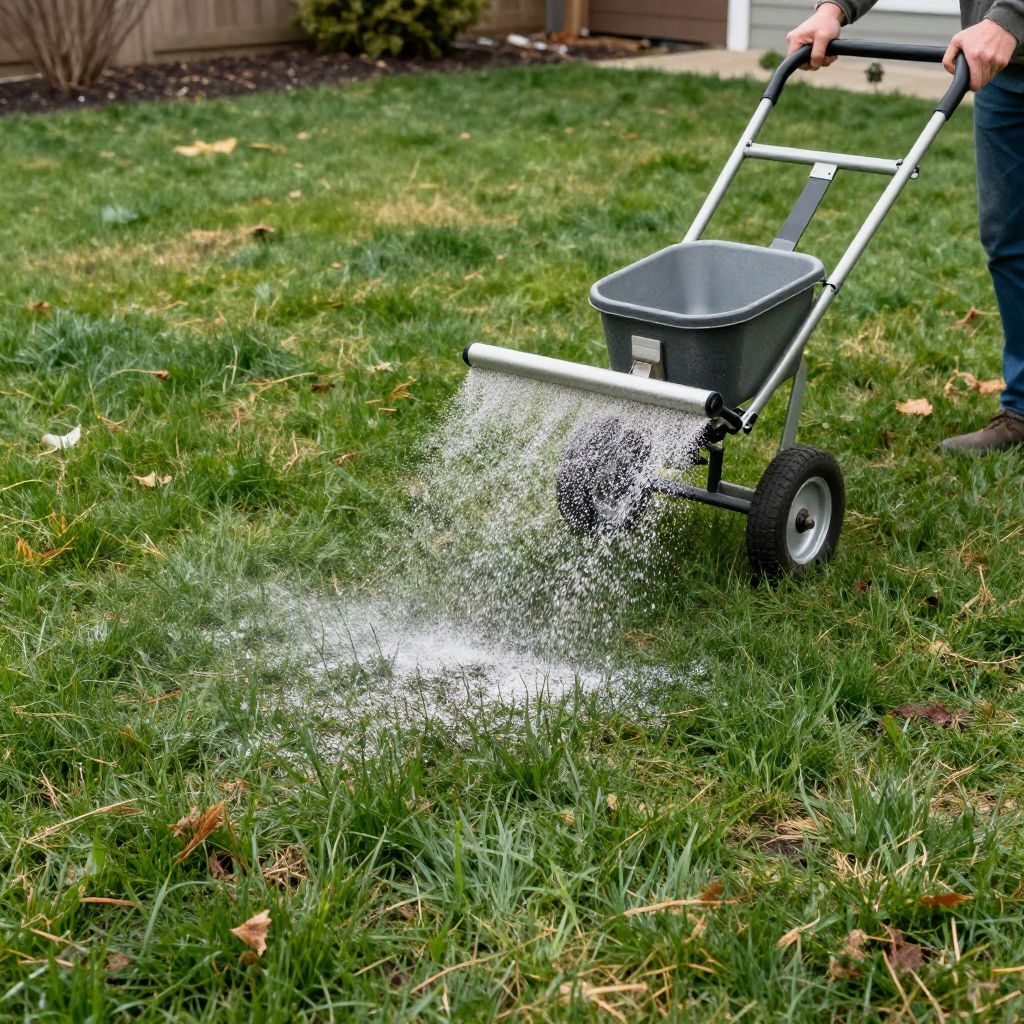
What does lime do for your lawn? If your grass looks thin, mossy, or stubbornly yellow even after regular care, the answer may be in your soil, not your mower or fertilizer.
Lime is used to raise soil pH when soil is too acidic. In the right situation, it can help turfgrass use nutrients more efficiently, improve overall lawn health, and support stronger growth—but only after a soil test confirms it’s needed.
What does lime do for your lawn?
Lime raises soil pH, making acidic soil less sour and more suitable for turfgrass. This can improve nutrient availability, encourage better root growth, and help lawn grasses compete more effectively. It does not “feed” grass like fertilizer, and it will not fix problems caused by poor drainage, compaction, shade, or drought.
Why soil pH matters for grass
Soil pH affects how well grass can absorb nutrients such as nitrogen, phosphorus, potassium, and micronutrients. When soil is too acidic, some nutrients become less available, and turf may struggle even if you fertilize regularly.
Most lawns grow best in a slightly acidic to near-neutral range, but the ideal pH depends on the grass type and your local soil. If the pH is already suitable, adding lime can do little or even create new nutrient problems.
Common signs of overly acidic soil
- Thin, weak turf that recovers slowly
- More moss than grass in shady or damp areas
- Poor response to fertilizer
- Yellowing that does not improve with normal feeding
- Compacted, slow-growing lawn patches
These symptoms can also come from other causes, so they are clues, not proof. A soil test is the best way to know whether lime will help.
Test before you apply lime
The most important step is a soil test. It tells you your current pH and often gives a lime recommendation based on your soil type and lawn needs. Without that information, you may apply too little, too much, or none at all.
- Collect several small soil samples from different parts of the lawn.
- Mix the samples together in a clean container.
- Send the sample to a local extension service or reliable soil lab.
- Follow the lab’s recommendation rather than guessing.
Do not lime just because a lawn looks tired. Brown patches, weeds, and moss can come from many issues, including low fertility, disease, shade, foot traffic, or drainage problems.
What kind of lime is used on lawns?
Most home lawns use agricultural lime, usually ground limestone. It is commonly sold as calcitic lime or dolomitic lime. Both raise pH, but dolomitic lime also supplies magnesium, which can be useful if your soil test shows a deficiency.
Common lime types
- Calcitic lime: Mostly calcium carbonate; good general choice when magnesium is already adequate.
- Dolomitic lime: Contains calcium and magnesium; useful when the soil needs both.
- Pelletized lime: Easier to spread evenly, though it still needs time and moisture to work.
- Hydrated lime: Acts faster but is more caustic and is usually not the best choice for routine lawn care.
For most homeowners, pelletized or finely ground agricultural lime is the most practical option. Always read the label and match the product to the soil test recommendation.
How lime helps, and what it cannot do
Lime can improve the soil environment, but it is not a cure-all. It works best as part of a broader lawn care plan that includes mowing correctly, watering deeply when needed, and managing compaction and thatch.
What lime can help with
- Raising low soil pH
- Improving nutrient uptake
- Supporting stronger root development
- Helping turf compete better with moss in acidic conditions
What lime will not fix
- Poor drainage or standing water
- Heavy shade
- Soil compaction
- Insect damage or fungal disease
- Thin turf caused by drought or poor mowing habits
If your lawn has more than one problem, solve the underlying issue first. Lime can support recovery, but it cannot replace basic lawn maintenance.
When to apply lime to a lawn
The best time to apply lime is usually when the lawn is actively growing and the soil is workable, so the material can move into the root zone with rainfall or irrigation. In many climates, that means spring or fall, but local conditions matter more than the calendar.
Fall is often a good time because cooler weather and regular moisture help lime begin working before the next growing season. Spring can also work well if the lawn is not waterlogged and you can spread it evenly.
Timing tips
- Apply after a soil test confirms low pH.
- Spread lime when rain is expected soon, or water it in lightly if needed.
- Avoid applying on frozen ground or during heavy runoff risk.
- Do not lime immediately after applying certain lawn chemicals unless the label says it is safe.
How to apply lime correctly
Even application matters. Uneven spreading can create patchy pH changes, which may lead to uneven growth and color across the lawn.
- Mow the lawn first if needed, and remove heavy debris.
- Use a broadcast or drop spreader for even coverage.
- Apply only the amount recommended by the soil test or product label.
- Make one pass in one direction, then a second pass at a right angle if the label suggests it.
- Water lightly afterward, or apply before a gentle rain.
Never guess at large amounts. Overliming can push pH too high, which can lock up nutrients and create new deficiencies.
Tools that help
- Soil test kit or lab sample bags
- Broadcast or drop spreader
- Gloves and eye protection
- Garden rake for breaking up clumps if needed
How long lime takes to work
Lime does not change soil overnight. Fine particles and moist soil speed the process, but it still takes time for the material to react and move into the root zone.
You may see gradual improvement over weeks to months, depending on soil texture, rainfall, and the product used. Clay soils often change more slowly than sandy soils because they buffer pH more strongly.
How often should you lime a lawn?
There is no universal schedule. Some lawns may need lime every few years, while others never need it. The right interval depends on your soil test results, rainfall, soil type, and the grass you grow.
Repeat testing is the best guide. If your pH remains in the target range, skip lime and focus on mowing height, fertility, watering, and soil structure instead.
Common mistakes to avoid
- Applying lime without a soil test
- Using lime to solve shade, compaction, or drainage problems
- Spreading too much at once
- Expecting immediate results
- Ignoring label directions for the specific product
- Applying on windy days, which can cause uneven spread
Another common mistake is using lime and fertilizer as if they are interchangeable. Fertilizer supplies nutrients; lime adjusts soil pH so those nutrients can be used more effectively.
Troubleshooting lawn problems after liming
If your lawn does not improve after liming, the issue may not have been acidity. Recheck the basics before adding more products.
If grass is still yellow
- Check for nitrogen deficiency or poor fertilization timing.
- Look for compaction or poor drainage.
- Inspect for pests such as grubs or for disease symptoms.
- Confirm the soil pH is now in a suitable range.
If moss keeps returning
- Reduce shade where possible.
- Improve drainage in wet areas.
- Rake out moss and overseed thin spots when conditions allow.
- Test pH again before adding more lime.
If growth becomes weak after liming
- Check whether you overapplied and pushed pH too high.
- Look for nutrient lockout, especially iron or manganese issues.
- Use a soil test to guide any corrective steps.
Best lawn care practices to pair with lime
Lime works best when the rest of your lawn care is sound. Healthy turf is built from the soil up.
- Mow at the proper height for your grass type.
- Water deeply and less often, rather than shallowly every day.
- Aerate compacted soil when appropriate for your lawn.
- Overseed thin areas to thicken turf.
- Use compost or organic matter to improve soil structure over time.
If your soil test also recommends fertilizer, apply it separately and according to the test results. A balanced plan is more effective than piling on one amendment.
Conclusion
So, what does lime do for your lawn? It corrects acidic soil so grass can use nutrients more effectively and grow in a healthier root zone. The key is to test first, apply the right type and amount, and pair lime with good mowing, watering, and drainage care. If you are unsure, start with a soil test before you spread anything.
For more practical lawn care guidance, it also helps to read about soil testing for home gardens and lawns and how to improve compacted lawn soil.