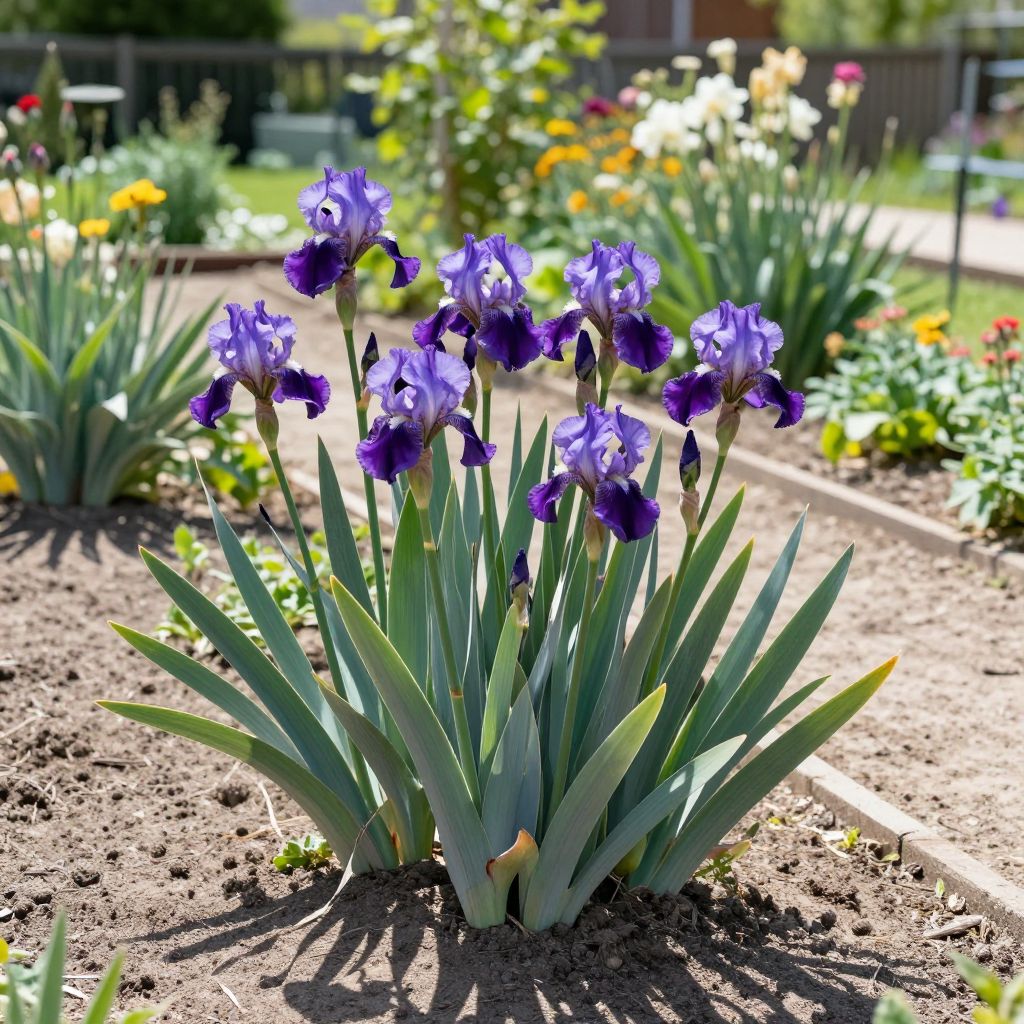
Do irises need full sun? In most gardens, yes—irises bloom best with plenty of direct light. Tall bearded irises especially need strong sun to produce sturdy stems and reliable flowers, though some iris types can tolerate a little afternoon shade in hot climates.
If your irises are leafy but not blooming, too much shade is often the reason. The good news is that with the right light, drainage, and spacing, these plants are usually easy to grow and long-lived.
Do irises need full sun?
Most irises grow and flower best in full sun, meaning at least 6 hours of direct sunlight per day. Some types can manage light afternoon shade, especially in very hot regions, but too much shade usually leads to fewer blooms, floppy growth, and more disease problems.
How much sun do different iris types need?
Not all irises have identical needs. The amount of sun they want depends on the type you are growing and your local climate.
Tall bearded iris
Tall bearded irises are the classic garden iris and usually perform best in full sun. They need strong light to bloom well and to keep their rhizomes dry enough to avoid rot.
Siberian iris
Siberian irises tolerate a bit more moisture and can handle light shade better than bearded irises, though they still flower more heavily in sun.
Japanese iris
Japanese irises often appreciate more moisture than other types and may tolerate partial shade, especially if the soil stays evenly moist. They still need good light for the best flowering.
Louisiana iris
Louisiana irises can handle wetter conditions than many other irises and may grow in partial shade, but they bloom best with several hours of direct sun.
What happens if irises get too little sun?
When irises are planted in too much shade, they often survive but do not perform well. You may notice fewer flowers, weak stems, and crowded clumps that seem healthy but never bloom properly.
- Fewer or no flowers even when the plant looks full and green
- Long, floppy leaves that lean toward the light
- More leaf spot and rot in damp, shaded areas
- Slow clump growth and poor reblooming
- Rhizomes that stay too wet under tree cover or near dense shrubs
If your iris is in shade from a fence, tree, or building, the plant may need to be moved rather than simply fertilized or watered differently.
Best planting site for healthy irises
The ideal iris site is sunny, open, and well drained. Irises do not like sitting in wet soil, especially bearded irises, whose rhizomes should stay close to the surface and dry quickly after rain.
Choose a spot with these conditions
- At least 6 hours of direct sun
- Loose, well-drained soil
- Good air circulation
- No competition from large tree roots
- Room for clumps to spread
If you garden in a very hot climate, a little afternoon shade can help prevent flower fade and heat stress. In cooler regions, aim for full sun all day if possible.
Soil and drainage matter as much as sunlight
Even in full sun, irises struggle in soggy soil. Good drainage is essential because wet soil can cause rhizomes and roots to rot, especially during cool or rainy periods.
How to improve soil before planting
- Loosen the soil to a depth of about 8 to 12 inches.
- Mix in compost if your soil is very poor or heavy, but do not overdo it.
- Avoid piling on rich manure that can make the soil too soft and wet.
- If drainage is poor, plant in raised beds or mounds.
For bearded irises, drainage is non-negotiable. If water pools after rain, choose another location or raise the planting area before you plant.
How to plant irises for the best light exposure
Planting depth and spacing affect how well irises use sunlight. Crowded or buried rhizomes often fail to bloom well, even in a sunny spot.
Planting tips for bearded iris rhizomes
- Set rhizomes near the soil surface, not deep underground.
- Leave the top of the rhizome slightly exposed in many climates.
- Space plants so air can move between clumps.
- Point the fan of leaves outward and spread roots gently.
If you bury the rhizome too deeply, the plant may grow leaves but produce few flowers. Too much shade plus too much soil cover is a common combination that causes disappointment.
Can irises grow in partial shade?
Yes, some irises can grow in partial shade, but flowering usually decreases as shade increases. Partial shade means the plant gets a few hours of direct sun, often morning sun with afternoon shade.
This can work in hot-summer gardens, especially for Siberian, Japanese, or Louisiana irises. For tall bearded iris, however, partial shade is usually a compromise rather than an ideal situation.
When partial shade may be acceptable
- In very hot climates where afternoon sun is intense
- Where the plant gets bright, direct morning sun
- For iris types that naturally tolerate more moisture
- When you prioritize foliage and garden structure over heavy bloom
If the shade is deep or all-day, irises are usually better moved to a brighter site.
Watering irises in sun and shade
Sun exposure affects how quickly soil dries, so watering should match the site. Newly planted irises need regular moisture to establish, but established plants usually prefer less frequent watering.
General watering guidance
- Water new plantings when the soil begins to dry, especially during the first few weeks.
- After establishment, water only when rainfall is lacking and the soil is dry several inches down.
- Avoid overhead watering late in the day if disease is a concern.
- Do not keep bearded iris soil constantly wet.
In shade, soil dries more slowly, so overwatering becomes even more of a risk. In full sun, plants may need more frequent moisture during hot, dry spells, especially in sandy soil.
How to tell if your iris needs more sun
Sometimes the plant itself tells you the site is wrong. If your iris is healthy-looking but underperforming, light is one of the first things to check.
Signs to watch for
- Leaves are lush but flowers are sparse
- Stems stretch toward open light
- Clumps become crowded without blooming well
- Plants near trees or shrubs bloom less than those in open beds
- Fungal problems increase in damp shade
If these signs show up, observe the site at different times of day. A spot that seems bright in the morning may be shaded for most of the afternoon.
Pruning, cleanup, and maintenance
Good maintenance helps irises make the most of their sunlight. Remove spent flowers and damaged foliage so the plant can put energy into roots and next year’s bloom.
Simple iris care tasks
- Deadhead faded flowers to keep the plant tidy.
- Cut back flower stalks after blooming if they are no longer attractive.
- Remove yellow or diseased leaves promptly.
- In many climates, trim foliage lightly in late season if needed, but avoid cutting healthy leaves too early.
Clean foliage also improves airflow, which matters more in shaded or humid gardens where leaves dry slowly.
Common pests and diseases linked to poor light
Shade does not directly cause every iris problem, but low light and poor air circulation can make issues worse. Wet, shaded beds are especially prone to rot and leaf diseases.
Problems to watch for
- Rhizome rot from wet soil and poor drainage
- Leaf spot and fungal disease in humid, shaded conditions
- Slugs and snails in damp, protected areas
- Borer damage in some regions, especially on stressed plants
To reduce problems, keep the planting area open, remove debris, and avoid crowding irises with aggressive groundcovers or shrubs.
Dividing and moving irises for better bloom
Over time, iris clumps can become crowded and bloom less, even in good sun. Division gives the plants room to reset and often improves flowering.
When to divide
Divide when clumps are congested, bloom declines, or the center of the clump becomes bare. The best timing depends on your climate and iris type, but the goal is to replant healthy divisions in a sunny, well-drained site.
How to improve a poor site
- Dig up the clump carefully.
- Separate healthy rhizomes or divisions.
- Discard soft, rotten, or diseased parts.
- Replant in a brighter location if possible.
- Give each division enough space and air circulation.
If you cannot move the plant, thinning nearby shrubs or pruning overhanging branches may increase light enough to help, though it may not fully solve the problem.
Quick answer: full sun or not?
For most garden irises, the best answer to Do Irises Need Full Sun is yes. Full sun gives you stronger stems, better bloom, and healthier plants. A little afternoon shade can be helpful in very hot climates, but deep shade usually means fewer flowers and more maintenance.
If your irises are not blooming well, start by checking sunlight, then drainage, planting depth, and crowding. Move them to a brighter, better-drained spot if needed, and you’ll usually see a big improvement in the next season. For more practical plant-care reading, look for guides on dividing perennials and improving garden soil drainage.