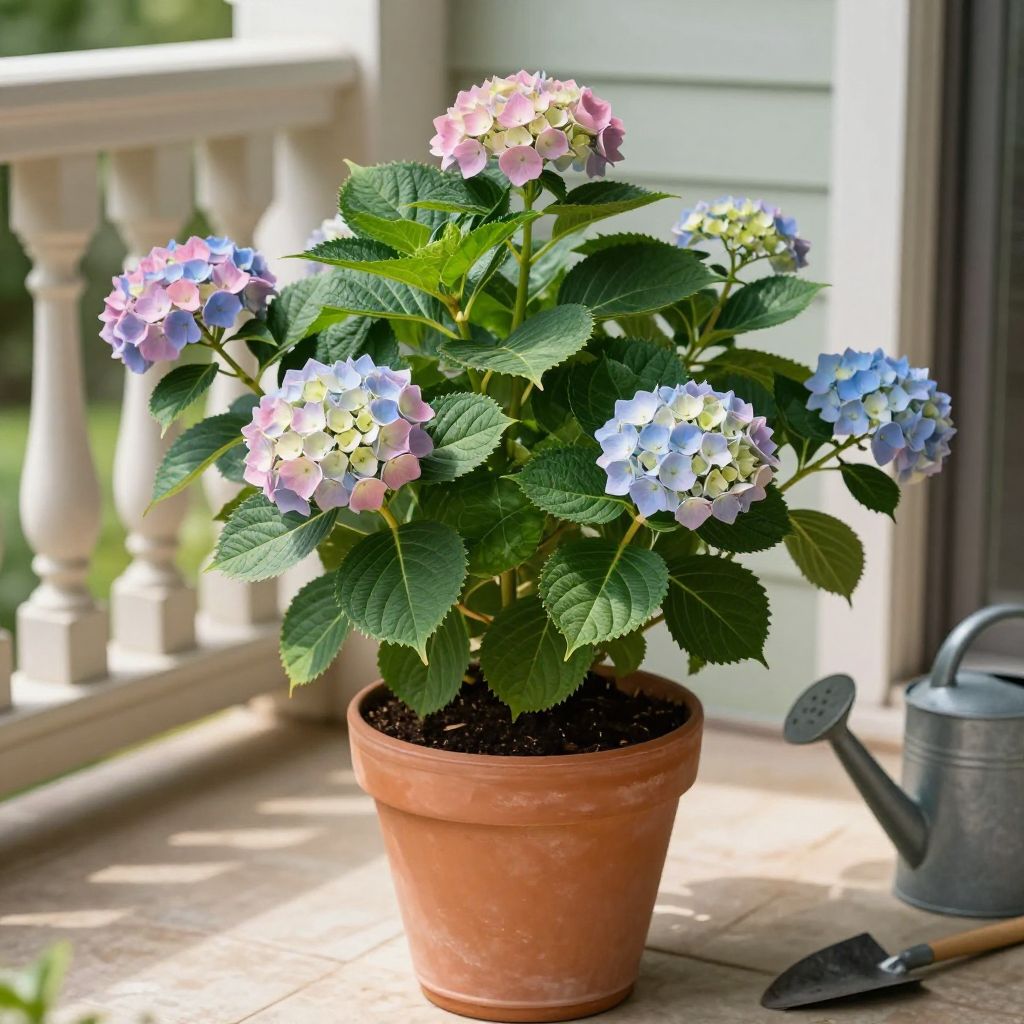
Can you plant hydrangeas in a pot? Yes—you absolutely can, and many hydrangeas do very well in containers if you give them enough room, moisture, and the right soil. The key is choosing a suitable variety and keeping the roots cool, evenly watered, and never waterlogged.
Potted hydrangeas can brighten patios, balconies, porches, and small gardens with big flower heads and lush foliage. Success depends less on fancy equipment and more on steady care, good drainage, and regular attention during warm weather.
Can you plant hydrangeas in a pot?
Yes. Hydrangeas can grow well in pots if the container is large enough, drains freely, and is filled with a moisture-retentive but airy potting mix. Container-grown hydrangeas usually need more frequent watering than in-ground plants, plus protection from harsh sun, wind, and winter cold.
Choosing the right hydrangea for a container
Not every hydrangea is equally suited to pot culture. Compact or naturally smaller types are easier to manage, while large, vigorous shrubs can quickly outgrow containers.
Best types for pots
- Bigleaf hydrangea (Hydrangea macrophylla) in compact forms is a popular choice for containers.
- Panicle hydrangea (Hydrangea paniculata) can work well in large pots if you have space.
- Mountain hydrangea (Hydrangea serrata) is often a good container candidate because it tends to stay smaller.
If you are buying a plant, look for a compact habit rather than a fast-growing shrub meant for the border. The smaller the mature plant, the easier it is to keep happy in a pot for several seasons.
What to look for at the nursery
- Healthy green leaves without heavy spotting or yellowing
- Sturdy stems, not floppy growth
- A root ball that is moist but not sour-smelling
- No obvious signs of pests such as aphids or spider mites
How to plant hydrangeas in a pot
Use a container with drainage holes and choose one that gives the roots room to grow. A pot that is too small dries out too fast and can stunt the plant.
Container size
Start with a pot at least 18 inches wide and deep for a young hydrangea. Larger plants may need a container 20 to 24 inches across or more. Bigger pots hold moisture more evenly and help reduce stress in hot weather.
Best potting mix
Use a high-quality potting mix, not garden soil. Garden soil compacts in containers and can suffocate roots. For better moisture balance, you can mix in compost or a moisture-retentive ingredient such as coco coir, as long as the mix still drains well.
A good container blend should be:
- Loose and airy
- Moisture-holding, but not soggy
- Rich in organic matter
- Free-draining at the bottom of the pot
Step-by-step planting
- Choose a pot with drainage holes.
- Add a layer of potting mix to the bottom.
- Remove the hydrangea from its nursery pot and gently loosen circling roots.
- Set the plant so the top of the root ball sits level with the surrounding mix.
- Fill in around the roots and firm lightly.
- Water thoroughly until excess drains from the bottom.
- Top the surface with a thin mulch layer if desired, keeping it away from the stem.
Do not bury the stem too deeply. A hydrangea planted too low in a pot is more likely to rot and struggle.
Light, temperature, and placement
Hydrangeas usually prefer morning sun and afternoon shade, especially in warm climates. In cooler regions, they can take more sun if the soil stays evenly moist.
Best location for a potted hydrangea
- Bright light with some protection from harsh afternoon sun
- Shelter from strong wind, which dries leaves and soil quickly
- A spot where you can water easily and check moisture often
If you live in a hot area, container hydrangeas may need more shade than garden-planted ones. Pots heat up faster than ground soil, so a plant that looks fine in spring can wilt quickly in midsummer.
Watering and feeding container hydrangeas
Watering is the most important part of container hydrangea care. Pots dry out faster than garden beds, and hydrangeas are not plants that like to dry completely.
How to water properly
Check the soil with your finger. If the top inch feels dry, water deeply until excess runs out of the drainage holes. In warm weather, you may need to check daily, especially for smaller pots or windy sites.
Try to keep the soil evenly moist rather than swinging between bone-dry and soaked. That kind of stress can cause wilting, leaf scorch, and poor flowering.
Feeding tips
Container plants use nutrients faster than in-ground shrubs because watering leaches them out. A balanced, slow-release fertilizer for flowering shrubs or a light feeding program can help, but avoid overfeeding. Too much nitrogen can produce lush leaves with fewer blooms.
Compost mixed into the potting medium at planting time can help improve fertility and moisture retention. If you refresh the top layer with compost each season, that can also support healthy growth.
Pruning potted hydrangeas
Pruning depends on the type of hydrangea you have. This matters because some bloom on old wood, some on new wood, and some on both. If you prune at the wrong time, you may remove flower buds.
General pruning guidance
- Remove dead, damaged, or weak stems anytime you notice them.
- After flowering, deadhead spent blooms if you want a tidier look.
- Do major pruning only when you know the plant’s bloom habit.
If you are unsure which hydrangea you have, keep pruning light until you can identify it. A cautious approach is better than cutting off next season’s flowers.
Seasonal care for potted hydrangeas
Spring and summer
Watch for rapid drying as temperatures rise. Container hydrangeas may need more frequent watering, and they benefit from a mulch layer on top of the soil to slow evaporation.
Rotate the pot occasionally if one side gets more sun than the other. This helps the plant grow more evenly.
Autumn
As growth slows, reduce watering slightly, but do not let the pot dry out completely. Remove fallen leaves and spent flowers to reduce disease pressure.
Winter
Pots are more vulnerable to cold than garden soil because roots are exposed on all sides. In colder climates, move the container to a sheltered spot such as against a wall, into an unheated garage, or into a protected patio area if the plant is suited to your local winter temperatures.
Wrap the pot if needed, or place it inside a larger insulating container. The goal is to protect the roots from repeated freezing and thawing.
Common problems and how to fix them
Wilting leaves
Wilting usually means the plant is too dry, but it can also happen if roots are sitting in water. Check the soil before watering again. If the mix is soggy, improve drainage and reduce how often you water.
Yellow leaves
Yellowing can be caused by poor drainage, nutrient shortage, or stress from irregular watering. Make sure the pot drains well and that you are not letting the plant swing between dry and saturated conditions.
Few or no flowers
This may happen if the plant gets too much shade, too much nitrogen, or was pruned at the wrong time. It can also happen after a hard winter if flower buds were damaged.
Leaf scorch
Brown, crispy edges often mean too much sun, wind, or drought stress. Move the pot to a gentler location and keep the soil evenly moist.
Pests and diseases to watch for
Potted hydrangeas can still be affected by common garden pests and diseases. Good spacing, airflow, and careful watering help prevent many issues.
Common pests
- Aphids on soft new growth
- Spider mites in hot, dry conditions
- Slugs and snails if the pot sits in a damp, sheltered area
Common diseases
- Powdery mildew in humid conditions with poor airflow
- Leaf spot after prolonged wet foliage
- Root rot if the pot stays waterlogged
To reduce problems, water the soil rather than the leaves, avoid overcrowding plants, and remove fallen debris from the pot surface. If a plant is repeatedly diseased, repotting into fresh mix may help.
Repotting and long-term maintenance
Hydrangeas in pots do best when repotted every few years, or sooner if roots fill the container. If water runs straight through too quickly or the plant dries out unusually fast, it may be rootbound.
When to repot
- Roots are circling tightly at the pot edge
- The plant dries out very quickly after watering
- Growth and flowering have declined
- The potting mix has broken down and become compacted
Move the plant into a slightly larger pot with fresh mix, or root-prune and refresh the container if you want to keep the same size. Replace at least part of the old mix if it has become tired or dense.
Can hydrangeas stay in pots permanently?
Yes, many hydrangeas can live in containers for years if you keep up with watering, feeding, and occasional repotting. That said, they often perform best when given more root room over time.
If you want a long-term container display, choose a generous pot from the start and plan for seasonal maintenance. If the plant becomes too large or difficult to keep hydrated, you can always move it into the ground later.
Final tips for success
If you remember only a few things, make them these: use a large pot, keep the soil evenly moist, protect the plant from harsh afternoon sun, and repot before it becomes cramped. Those simple habits make the biggest difference with container-grown hydrangeas.
With the right setup, you can enjoy a healthy potted hydrangea on a patio, balcony, or doorstep for many seasons. For more container-growing ideas, you may also want to read about how to choose the best potting mix for flowering shrubs and pruning hydrangeas without losing blooms.