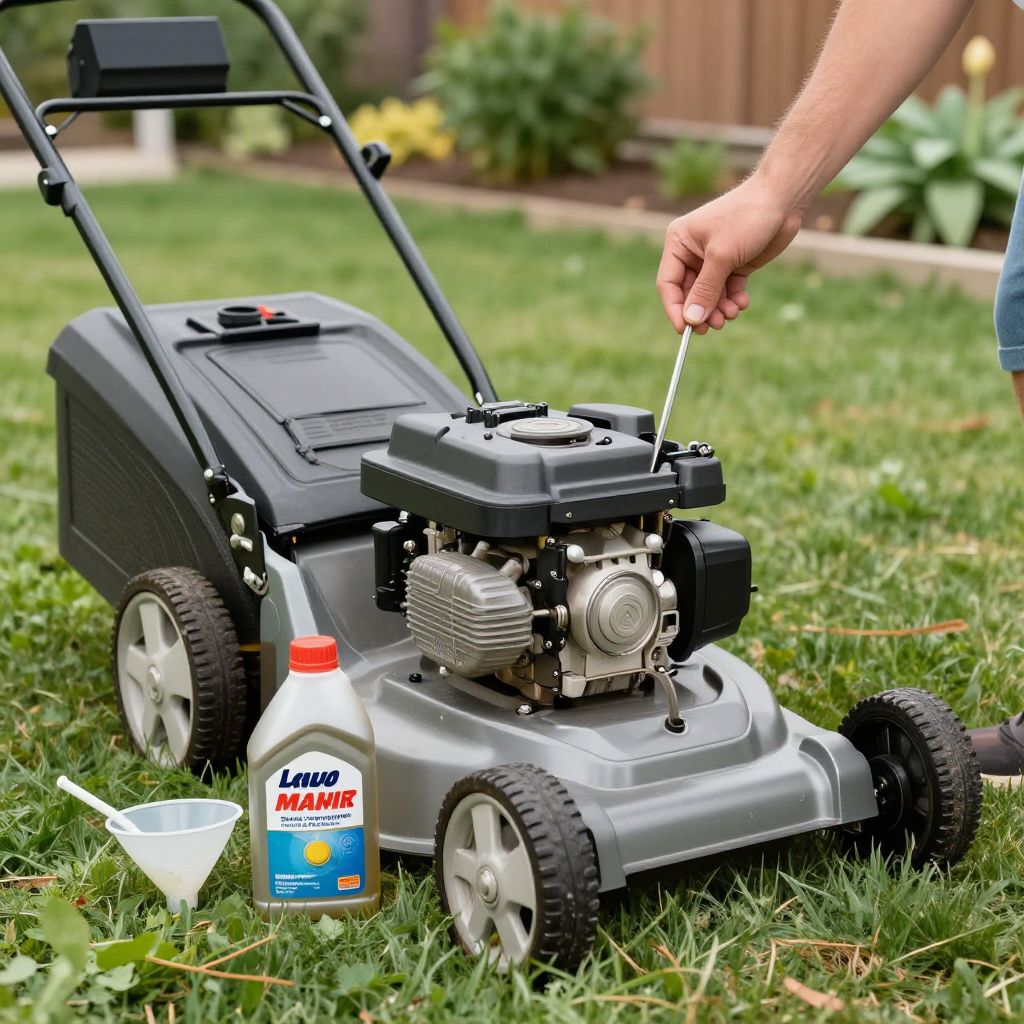
What oil does a lawn mower take? The short answer is that most walk-behind and riding mowers use detergent motor oil, but the exact type depends on the engine design, outdoor temperature, and the manufacturer’s instructions. Choosing the right oil helps the engine start easier, run cooler, and last longer.
If you’ve ever stood in front of an oil shelf wondering whether to buy 30-weight, 10W-30, or synthetic, you’re not alone. The good news is that once you know how to read your mower manual and match oil to the weather, the choice becomes simple.
What oil does a lawn mower take?
Most lawn mowers take small-engine detergent oil, commonly SAE 30 for warm weather or 10W-30 for a wider temperature range. Some modern engines also allow synthetic 5W-30 or 10W-30. Always check the owner’s manual first, because the correct oil depends on the engine brand, model, and local temperatures.
How to choose the right mower oil
The best oil for your mower is the one recommended by the engine maker. If you do not have the manual, look for the engine model number on the mower and search that exact model’s oil specification.
Common oil types you may see
- SAE 30 – A common choice for warm-weather mowing and many older walk-behind mowers.
- 10W-30 – Better for variable temperatures and cooler starts.
- 5W-30 – Often used in colder conditions or certain newer engines, especially synthetic versions.
- Synthetic oil – Can improve cold starts and high-heat performance if the manual allows it.
Why the temperature matters
Oil thickens in cold weather and thins in heat. If you use oil that is too thick for cool conditions, the engine may start hard and wear more at startup. If the oil is too thin for hot weather, it may not protect the engine as well under load.
As a practical rule, SAE 30 is often fine for warm-season mowing, while 10W-30 is a safer all-around option if temperatures swing a lot. In very cold weather, some engines need a lighter oil grade approved by the manufacturer.
How to check your mower’s oil requirements
Before adding oil, confirm three things: engine type, oil grade, and oil capacity. These details are usually on the manual, the engine label, or the manufacturer’s website.
- Find the engine brand and model number.
- Look up the oil recommendation for that exact engine.
- Check whether the engine is a four-stroke or two-stroke design.
- Confirm the oil capacity so you do not overfill.
Four-stroke vs. two-stroke engines
Most modern lawn mowers use four-stroke engines, which have a separate oil reservoir and take straight engine oil. Two-stroke engines are less common in lawn mowers and usually require a fuel-oil mix instead of a separate crankcase oil supply.
If you are not sure which type you have, do not guess. Check the manual or the engine label. Using the wrong oil system can damage the engine quickly.
Step-by-step: how to add mower oil correctly
Adding oil is simple, but it needs a careful touch. A mower that is underfilled can run hot, while an overfilled one can smoke, leak, or foul the air filter.
- Park the mower on level ground and turn it off completely.
- Let the engine cool so you can work safely.
- Clean around the oil fill cap or dipstick to keep dirt out of the engine.
- Remove the dipstick or cap and wipe it clean.
- Add oil slowly, a little at a time.
- Check the level with the dipstick, if your mower has one.
- Stop when the oil reaches the full mark, not above it.
- Replace the cap securely before starting the engine.
If your mower has no dipstick, follow the fill instructions in the manual and measure carefully. Many small engines hold only a small amount, so a few extra ounces can be too much.
Signs you may have added too much oil
- White or blue smoke from the muffler
- Oil leaking from the air filter or breather
- Engine running rough after startup
- Oil level above the full mark
How often should you change lawn mower oil?
Oil change timing depends on the mower type, how often you use it, and the manufacturer’s service schedule. Many small engines need an oil change after the first few hours of use and then periodically during the season or at least once a year.
For mowers used heavily, in dusty conditions, or in hot weather, oil may need changing more often. If you mow frequently or cut tall, dry grass that creates more engine load, check the oil level regularly and inspect the oil’s color and smell.
When to change it sooner
- The oil looks very dark and dirty
- The engine has been working hard in heat
- You notice more smoke than usual
- The mower has sat unused for a long time
- You accidentally ran it low on oil
What happens if you use the wrong oil?
Using the wrong oil may not cause instant failure, but it can shorten engine life. Thick oil in cold weather can make starting harder, while oil that is too light may not protect well in heat. Non-detergent or automotive specialty oils that do not meet the engine’s needs can also cause problems.
Common mistakes include mixing up two-stroke and four-stroke requirements, overfilling the crankcase, and assuming all 10W-30 oils are identical. Always match the oil to the engine specification, not just the bottle label.
Problems caused by incorrect oil
- Hard starting
- Excess smoke
- Overheating
- Sludge buildup
- Poor lubrication and engine wear
Practical tips for seasonal lawn mower care
Oil care is part of good mower maintenance, especially if you want reliable starts and a clean cut through the growing season. A well-maintained mower handles grass more efficiently and puts less stress on the engine.
- Check oil before each mowing session during peak use.
- Change oil before long storage if the manual recommends it.
- Keep the air filter clean so the engine does not work harder than necessary.
- Use fresh fuel and store it properly to avoid starting problems that can be mistaken for oil issues.
- Clean grass clippings from the deck and engine area after mowing.
Storage and off-season care
If you are putting the mower away for the season, follow the manual’s storage guidance. In many cases, it is wise to change the oil before storage if it is dirty or due for replacement, because old oil can contain moisture and combustion byproducts.
Store the mower in a dry place, away from standing water and damp soil. That helps protect the engine and the metal deck from corrosion.
Troubleshooting common mower oil questions
If your mower is acting up, oil may be part of the problem, but not always the only one. A few simple checks can save time and prevent unnecessary repairs.
The mower smokes after an oil change
This often means the engine is overfilled or oil got into the air filter or muffler area. Check the oil level on level ground and remove any excess if needed.
The mower is hard to start in cool weather
The oil may be too thick for the temperature. If your manual allows it, a lighter multigrade oil such as 10W-30 may start more easily in cooler conditions.
The oil looks milky
Milky oil can indicate moisture contamination. That may happen after storage in damp conditions or if the engine has been exposed to water. Change the oil and inspect for other issues if the problem returns.
The oil level keeps dropping
Check for leaks, worn seals, or oil burning in the engine. Also inspect the air filter and spark plug area. If the mower uses oil faster than expected, it may need professional service.
Quick checklist before you mow
A short pre-mow check helps keep the engine healthy and the lawn looking better.
- Oil level is within the safe range
- Oil type matches the manual
- Air filter is clean
- Blade is sharp and secure
- No visible oil leaks under the mower
- Cooling fins and engine cover are free of grass buildup
Final takeaways
So, what oil does a lawn mower take? In most cases, it takes a detergent small-engine oil such as SAE 30, 10W-30, or a manufacturer-approved synthetic blend. The right choice depends on your engine and the weather where you mow.
Before your next cut, check the manual, confirm the engine type, and verify the oil level on level ground. If you want more help choosing the right product, you may also find this guide useful: what kind of oil does a lawn mower take.