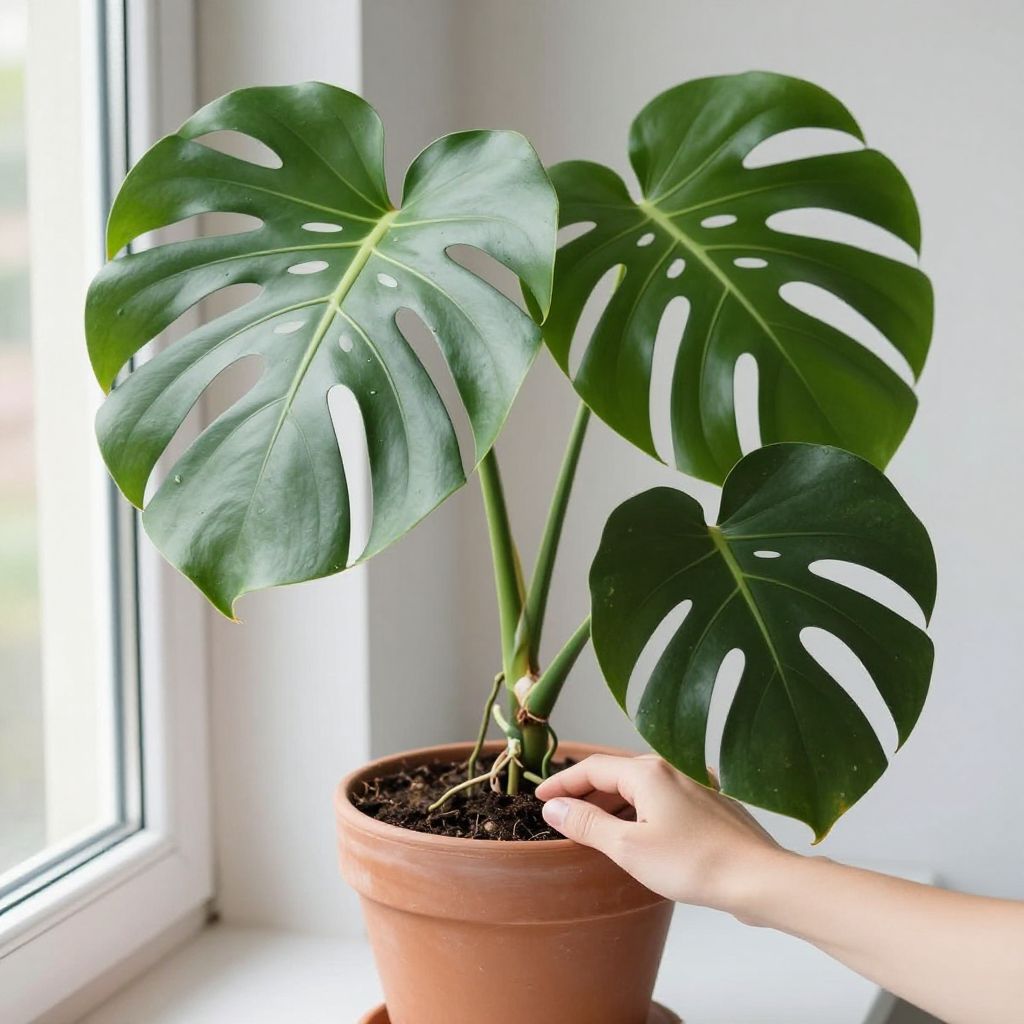
Why are my Monstera leaves curling? In most cases, curling leaves are your plant’s way of saying something in its environment is off—usually watering, humidity, light, or pests. The good news is that Monsteras are resilient, and once you identify the cause, they often recover well.
The key is to look at the whole plant, not just the curled leaf. Soil moisture, leaf texture, recent changes in location, and signs of insects can tell you whether your Monstera deliciosa needs a simple care adjustment or a more serious fix.
Why are my Monstera leaves curling?
Monstera leaves usually curl because the plant is stressed. The most common causes are underwatering, inconsistent watering, low humidity, too much direct sun, root problems, or pests such as spider mites and thrips. Check the soil first, then inspect the leaves and stems to narrow down the cause quickly.
Start with the soil: too dry or too wet?
Soil moisture is the first thing to check because both dryness and waterlogged roots can cause curling. A Monstera prefers evenly moist but well-draining soil, not soggy conditions and not long dry spells.
If the soil is dry
If the top 2 to 3 inches of soil feel dry and the pot feels noticeably light, underwatering is likely. Leaves may curl inward, feel a little limp, or develop dry edges.
- Water thoroughly until excess drains from the bottom.
- Empty the saucer so the plant does not sit in runoff.
- If the mix has become hydrophobic and water runs down the sides, water slowly in two or three passes.
- For badly dried-out plants, soak the pot in a basin for 15 to 20 minutes, then let it drain fully.
If the soil is wet
If the potting mix stays damp for days, smells sour, or the leaves are curling while also turning yellow, root stress may be the issue. Overwatering reduces oxygen around the roots and can lead to root rot.
- Stop watering until the top layer dries slightly.
- Check that the pot has drainage holes.
- Make sure the soil is airy and fast-draining, not compacted.
- If roots are brown, mushy, or foul-smelling, repot into fresh mix and trim damaged roots with clean scissors.
Important: A Monstera in a large pot can stay wet longer than you expect, especially in cool weather or low light. Always test the soil rather than watering on a fixed schedule.
Could low humidity be curling the leaves?
Yes. Monsteras are tropical plants, and dry indoor air often causes leaves to curl, especially in winter when heating systems run. Low humidity can also make new growth look smaller or less fully unfurled.
Signs of low humidity include curling edges, crispy tips, and leaves that feel a little leathery. This is more common indoors than outdoors, but it can happen in sheltered patios or dry climates too.
How to raise humidity the right way
- Group plants together to create a slightly more humid microclimate.
- Use a pebble tray with water under the pot, keeping the pot above the waterline.
- Run a humidifier near the plant if indoor air is very dry.
- Keep the plant away from heating vents, radiators, and strong drafts.
Do not mist as your main solution. Misting may briefly raise humidity around the leaf, but it does not solve dry-room conditions for long.
Is the light too strong or too weak?
Light problems can also make Monstera leaves curl. Too much direct sun can cause heat stress and curling, while very low light can weaken the plant and make it more vulnerable to watering issues and pests.
Too much direct sun
If your Monstera sits in a hot, south- or west-facing window with strong direct rays, the leaves may curl to reduce moisture loss. You might also see pale patches, scorched spots, or crispy areas.
- Move the plant a few feet back from the window.
- Filter harsh sun with a sheer curtain.
- Rotate the pot every couple of weeks so growth stays even.
Too little light
In low light, Monsteras may not use water as quickly, so the soil stays wet longer. That can lead to root stress and curling leaves even if you are not overwatering much.
- Place the plant in bright, indirect light.
- Near an east window or a few feet from a bright south or west window is often a good indoor position.
- If natural light is limited, a grow light can help during darker months.
Tip: Bright indirect light is usually the sweet spot for Monstera deliciosa. If the plant is comfortable, leaves tend to stay flatter, larger, and more evenly colored.
Check for pests hiding on the undersides of leaves
Spider mites, thrips, and other sap-feeding pests can cause curling, distortion, and dull-looking foliage. These pests are easy to miss at first, especially on the undersides of leaves and along stems.
What to look for
- Fine webbing, especially from spider mites
- Silvery streaks, speckling, or scarring
- Tiny moving insects or black specks on the leaf underside
- New leaves that emerge twisted or fail to open properly
What to do
- Isolate the plant from other houseplants.
- Rinse the foliage gently with lukewarm water.
- Wipe leaves, stems, and petioles with a damp cloth.
- Use insecticidal soap or horticultural oil if the product is labeled for indoor use and suitable for Monsteras.
- Repeat treatment as directed on the label, because one application is rarely enough for active infestations.
Inspect nearby plants too. Pests often spread before you notice visible damage.
Could root problems be the real cause?
Yes. If a Monstera has been in the same pot for a long time, roots may be crowded, circling the pot, or damaged by poor drainage. Root problems often show up as curling leaves, slower growth, and soil that dries too fast or stays wet too long.
Signs of root stress
- Roots growing out of drainage holes
- Water running straight through the pot without soaking in
- Leaves curling despite regular watering
- Yellowing lower leaves or a stunted plant
When to repot
Repot if the plant is rootbound, the mix has broken down, or drainage is poor. Choose a pot only one size larger, and use a chunky, well-aerated mix that drains well.
- Use a pot with drainage holes.
- Choose a mix made for aroids or make one with potting soil, orchid bark, and perlite.
- Gently loosen circling roots if they are tightly packed.
- Water lightly after repotting, then allow the mix to settle before watering again.
Avoid: Jumping to a much larger pot “for room to grow.” Oversized pots hold excess moisture and can make curling worse.
Temperature swings and drafts can trigger curling
Monsteras dislike sudden environmental changes. Cold windows, air-conditioning vents, heaters, and drafty doors can stress the plant and cause leaves to curl or droop.
Keep the plant in a stable spot where temperatures stay moderate. If you move it outdoors for summer, acclimate it gradually so the leaves are not shocked by wind or intense sun.
Could fertilizer be part of the problem?
Sometimes. Too much fertilizer can burn roots and cause curling, while very low nutrition over time may weaken the plant. Fertilizer issues are usually not the first suspect, but they matter if the plant has been fed heavily or neglected for a long period.
How to handle feeding
- Feed only during active growth, when the plant is producing new leaves.
- Use a balanced houseplant fertilizer at the label rate.
- Do not fertilize a stressed plant with dry soil or suspected root rot.
- If you think you overfertilized, flush the pot with plenty of water and let it drain well.
If the soil has a crusty white buildup, salts may be accumulating. Periodic flushing with clean water can help, especially for plants grown in pots indoors.
How to troubleshoot curling Monstera leaves step by step
If you want the fastest route to a solution, work through the plant in this order. Most curl problems become clear once you check moisture, light, and pests together.
- Feel the soil 2 to 3 inches down.
- Look at the leaf curl pattern: inward curl, edge curl, limp curl, or twisted new growth.
- Inspect the undersides of leaves for pests.
- Check the light level and whether the plant gets direct sun.
- Review recent changes such as repotting, moving the plant, or a shift in indoor temperature.
- Adjust one thing at a time so you can tell what helped.
What healthy Monstera care looks like
A healthy Monstera usually has firm, glossy leaves that hold their shape without curling. It grows best in a potting mix that drains quickly but does not dry out instantly, with bright indirect light and moderate humidity.
Good routine care
- Water when the top layer of soil has dried, not on a strict calendar.
- Provide bright, indirect light.
- Keep the plant away from harsh drafts and heat sources.
- Wipe dust from leaves so they can photosynthesize efficiently.
- Prune only damaged or dead growth, using clean tools.
If your Monstera is climbing, a moss pole or support can also help it grow more naturally and produce larger, healthier leaves over time.
When curling is not an emergency
Not every curled leaf means serious trouble. A new leaf may stay curled for a while as it unfurls, and a single older leaf may curl slightly as it ages. The concern is when multiple leaves curl at once, or when curling happens along with yellowing, spotting, pests, or soil problems.
If the plant is otherwise growing well, with healthy new leaves and no pest signs, minor curling may correct itself after you improve care conditions.
Conclusion: fix the environment first
When you ask, “Why are my Monstera leaves curling?” the answer is usually found in the plant’s environment. Start with soil moisture, then check humidity, light, pests, and roots. Make one correction at a time, and give the plant a little time to respond. For more houseplant care guidance, you may also want to read related articles on watering, repotting, and pest control.