What is the best fertilizer for fruit trees? The short answer is: the best fertilizer is the one that matches your soil, tree age, and fruiting stage. In many home gardens, that means a balanced, slow-release fertilizer or well-finished compost used thoughtfully, not heavily.
Fruit trees usually do best when they grow steadily rather than wildly. Too much nitrogen can create lush leaves, weak branches, and fewer fruits, so the goal is healthy growth, good flowering, and strong root development.
What Is The Best Fertilizer For Fruit Trees?
The best fertilizer for fruit trees is usually a balanced, slow-release fertilizer or a soil-building amendment such as compost, chosen after checking your soil and observing tree growth. Young trees often need more support for roots and structure, while mature trees usually need less fertilizer than gardeners expect. Avoid overfeeding, especially with high-nitrogen products.
How to choose the right fertilizer
There is no single “best” product for every orchard or backyard tree. The right choice depends on whether your soil is already fertile, whether the tree is young or established, and whether the tree is growing too much wood instead of fruit.
Common fertilizer types for fruit trees
- Balanced granular fertilizer — Useful when trees need a general nutrient boost. Look for a moderate, not extreme, N-P-K ratio.
- Slow-release fertilizer — A practical choice for steady feeding and fewer spikes of growth.
- Compost — Excellent for improving soil structure, moisture retention, and overall soil life.
- Composted manure — Can help poor soils, but it should be fully composted and used sparingly.
- Organic fruit-tree fertilizers — Often lower in nutrients but gentler and easier to overapply safely.
If your soil is already rich, a heavy fertilizer program may do more harm than good. In many gardens, compost and mulch are more useful than a strong synthetic feed.
What the numbers on fertilizer mean
Fertilizer labels list nitrogen, phosphorus, and potassium as N-P-K. For fruit trees, nitrogen is usually the nutrient that most affects leafy growth, while phosphorus and potassium support broader plant function, flowering, and fruit development.
That does not mean more is better. A tree with too much nitrogen may look vigorous but produce fewer blossoms and softer growth that is more prone to pests and winter damage.
Start with the soil, not the bag
Before you fertilize, check the soil around the tree. A soil test is the most reliable way to find nutrient deficiencies and pH issues, especially if your tree has poor growth, yellowing leaves, or low fruit production.
Fruit trees generally prefer well-drained soil. If roots sit in waterlogged ground, fertilizer will not solve the problem and may even stress the tree further.
Signs your tree may need fertilizer
- Slow, weak shoot growth in the growing season
- Pale leaves, especially on older foliage
- Small leaves and reduced canopy density
- Poor flowering or low fruit set over more than one season
Signs you may be overfertilizing
- Long, soft shoots with very dark green leaves
- Few flowers or little fruit
- Increased aphids or other sap-feeding pests
- Leaf scorch or salt buildup near the root zone
Important: a healthy-looking tree does not always need fertilizer. Many fruit trees need only mulch, compost, and correct pruning to perform well.
Best fertilizer approach by tree age
Young fruit trees
Young trees need support to establish roots and build a strong framework. A modest, balanced feeding can help if the soil is poor, but avoid pushing rapid top growth at the expense of root development.
- Use compost as a topdressing around the root zone.
- If needed, apply a light dose of balanced fertilizer in spring.
- Keep fertilizer away from the trunk to reduce burn and rot risks.
Established fruit trees
Mature trees often need less fertilizer than people assume. If the tree is cropping well and the leaves look healthy, annual compost and mulch may be enough.
For established trees that are underperforming, a soil test and a careful spring feeding are better than repeated heavy applications.
Neglected or stressed trees
If a tree has been ignored for years, do not try to fix everything at once with fertilizer. First address drainage, weeds, mulch depth, pruning, and watering. Fertilizer should come after the tree is able to use it properly.
When to fertilize fruit trees
Timing matters as much as the fertilizer itself. In most climates, the best time to fertilize fruit trees is in early spring as new growth begins, or just before active growth starts.
Late-season feeding can encourage tender growth that may not harden off before cold weather. In warm climates with multiple growth flushes, adjust timing to your local seasonal pattern rather than following a fixed calendar date.
General timing guidelines
- Early spring: Best for most routine feeding.
- After bloom: Sometimes useful if the tree is clearly nutrient-starved and soil conditions are suitable.
- Late summer or fall: Usually avoid strong nitrogen feeding unless local guidance says otherwise.
If you are unsure, feed lightly rather than heavily. Overfertilizing is harder to correct than underfertilizing.
How to fertilize fruit trees correctly
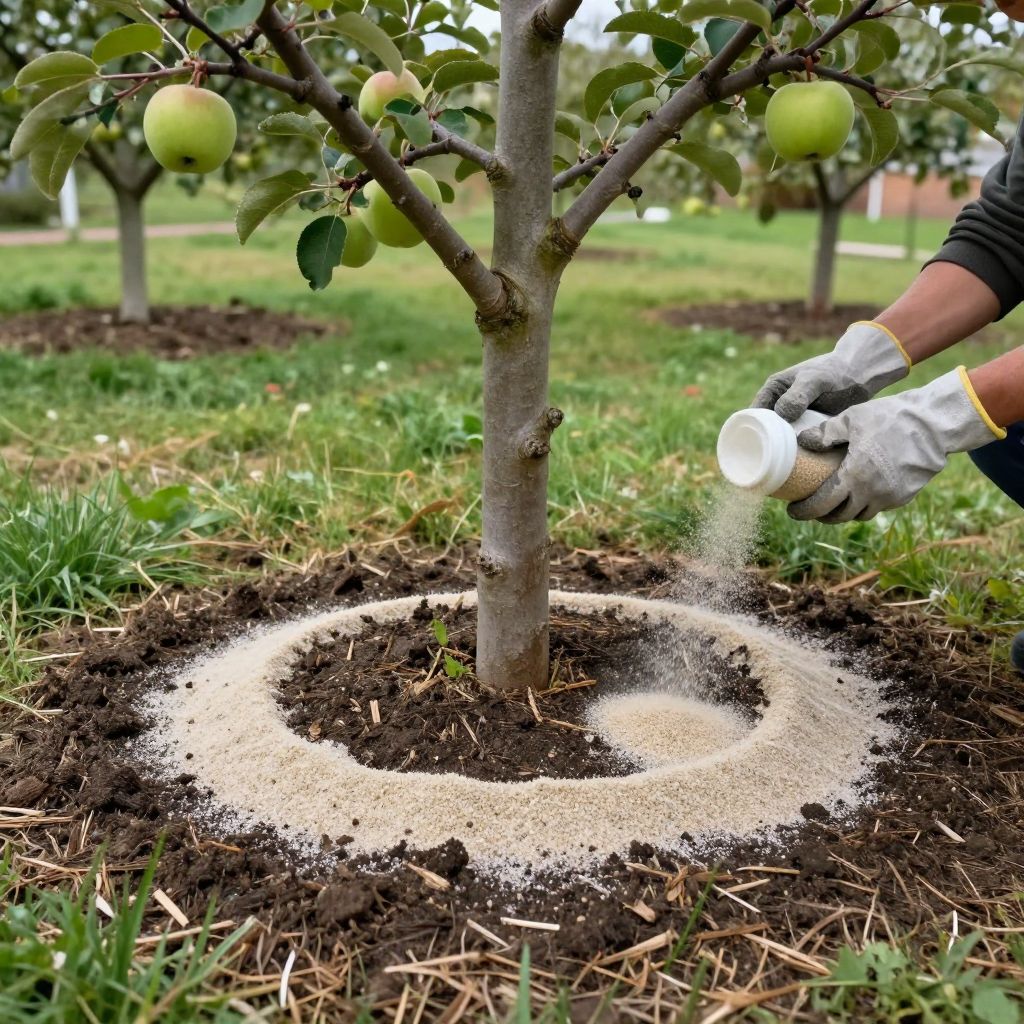
Good technique matters. Fertilizer should be spread where the active roots are, not piled against the trunk.
- Clear away weeds and grass from the base of the tree.
- Spread compost or fertilizer evenly under the canopy and slightly beyond the drip line if the tree is established.
- Keep material several inches away from the trunk.
- Water in granular fertilizer if the label recommends it.
- Finish with mulch, but do not let mulch touch the bark.
Do not place fertilizer in a deep hole near the trunk. Fruit tree roots are usually shallow and spread outward, so surface application is more effective and safer.
Compost and mulch: the underrated best option
For many home gardeners, the best “fertilizer” for fruit trees is actually a combination of compost and mulch. Compost adds organic matter and a gentle nutrient supply, while mulch helps keep moisture even and protects roots from temperature swings.
How to use compost
- Apply a thin layer, usually 1 to 2 inches, over the root zone.
- Use finished compost only; it should smell earthy, not sour or rotten.
- Refresh annually or as needed based on soil condition.
How to mulch properly
- Use wood chips, shredded bark, straw, or similar organic mulch where appropriate.
- Keep mulch a few inches away from the trunk.
- Maintain a moderate depth rather than burying the root flare.
Mulch is especially helpful in dry climates, sandy soils, and gardens where grass competes with the tree for water and nutrients.
Special considerations for different fruit trees
Different fruit trees have slightly different needs, but the basic principle is the same: feed the soil, not just the tree.
Apple and pear trees
These trees often respond well to moderate spring feeding and consistent soil moisture. Too much nitrogen can reduce fruiting and increase disease-prone growth.
Stone fruit trees
Peaches, plums, cherries, and apricots can be sensitive to excessive nitrogen. Keep fertilization modest and focus on pruning, sunlight, and drainage.
Citrus trees
Citrus often needs more regular feeding than many temperate fruit trees, especially in containers. Use a fertilizer formulated for citrus or a balanced product that includes micronutrients if deficiency symptoms appear.
Container-grown fruit trees
Potted trees rely on you for nearly all nutrients. Use a controlled, light feeding program because nutrients wash out faster in containers, but salts can also build up more quickly.
- Use a quality potting mix with good drainage.
- Feed lightly and more often rather than heavily all at once.
- Flush the pot occasionally with water if salt buildup is suspected.
Common fertilizer mistakes to avoid
- Using too much nitrogen and reducing flower and fruit production.
- Fertilizing dry soil without watering afterward when the product requires it.
- Applying fertilizer right against the trunk.
- Feeding a tree that is actually suffering from poor drainage or root damage.
- Skipping soil testing and guessing every year.
- Expecting fertilizer to fix pruning, pest, or disease problems.
Troubleshooting poor fruiting
If your fruit tree is not producing well, fertilizer may be only part of the answer. Fruit set depends on sunlight, pollination, pruning, weather, and tree age as much as nutrition.
Ask these questions first
- Is the tree getting enough direct sun for its species?
- Is the soil draining well, or staying wet too long?
- Was the tree pruned too hard, too late, or not at all?
- Are there pollination issues, such as a missing compatible variety?
- Are pests or diseases damaging flowers, leaves, or shoots?
If the tree is healthy but underperforming, a soil test and a careful feeding plan are much more useful than repeated fertilizer applications.
A practical fertilizing plan for home gardeners
If you want a simple, low-risk approach, use this seasonal plan and adjust it to your climate and soil:
- Test the soil if possible.
- In early spring, topdress with compost.
- Apply a light, balanced slow-release fertilizer only if growth is weak or soil is poor.
- Mulch the root zone, keeping mulch away from the trunk.
- Water deeply during dry spells, especially for young trees.
- Reassess growth, leaf color, and fruiting before adding more fertilizer.
This approach is gentle, flexible, and suitable for most backyard fruit trees. It also reduces the risk of overfeeding, which is one of the most common mistakes in home orchards.
Conclusion
The best fertilizer for fruit trees is not the strongest one; it is the one that fits your soil, tree age, and growing conditions. In many gardens, that means compost first, then a light application of balanced slow-release fertilizer only when the tree truly needs it.
For more practical orchard care, you may also want to read about how to prune fruit trees for better harvests and how to improve garden soil with compost.