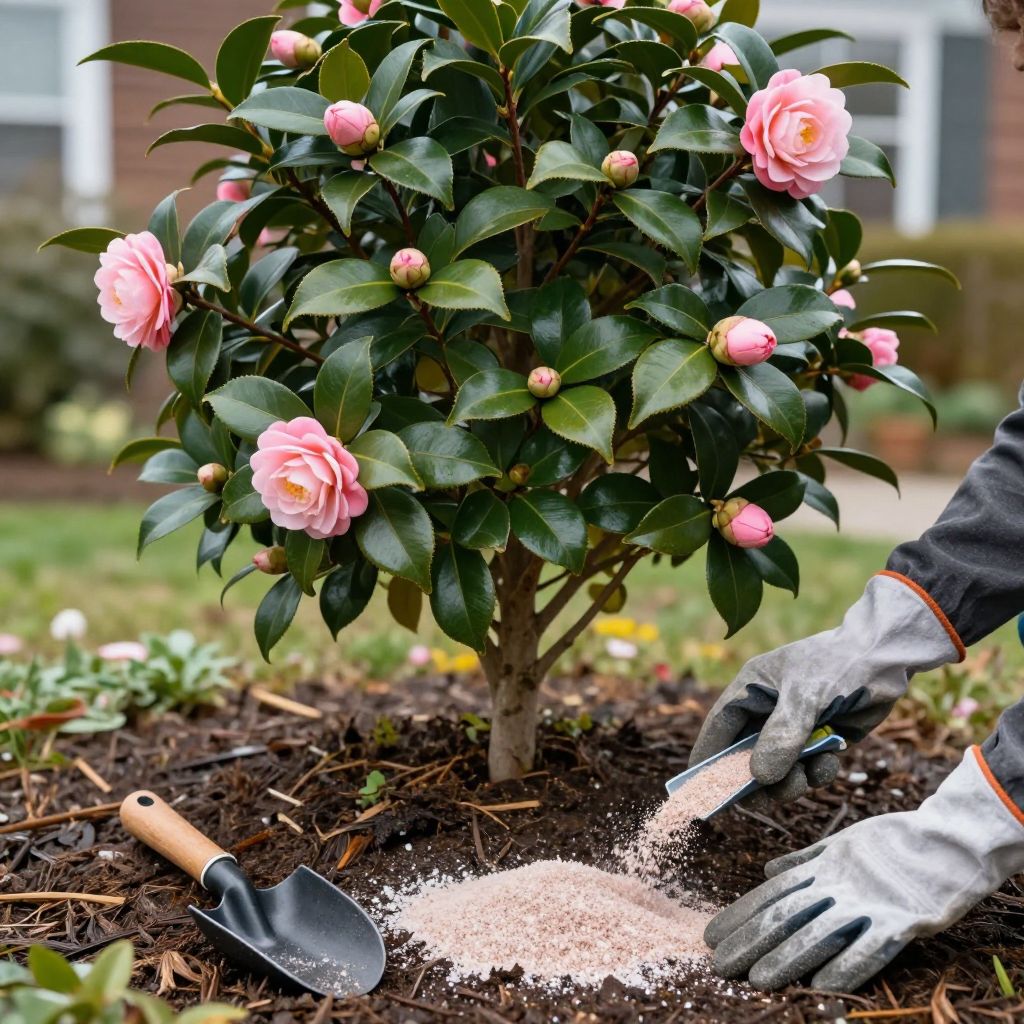
When should you fertilize camellias? Timing matters because these shrubs feed best when they are actively growing, not when they are setting buds or resting. The goal is to support healthy leaves, roots, and flowering without pushing soft growth at the wrong time.
Camellias are relatively light feeders, so a little well-timed fertilizer goes further than heavy feeding. If you fertilize too late in the season, you can reduce bloom quality or encourage tender growth that is more vulnerable to cold damage.
When to fertilize camellias?
Feed camellias in early spring after flowering, and if needed, give a second light feeding in late spring or early summer. Avoid fertilizing in late summer, fall, or winter, because that can interfere with bud formation and stress the plant during dormancy. In mild climates, timing may shift slightly with local bloom season.
Why timing matters for camellias
Camellias form flower buds well ahead of bloom, so fertilizer timing affects both growth and flowers. A well-timed feeding supports leaf color, root health, and next season’s buds without forcing weak, leafy growth.
These shrubs prefer steady, moderate nutrition rather than frequent feeding. Overfertilizing is one of the most common mistakes, especially for gardeners who are used to feeding roses, vegetables, or lawn plants more heavily.
What happens if you fertilize at the wrong time?
- Too early: fertilizer may be wasted if roots are inactive in cold soil.
- Too late: new growth may not harden off before cold weather.
- Too much: you may see leaf burn, excess foliage, or fewer blooms.
- Too often: salts can build up in the soil, especially in containers.
Best seasonal feeding schedule for camellias
The right schedule depends on your climate, soil, and whether the camellia is in the ground or in a pot. Use the plant’s growth cycle as your guide rather than the calendar alone.
Spring feeding
Apply fertilizer in early spring after flowering finishes. This is usually the safest and most useful feeding window for established camellias, because the plant is ready to grow new leaves and recover from bloom.
If your camellia blooms in late winter or very early spring, wait until the flowers drop before feeding. If it blooms later, feed soon after the main bloom flush ends.
Optional second feeding
A second, lighter feeding in late spring or early summer can help if the plant is growing in poor soil or showing pale foliage. Keep this feeding modest and stop well before the end of summer.
In warmer regions with a longer growing season, some gardeners use two light feedings. In cooler areas, one spring feeding is often enough.
When not to fertilize
- During late summer and fall
- When the plant is drought-stressed
- When the soil is frozen or very cold
- Right after transplanting, unless the plant is established and actively growing
- When the camellia is already healthy and growing well in rich soil
How to tell if your camellia actually needs fertilizer
Not every camellia needs regular feeding. If the shrub is healthy, flowering well, and producing steady new growth, it may only need mulch and good soil care.
Signs that feeding may help include:
- Light green leaves, especially on newer growth
- Slow growth during the active season
- Reduced flowering compared with previous years
- Container plants that dry out quickly and seem depleted
Before fertilizing, check other likely causes. Yellowing leaves can also come from poor drainage, alkaline soil, root stress, or inconsistent watering.
What fertilizer is best for camellias?
Camellias do best with a fertilizer made for acid-loving plants or a balanced, slow-release product used at a light rate. The exact product matters less than applying it gently and at the right time.
Look for a fertilizer that is suitable for azaleas, rhododendrons, gardenias, or camellias. These products are usually formulated for plants that prefer acidic soil conditions.
Good fertilizer traits to look for
- Slow-release or controlled-release formulation
- Designed for acid-loving shrubs
- Moderate nitrogen rather than a very high first number
- Clear label directions for ornamental shrubs
Avoid overdoing high-nitrogen lawn fertilizers near camellias. They can push lush leaves at the expense of flowers and may raise the risk of burn.
How to fertilize camellias step by step
Use this simple process to feed camellias safely and evenly.
- Water the plant first if the soil is dry.
- Read the fertilizer label and follow the ornamental shrub instructions.
- Spread fertilizer evenly under the outer canopy, not against the trunk.
- Keep granules a few inches away from the stem.
- Water lightly after applying, unless the label says otherwise.
- Mulch afterward if needed, but keep mulch off the trunk.
For container camellias, use a product labeled for pots or acid-loving container plants and apply it carefully. Potted plants are more prone to fertilizer buildup, so less is usually better.
Soil, pH, and drainage: the foundation of good feeding
Fertilizer works best when the soil suits camellias. These shrubs prefer well-drained, organically rich, slightly acidic soil. If drainage is poor or the soil is too alkaline, feeding alone will not solve the problem.
If you suspect a pH issue, a soil test is the most reliable next step. Camellias often struggle in soils that are too alkaline, which can cause nutrient lockout and chlorosis even when fertilizer is present.
Improve the root zone before adding more fertilizer
- Top-dress with compost if the soil is thin or poor
- Maintain a 2- to 3-inch layer of mulch
- Keep mulch pulled back from the base of the shrub
- Fix drainage problems before increasing feeding
Watering and fertilizer go together
Camellias should not be fertilized when they are thirsty. Dry roots are more likely to burn, and stressed plants use nutrients poorly.
Keep the soil evenly moist, especially during bud development, flowering, and active spring growth. At the same time, avoid soggy conditions, which can damage roots and make the shrub look nutrient-deficient even when it is not.
Special notes for container camellias
Camellias grown in pots need more careful feeding than those in the ground because nutrients wash out faster. They also dry out more quickly, which makes timing and moderation especially important.
Container care tips
- Feed only during active growth, usually spring
- Use a diluted or slow-release fertilizer made for acid-loving plants
- Flush the pot occasionally with plain water to reduce salt buildup
- Repot when roots fill the container and the mix breaks down
If a potted camellia is blooming poorly, check light, root space, and drainage before adding more fertilizer. A crowded or waterlogged pot can mimic nutrient problems.
Pruning, pests, and disease: what to watch for
Fertilizer is only one part of camellia care. Good pruning, pest monitoring, and disease prevention help the plant use nutrients effectively.
Pruning
Prune camellias lightly after flowering if needed. Avoid heavy pruning late in the season, because that can remove buds and stimulate growth at the wrong time.
Common pests
- Scale insects
- Aphids
- Spider mites in hot, dry conditions
Check the undersides of leaves and stems regularly. If pests are present, address them before increasing fertilizer, since stressed plants often recover better once the pest issue is controlled.
Common diseases
- Root rot in poorly drained soil
- Leaf spot in humid, crowded conditions
- Bud drop caused by stress, drought, or sudden temperature swings
Feeding will not fix root rot or chronic bud drop caused by environmental stress. Correct the underlying issue first.
Common fertilizing mistakes to avoid
- Feeding too late in the season
- Using too much fertilizer because the plant looks slow
- Applying fertilizer directly against the trunk
- Fertilizing dry, stressed plants
- Ignoring soil pH and drainage
- Using lawn fertilizer near the root zone
If your camellia has been overfed, flush the soil with deep watering if drainage is good, then stop fertilizing until the next appropriate season. In containers, repotting into fresh mix may be the better fix.
Quick seasonal guide
- Late winter to early spring: wait until bloom finishes, then feed if needed
- Spring: best time for the main fertilizer application
- Late spring to early summer: optional light second feeding in some climates
- Late summer through winter: do not fertilize
Conclusion
If you remember one thing, make it this: fertilize camellias in spring after flowering, and stop before late summer. That timing supports healthy growth and future blooms without pushing soft, vulnerable growth.
For the best results, combine light feeding with acidic, well-drained soil, steady moisture, and minimal pruning. If you want to fine-tune your camellia care, consider reading more about camellia care and pruning and growing acid-loving shrubs.