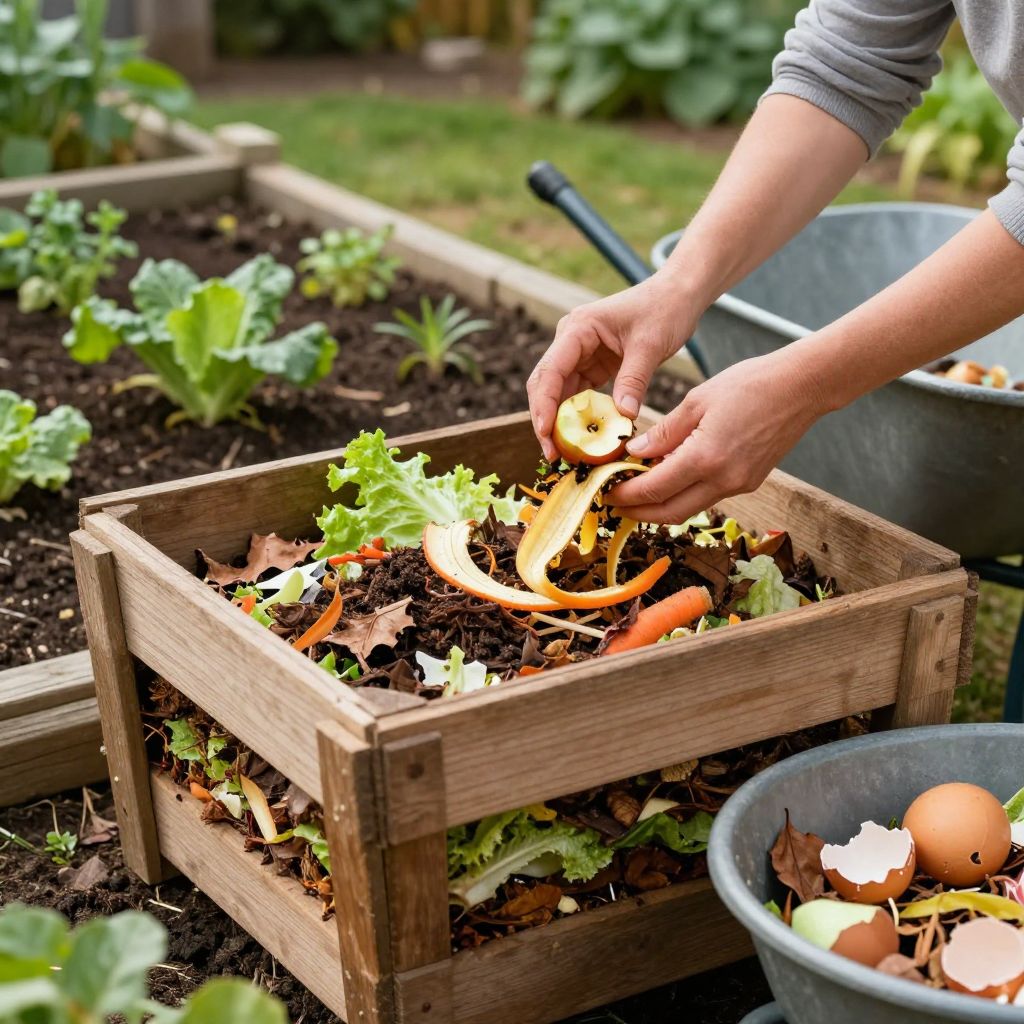
Wondering what can I compost without making a smelly mess or ruining your pile? The short answer is: compost a balanced mix of “greens” and “browns,” plus many untreated plant scraps and yard trimmings. Avoid meat, dairy, oils, diseased plants, weeds with seeds, and anything that attracts pests or slows decomposition.
When you compost well, you turn kitchen and garden waste into a rich soil amendment that improves structure, drainage, moisture retention, and long-term fertility. The key is knowing what belongs in the pile, what needs extra care, and what should stay out.
What can I compost?
You can compost most fruit and vegetable scraps, coffee grounds, tea leaves, eggshells, dry leaves, grass clippings, small twigs, shredded paper, cardboard, and untreated plant material. The best compost piles combine nitrogen-rich “greens” with carbon-rich “browns” in roughly a 1:2 to 1:3 ratio by volume.
Greens: nitrogen-rich materials for active decomposition
“Greens” add moisture and nitrogen, which help microbes break down organic matter. Use them in moderation and mix them well with dry browns so the pile does not turn slimy or smelly.
Good greens to compost
- Fruit and vegetable scraps
- Coffee grounds and paper coffee filters
- Loose tea leaves and most paper tea bags, if they are plastic-free
- Fresh grass clippings in thin layers
- Soft, non-woody plant trimmings
- Spent annual flowers and deadheaded blooms
- Eggshells, crushed well
Use caution with these greens
- Large amounts of grass clippings can mat down and go anaerobic. Mix them with dry leaves or shredded cardboard.
- Weeds that have not gone to seed are usually fine, but aggressive perennial weeds may survive if your pile does not heat up enough.
- Plant material treated with persistent herbicides can contaminate compost and later damage garden beds.
Browns: carbon-rich materials that keep compost airy
Browns provide structure, absorb excess moisture, and help air move through the pile. Without enough browns, compost often becomes compacted, wet, and slow to break down.
Good browns to compost
- Dry leaves
- Shredded newspaper and plain paper
- Corrugated cardboard, torn or shredded
- Straw and untreated hay
- Small twigs and chipped branches
- Wood shavings from untreated wood
- Paper towels and napkins used for water or plant debris, if free of grease or chemicals
Best practices for browns
- Shred cardboard and paper so they break down faster.
- Keep woody pieces small; large sticks take much longer to decompose.
- Mix dry browns into the center of the pile, not just on top.
What should not go in a compost pile?
Some materials attract pests, create odors, slow decomposition, or introduce disease and weed problems. If you are unsure, leave it out until you can verify it is safe for your compost system.
Avoid composting these items
- Meat, fish, bones, and poultry
- Dairy products
- Cooking oils, grease, and fatty foods
- Pet waste from dogs or cats
- Diseased plant material
- Weeds with mature seeds or invasive roots that may survive
- Glossy or heavily coated paper
- Coal ash and charcoal briquettes with additives
- Plastic, glass, metal, and synthetic fabric
- Large amounts of sawdust or wood from treated, painted, or stained lumber
Why these materials cause problems
Animal products and greasy foods often smell bad and can attract rodents, flies, and other pests. Diseased plants and seeding weeds may survive in cool piles and spread back into the garden later. Treated wood and coated paper can introduce unwanted chemicals or non-compostable residues.
How to build a healthy compost pile
A good compost pile is a living system. It needs the right balance of ingredients, moisture, and airflow to heat up and decompose efficiently.
- Start with a layer of browns. Use dry leaves, shredded cardboard, or straw to create air space at the base.
- Add greens in thin layers. Kitchen scraps and fresh clippings should be buried under browns to reduce odor and pests.
- Keep the pile moist, not soggy. It should feel like a wrung-out sponge.
- Turn or mix it regularly. Turning introduces oxygen and speeds decomposition, especially in active backyard piles.
- Adjust as needed. If it smells, add browns. If it is dry and inactive, add a little water and more greens.
Simple compost balance guide
- Too wet or smelly: add dry leaves, shredded paper, or cardboard.
- Too dry and slow: add water and more fresh scraps or green plant material.
- Too compacted: fluff the pile and add coarse browns for airflow.
Can you compost kitchen scraps indoors?
Yes, but indoor composting needs tighter control than an outdoor pile. Small systems such as countertop collection bins, worm bins, or sealed compost containers work best when you empty them regularly and balance them with enough dry material.
Indoor composting tips
- Use a lidded bin with a washable liner or compostable bag, if appropriate for your system.
- Empty food scraps often so they do not rot.
- Keep a supply of shredded paper, dry leaves, or coco coir nearby to layer over fresh scraps.
- Rinse bins as needed to prevent odors and fruit flies.
If you are vermicomposting with worms, follow the same basic rule: feed small amounts, avoid greasy or salty foods, and keep bedding airy and moist rather than wet.
What about weeds, diseased plants, and invasive material?
This is where many gardeners make mistakes. Not all plant waste is safe to compost, especially if your pile stays cool or you plan to use the compost in vegetable beds.
Safer approach for problem plant material
- Compost only weeds before they flower or set seed.
- Do not add plants with fungal, bacterial, or viral diseases unless you know your system reaches and maintains hot-compost temperatures.
- Dispose of persistent invasive roots separately if you cannot guarantee complete breakdown.
When in doubt, keep suspect material out. A slightly smaller compost pile is better than spreading weeds or disease through your garden later.
Hot composting vs. cold composting
The type of composting you use affects what you can safely add. Hot composting breaks down material faster and can kill many weed seeds and pathogens if managed correctly. Cold composting is easier, but it is slower and less reliable for problem materials.
Hot composting
- Works best with a large enough pile to retain heat
- Needs a balanced mix of greens and browns
- Requires regular turning and moisture checks
- Is better for gardeners who want faster results and cleaner compost
Cold composting
- Requires less effort
- Breaks down material gradually over months or longer
- Is best for safe, everyday kitchen and yard waste only
- Should not be relied on for diseased plants or seedy weeds
Common compost problems and how to fix them
Most compost issues come down to too much moisture, too little air, or an unbalanced mix of ingredients. Small corrections usually solve the problem quickly.
Bad smell
Usually means the pile is too wet or has too many greens. Add dry browns, turn the pile, and stop adding wet scraps until it recovers.
Fruit flies or pests
Cover fresh food scraps with browns and avoid exposed fruit peels. If pests are persistent, switch to a secure bin and remove prohibited foods like meat and dairy.
Nothing seems to be happening
Dry, cold, or overly brown-heavy piles decompose slowly. Add a little water, mix in more greens, and chop materials into smaller pieces.
Slimy or compacted pile
This usually means too much grass or kitchen waste without enough structure. Add shredded cardboard, dry leaves, or straw, then turn the pile to restore airflow.
How to use finished compost in the garden
Finished compost should look dark, crumbly, and earthy, with few recognizable scraps. It is a soil amendment, not a complete fertilizer, so use it to improve soil health rather than as the only source of nutrients.
Practical ways to apply compost
- Mix it into vegetable beds before planting.
- Top-dress around perennials, shrubs, and trees, keeping it away from stems and trunks.
- Blend it into potting mixes only when the compost is fully finished and well sifted.
- Use a thin layer as mulch around established plants.
For containers, avoid using too much compost on its own. Container plants need a mix that drains well, so compost should usually be part of a broader potting blend rather than the entire medium.
Quick compost checklist
- Use a mix of greens and browns
- Chop or shred materials for faster breakdown
- Keep the pile moist, not soggy
- Cover food scraps with browns
- Exclude meat, dairy, oils, pet waste, and diseased plants
- Turn the pile when it starts to compact or smell
If you want to improve your garden soil, start by sorting your kitchen and yard waste into compostable and non-compostable materials today. Then build a balanced pile, monitor moisture, and use the finished compost to feed beds, borders, and containers more effectively.