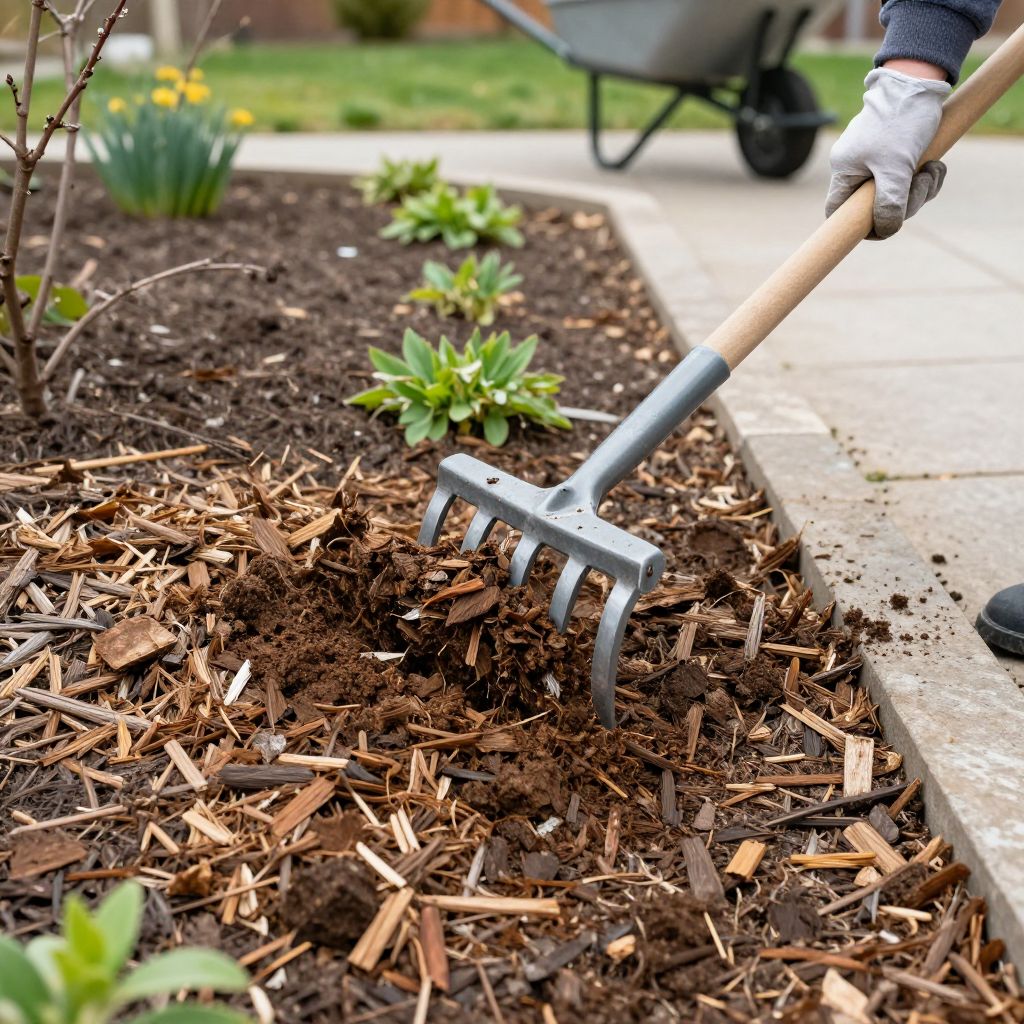
What should you do with old mulch once it starts looking tired, compacted, or faded? In many gardens, the answer is not to throw it away right away. Old mulch can often be refreshed, reused, or safely removed depending on its condition and what you plan to grow next.
The best choice depends on whether the mulch is still clean and loose, or whether it has broken down, matted, grown weeds, or started to smell. A quick inspection can tell you whether to rake it back into shape, top it up, compost it, or replace it entirely.
What to do with old mulch?
Old mulch can usually be reused if it is still clean, weed-free, and not compacted. Rake it to fluff it up, pull it back from plant stems, and add a fresh layer only where needed. If it is decomposed, moldy, or full of weeds, remove it and compost or discard it.
First, inspect the mulch before you decide
Not all old mulch needs the same treatment. The condition of the mulch matters more than its age.
Check for these signs
- Still usable: Loose texture, earthy smell, little weed growth, and only partial breakdown.
- Needs refreshing: Faded color, thin coverage, or some compaction from rain and foot traffic.
- Should be removed: Heavy weed infestation, sour or rotten smell, visible mold problems, or mulch that has formed a hard mat.
- May be contaminated: Mulch from diseased plants, insect-infested beds, or areas treated with herbicides that could affect new planting.
If you are unsure, lift a handful and look underneath. Healthy mulch should still allow air and water to move through it.
How to reuse old mulch in the garden
In many beds, older mulch can be put right back to work. The goal is to restore its structure and make sure it is not smothering plants.
- Rake the mulch gently to break up crusted or compacted areas.
- Pull mulch back a few inches from plant crowns, stems, and tree trunks.
- Remove weeds, sticks, and any debris that has collected in it.
- Add a thin fresh layer only if the mulch is too shallow or uneven.
- Water the bed if the soil underneath is dry, then replace the mulch evenly.
A good mulch layer is usually about 2 to 4 inches deep, depending on the material and the plantings. Keep it thinner around small perennials and thicker in open shrub beds, but avoid piling it against stems or trunks.
When old mulch should be removed
Some mulch is past the point of simple refreshing. Removing it can prevent problems and improve soil and plant health.
Remove mulch if it is:
- So tightly packed that water runs off instead of soaking in
- Covered in persistent weeds or weed seed heads
- Rotting in a way that smells sour or anaerobic
- Harboring slugs, fungal growth, or insect pests in large numbers
- Mixed with diseased plant debris
- So thin and broken down that it no longer serves as mulch
When you remove it, take the opportunity to inspect the soil beneath. Old mulch often hides dry, compacted, or depleted soil that may need loosening before re-mulching.
Can old mulch be composted?
Yes, many types of old mulch can go into a compost pile if they are mostly organic and free of serious disease or invasive weeds. Shredded bark, leaves, straw, and wood chips can all break down over time.
Best candidates for the compost pile
- Partially decomposed bark mulch
- Leaf mulch
- Straw or hay that is not full of weed seed
- Wood chips that are already breaking down
- Mulch mixed with small amounts of soil and plant residue
What to avoid composting
- Mulch with aggressive perennial weeds or mature weed seeds
- Material from diseased plants, especially if the disease was severe
- Mulch contaminated with treated wood, chemicals, or unknown residues
- Large chunks of material that will take years to break down without shredding
If the mulch is woody, mix it with greener, nitrogen-rich compost ingredients so it breaks down more evenly. Turning the pile occasionally helps speed decomposition.
How old mulch affects soil and plants
As mulch breaks down, it gradually improves soil structure and adds organic matter. That is one reason old mulch is often worth keeping in place if it is still functioning well.
Benefits of partially decomposed mulch
- Helps conserve moisture
- Buffers soil temperature
- Reduces weed germination
- Feeds soil life as it decomposes
- Improves surface soil over time
There is a tradeoff, though. Very old mulch can become too fine, too thin, or too compacted to do its job. In that case, it may still be adding organic matter, but it is no longer an effective protective layer.
How to refresh old mulch without overdoing it
One of the most common mistakes is adding too much new mulch on top of old mulch. That can create a thick, airless layer that holds too much moisture near stems and roots.
Use this simple refresh method
- Clear away debris and weeds.
- Rake the old mulch to loosen it.
- Check the depth in several spots.
- Add just enough new mulch to restore coverage.
- Keep mulch away from trunks, crowns, and graft unions.
If the bed already has a healthy mulch layer, you may only need a light top-up. In established landscape beds, a little maintenance each season is usually better than a full replacement every time.
Should you leave old mulch in place over winter?
Often, yes. In many climates, old mulch can stay in place through winter to protect roots from temperature swings and erosion. It is especially useful around shrubs, perennials, and trees that benefit from stable soil conditions.
Before winter, make sure the mulch is not piled against plant stems and that it is not trapping too much damp debris around crowns. Wet, matted mulch can encourage rot in some plants, especially in poorly drained beds.
Winter mulch tips
- Leave a moderate layer in place if it is still loose and clean
- Refresh only if the layer has broken down too much
- Avoid burying tender perennials under deep, soggy mulch
- Pull mulch back slightly in early spring if the soil is slow to warm
Special cases: vegetable beds, flower beds, and trees
Different garden areas need slightly different handling. What works for a shrub border may not be best for a vegetable bed.
Vegetable beds
Old mulch in vegetable beds should be checked carefully for disease, pests, and weed seeds. If the mulch is clean and plant-based, you can often leave it in place or work it into the top layer of soil at the end of the season, depending on your gardening method.
Flower beds
Perennial and annual flower beds usually benefit from a refreshed mulch layer each season. Remove any matted or weed-filled material before reapplying mulch so new shoots can emerge cleanly.
Trees and shrubs
Old mulch around trees and shrubs often only needs raking and thinning. Keep mulch in a broad ring, but avoid the common “mulch volcano” shape against trunks, which can cause bark problems and encourage pests.
Common mistakes to avoid with old mulch
Most mulch problems come from either ignoring it too long or trying to fix it with too much new material.
- Do not bury plant crowns or stems. This can lead to rot and pest issues.
- Do not add fresh mulch on top of a thick old layer. Too much mulch blocks air and water movement.
- Do not keep diseased mulch in place. Remove and discard suspect material.
- Do not leave weed seeds in the bed. They can spread quickly once conditions improve.
- Do not assume all mulch breaks down the same way. Wood chips, leaves, straw, and bark age differently.
How to tell if mulch is still doing its job
Good mulch should help the soil, not create problems. If you are seeing fewer weeds, more even moisture, and healthier soil underneath, the mulch is probably still useful.
If the bed dries out too quickly, weeds are breaking through, or the mulch has become crusted and hard, it is time to refresh or replace it. The soil beneath should feel protected, not sealed off.
Practical takeaway for home gardeners
Old mulch is often more valuable than it looks. If it is clean and loose, you can usually rake it, refresh it, and keep using it. If it is compacted, weedy, moldy, or contaminated, remove it and start fresh with a properly maintained layer.
For more seasonal garden maintenance advice, you may also find it helpful to read related guidance on how to improve garden soil and choosing the right mulch for your beds.