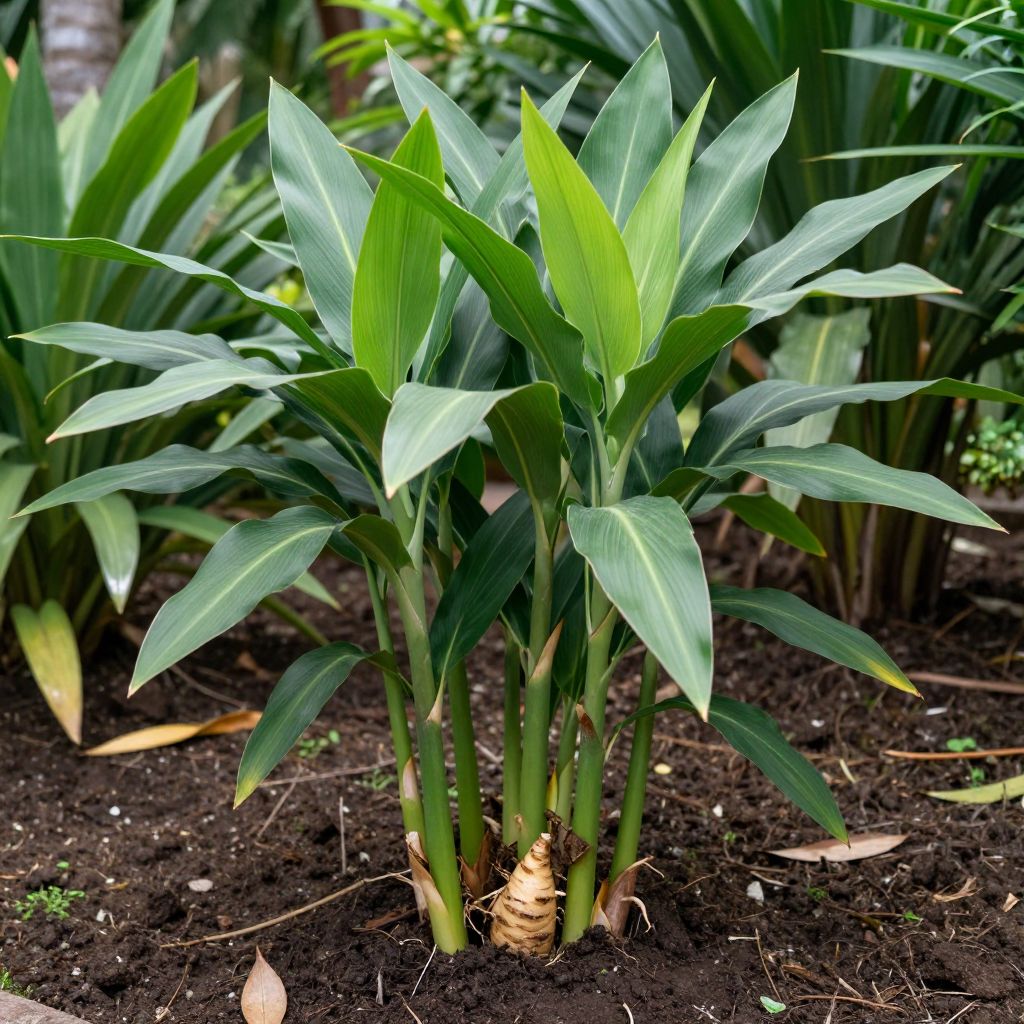
What does a ginger plant look like? If you’re trying to identify one in the garden, the answer is more than “a plant with ginger roots.” Ginger is a tropical herb with tall, narrow leaves, reed-like stems, and a clumping growth habit that can look a bit like ornamental grass or bamboo from a distance.
Below ground, it forms thick, knobby rhizomes that are the familiar edible ginger. Once you know the leaf shape, stem structure, and growth pattern, it becomes much easier to spot and grow ginger successfully.
What does a ginger plant look like?
A ginger plant usually grows as a clump of upright leafy stems, often 2 to 4 feet tall in warm conditions, with long lance-shaped leaves arranged alternately along the stem. The visible “stem” is actually a pseudostem made from overlapping leaf bases, while the edible part is the underground rhizome.
How to identify ginger by its main features
Leaves
Ginger leaves are long, narrow, and pointed, often 6 to 12 inches or more depending on growing conditions. They have a smooth surface, a fresh green color, and a slightly arching habit that gives the plant a soft, tropical look.
Stems and growth habit
The stems are not woody. They are soft, upright, and cane-like, forming dense clumps over time. If you gently part the foliage, you may notice each stem is made of leaf sheaths wrapped around one another.
Flowers
Ginger can produce flowers, but many home gardeners never see them. The blooms are usually small, fragrant, and arranged on short flower spikes, often near the base of the plant or on separate stalks depending on the type. In cooler climates, flowering is less common.
Rhizomes
The rhizomes are the most distinctive part of the plant. They are thick, tan to pale brown, and irregularly branched, with visible rings and buds. These underground stems store energy and are what you harvest for culinary ginger.
What ginger looks like at different stages
Young ginger shoots
New shoots emerge as narrow spears from the soil, often with a reddish or pale green tint. Early growth can look delicate, so don’t mistake it for a weed or a weak seedling.
Mature plants
As the plant matures, it develops more height and fuller foliage. A healthy ginger plant looks lush and layered, with many stems rising from one clump.
Late-season growth
In cooler weather, ginger may slow down, yellow, or begin to die back. That does not always mean the plant is failing; it may simply be entering dormancy or reacting to lower temperatures.
How ginger grows in the garden
Ginger is a tropical plant that prefers warmth, humidity, rich soil, and consistent moisture. It grows best in partial shade or filtered sun, especially in hot climates where strong afternoon sun can scorch the leaves.
Because it spreads from rhizomes rather than seeds in most home gardens, ginger tends to form a broad clump rather than a single upright plant. This makes it useful in edible beds, containers, and sheltered borders.
Best growing conditions
- Light: Bright shade, morning sun, or filtered sunlight
- Soil: Loose, fertile, well-drained soil rich in organic matter
- Moisture: Evenly moist, but never waterlogged
- Temperature: Warm conditions with protection from frost
- Space: Enough room for the clump to spread underground
How to grow ginger from rhizomes
Most gardeners grow ginger by planting a piece of fresh rhizome with visible buds. Choose firm, plump rhizomes from a trusted source or a healthy grocery-store ginger piece that has not been treated to prevent sprouting.
- Cut the rhizome into pieces, making sure each piece has at least one or two healthy buds.
- Let the cut surfaces dry for a day if needed to reduce rot risk.
- Plant the rhizome 1 to 2 inches deep in loose, moist soil or potting mix.
- Keep the soil warm and lightly moist until shoots appear.
- Move the plant to brighter light once growth is established.
If you are growing ginger indoors, use a wide container with drainage holes. A shallow, broad pot often works better than a deep one because ginger spreads horizontally.
Soil, compost, and drainage tips
Ginger likes soil that holds moisture without becoming soggy. A mix with compost or well-rotted organic matter helps feed the plant and improve texture, especially in sandy or poor soils.
Good drainage matters because rhizomes rot easily in stagnant, wet soil. If your garden soil is heavy clay, consider raised beds or containers, and mix in organic matter to improve structure.
Simple soil checklist
- Soil feels loose and crumbly, not compacted
- Water soaks in but does not pool for long
- There is plenty of compost or aged organic matter
- The planting site is sheltered from cold winds
Watering and light: what ginger needs
Ginger performs best with regular moisture, especially while it is actively growing. Water when the top inch of soil begins to dry, but avoid keeping the root zone constantly saturated.
Light should be bright but gentle. In hot regions, too much direct sun can burn the leaves and slow growth. In cooler or cloudier climates, ginger can take more sun as long as the soil does not dry out.
Common watering mistakes
- Letting the soil dry out completely for long periods
- Overwatering in cool weather when growth is slow
- Using pots without drainage holes
- Assuming the same watering schedule works in every season
Pruning, maintenance, and seasonal care
Ginger does not need formal pruning, but you can remove yellowing or damaged leaves to keep the plant tidy. Use clean scissors or pruners and cut close to the base of the stem.
In many climates, ginger grows strongly through warm months and slows as temperatures drop. If you grow it outdoors, protect it from frost. In colder areas, container-grown ginger can be moved indoors before cold weather arrives.
What to do if the plant looks tired
- Check soil moisture first
- Look for cold damage or sun scorch
- Inspect for pests under the leaves and at the base
- Make sure the soil is not compacted or waterlogged
Common pests and diseases
Ginger is usually fairly resilient, but it can suffer from problems if conditions are too wet, too dry, or too crowded. Watch for leaf spotting, yellowing, soft rhizomes, or stunted growth.
Typical issues
- Rhizome rot: Often caused by poor drainage or overwatering
- Leaf scorch: Usually from too much direct sun or dry air
- Aphids or spider mites: More likely on stressed indoor plants
- Fungal leaf spots: Can appear in humid, crowded conditions
To reduce disease risk, give plants enough spacing, water at the soil level when possible, and remove dead foliage promptly. Good airflow is especially important indoors and in humid climates.
How to tell ginger apart from lookalike plants
Many gardeners confuse ginger with ornamental grasses, canna lilies, or other tropical foliage plants. The easiest way to tell is to look for the combination of broad, smooth leaves, clumping pseudostems, and the rhizome structure below the soil.
- Compared with grasses: Ginger has thicker stems and broader leaves
- Compared with canna: Ginger leaves are narrower and the plant is less rigid
- Compared with bamboo: Ginger does not have woody canes or true joints
Harvesting ginger without harming the plant
If you want fresh ginger, you can harvest carefully by digging along the edge of the clump and removing only part of the rhizome. This allows the plant to keep growing if conditions are warm enough and the remaining rhizome stays healthy.
For a larger harvest, wait until the plant has matured and the foliage begins to yellow naturally. Harvesting too early usually gives smaller, less developed rhizomes.
Quick visual summary
- Tall, clumping herb with narrow green leaves
- Soft, reed-like pseudostems rather than woody stems
- Underground rhizomes that are thick and knobby
- Best growth in warmth, moisture, and partial shade
- Can be grown in beds or containers with good drainage
Conclusion
If you’ve been wondering what does a ginger plant look like, remember the key signs: a leafy tropical clump above ground and a knobby rhizome below. Once you can identify those features, you can grow ginger more confidently and avoid common mistakes with light, water, and drainage.
For more practical help with tropical edibles and container growing, you may also want to read related gardening guides on growing herbs in pots and improving garden soil drainage.