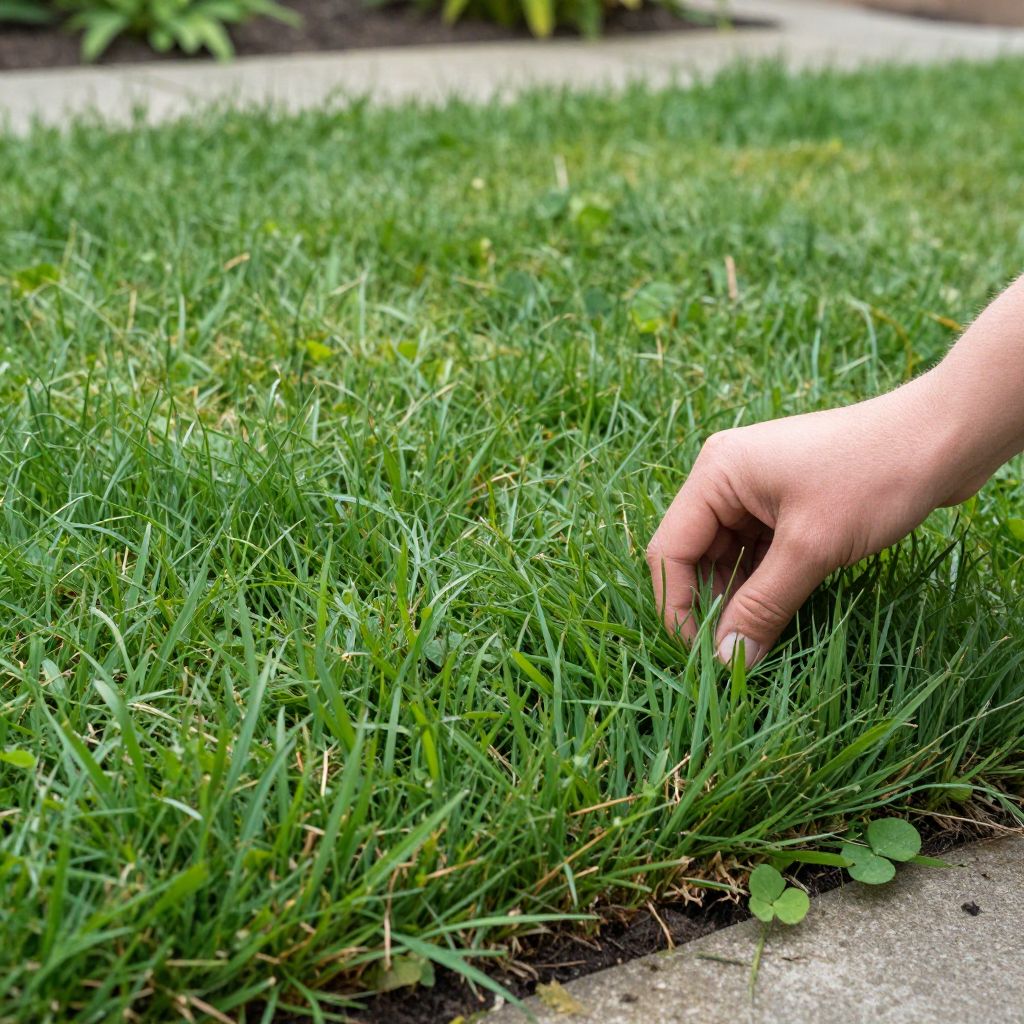
If you’re asking, “What kind of grass do I have?” the fastest way to find out is to look closely at the blade shape, growth habit, seed head, and how the lawn spreads. Those clues usually tell you whether you have a cool-season turf like Kentucky bluegrass or fescue, or a warm-season grass like bermudagrass or zoysia.
Once you identify the grass, you can mow, water, fertilize, and repair it much more effectively. A lawn that looks “bad” is often just being managed like the wrong type of grass.
What kind of grass do I have?
To identify your grass, compare blade width, texture, color, growth pattern, and whether it spreads by stolons, rhizomes, or bunches. Then match those traits to common lawn grasses in your region. The most reliable ID comes from looking at several features together, not just one clue like color or height.
Start with the easiest visual clues
Grass identification gets much easier when you look at the plant up close. Use your phone camera or a hand lens and inspect a few healthy patches, not just stressed areas.
1. Blade width and texture
- Fine blades: often Kentucky bluegrass, bermudagrass, or fine fescues.
- Medium blades: commonly perennial ryegrass, tall fescue, or zoysia.
- Broad blades: often St. Augustinegrass or some coarse tall fescues.
Rub the blade between your fingers. Fine-textured grasses feel soft or narrow; coarse grasses feel thicker and stiffer.
2. Growth habit
- Bunch-type grasses grow in clumps and spread slowly, if at all. Tall fescue and perennial ryegrass often behave this way.
- Spreading grasses creep outward by runners. Bermudagrass, zoysia, Kentucky bluegrass, and St. Augustinegrass do this.
If the lawn fills in bare spots by sending runners across the soil, it is likely a spreading grass rather than a bunch grass.
3. Color and seasonal appearance
- Cool-season grasses stay green longer in spring and fall, and may slow down or brown in summer heat.
- Warm-season grasses green up later in spring and may go dormant and tan in cool weather.
Color alone is not enough for identification, but it helps when combined with other traits and your local climate.
How to identify common lawn grasses
Most home lawns are made up of a few common species. Use the descriptions below as a practical starting point, especially if you live in a region where that grass is commonly sold or planted.
Kentucky bluegrass
This cool-season grass has fine to medium blades, a rich green color, and a soft feel. It spreads by underground rhizomes, so it can repair itself well. It often forms a dense, attractive lawn in cooler climates.
Look for:
- Boat-shaped leaf tips
- Dense turf that spreads into thin areas
- Strong spring and fall growth
Tall fescue
Tall fescue has broader blades than Kentucky bluegrass and usually grows in clumps, though newer turf-type varieties can look finer. It is often chosen for durability and heat tolerance in transitional climates.
Look for:
- Coarser texture
- Clumping growth pattern
- Deep green color with a slightly rough feel
Perennial ryegrass
Perennial ryegrass has shiny leaf undersides, very narrow blades, and a bunch-type growth habit. It establishes quickly, which makes it useful for overseeding and quick lawn cover.
Look for:
- Glossy underside on the blade
- Very fine texture
- Fast germination and quick establishment
Bermudagrass
Bermudagrass is a warm-season turf with fine blades and aggressive spreading by stolons and rhizomes. It thrives in heat and full sun and can become invasive in mixed plantings.
Look for:
- Very dense, wiry turf
- Runners above and below ground
- Seed heads that may look finger-like
Zoysia
Zoysia is a warm-season grass with medium-fine blades and a dense, carpet-like habit. It spreads slowly compared with bermudagrass but can form a thick lawn over time.
Look for:
- Stiff blades that stand upright
- Dense, slow-spreading growth
- Good tolerance for heat and some drought once established
St. Augustinegrass
St. Augustinegrass has broad, flat blades and spreads by thick above-ground runners called stolons. It prefers warm climates and often grows well in partial shade compared with other warm-season grasses.
Look for:
- Wide blades and coarse texture
- Thick runners across the soil surface
- Open, sprawling growth in warm regions
Fine fescues
Fine fescues include several cool-season grasses with very narrow blades and a soft appearance. They can work well in cooler, shadier areas and lower-input lawns.
Look for:
- Very fine, hair-like blades
- Soft texture
- Tufted or lightly spreading growth
Use the seed head, stem, and runners for a better ID
When blade shape is unclear, the seed head and growth structure can help. These details are especially useful in spring and early summer when grasses are actively producing flowers.
Seed head clues
- Finger-like seed heads often suggest bermudagrass or crabgrass.
- Open, branched seed heads may indicate Kentucky bluegrass.
- Small, delicate seed heads can point to fine fescues or ryegrass.
Seed heads are helpful, but they are not always present. Mowing can remove them before you notice them.
Runner clues
- Rhizomes are underground stems. Kentucky bluegrass spreads this way.
- Stolons are above-ground runners. Bermudagrass and St. Augustinegrass spread this way.
- No visible runners often suggests a bunch grass like tall fescue or perennial ryegrass.
Check your lawn’s location and climate
Your region narrows the possibilities quickly. Warm-season grasses are more common in hot, sunny areas, while cool-season grasses dominate in cooler climates with cold winters.
Cool-season lawns
If your lawn stays green through cool weather and struggles in summer heat, it is more likely to be a cool-season grass. These grasses usually grow best in spring and fall, when temperatures are moderate.
Warm-season lawns
If your grass greens up late in spring, grows fastest in summer, and turns tan after frost, it is likely a warm-season grass. These lawns often need different mowing heights and seasonal care than cool-season turf.
Important: Don’t assume a lawn problem is disease or drought until you know the grass type. The same symptom can mean very different things depending on the species.
Simple steps to identify your grass at home
Use this quick process if you want a practical answer without guessing.
- Choose a healthy patch of grass and cut a few blades with scissors.
- Look at blade width, tip shape, and whether the blade is shiny or dull.
- Check for runners above or below the soil.
- Look for clumps versus a dense spreading mat.
- Compare seed heads if present.
- Match what you see to common grasses in your climate.
If you still are unsure, take clear close-up photos of the blade, the base of the plant, and the whole lawn patch. A local garden center, extension office, or turf specialist can often narrow it down quickly from those images.
How grass type changes your lawn care
Once you know what kind of grass you have, you can adjust maintenance to fit it. That is often the difference between a thin, stressed lawn and a healthy one.
Mowing
Different grasses tolerate different mowing heights. Cutting too short weakens the lawn, while cutting too high can cause matting or poor appearance in some types.
- Cool-season turf often prefers a somewhat taller cut than many homeowners use.
- Warm-season turf may be mowed shorter, but not scalped.
- Never remove more than one-third of the leaf blade at a time.
Watering
Grass type affects drought tolerance and rooting behavior. New lawns need more frequent moisture than established lawns, but both benefit from deep, less frequent watering when conditions allow.
- Water more often during establishment.
- Adjust for heat, wind, soil type, and rainfall.
- Sandy soils dry faster than clay soils.
Fertilizing
Cool-season and warm-season grasses do not need fertilizer on the same schedule. Apply nutrients based on growth period, not just the calendar, and avoid feeding a lawn that is already stressed by drought or dormancy.
Common mistakes when identifying grass
Many homeowners misidentify turf because they focus on one feature or compare a stressed lawn to a perfect photo online. A lawn can look very different after drought, shade, low mowing, or pest damage.
- Using color alone to identify the grass
- Ignoring runners or clumping habit
- Comparing only mature turf and not new growth
- Confusing lawn grass with crabgrass, nutsedge, or other weeds
- Assuming all thin areas are disease instead of poor species match
If your lawn seems patchy, check whether more than one grass is present. Mixed lawns are common, especially where overseeding has been done for years.
What if your lawn has weeds mixed in?
Sometimes the real question is not just “What kind of grass do I have?” but “What grass and weeds are growing together?” Weeds can disguise the lawn and make identification harder.
Pull a few plants and examine the base. Grass blades are narrow and usually grow in two ranks from the stem, while many broadleaf weeds have wider leaves and a different growth pattern. Sedges and crabgrass can also mimic turf, so look carefully before treating anything.
When to get a closer diagnosis
Seek help if the lawn has unusual striping, circular dead patches, or a sudden decline that does not match normal seasonal change. A turf disease, insect problem, or soil issue may be involved.
Bring a sample with roots, stems, and a little soil attached if you visit a garden center or extension office. A complete sample is much easier to identify than a clipped blade alone.
Conclusion
The best way to answer “What kind of grass do I have?” is to look at several clues together: blade width, texture, growth habit, runners, and your local climate. Once you identify the grass, you can mow, water, and care for it with far better results. Start by inspecting one healthy patch today, then compare it to the common types in your region.
If you want to keep learning, a good next step is to read more about lawn grass identification and turf care basics and how to improve soil and drainage for healthier grass.